The metallic clatter of machine gun fire echoed through the narrow, windswept streets of Stanley as shells thudded into the sea-salted facades of Government House. The air was thick with the smell of cordite and the shrill scream of tactical radio chatter. Inside the darkened corridors, seventy pairs of boots pounded against polished wooden floors, their owners’ breath visible in the cold, dank air - Royal Marines preparing for a fight like no other. Here, 68 men stood resolute, steeling themselves against a force forty times their number with nothing but conviction and strategy to tip the scales.
A Standoff in Isolation
The Falkland Islands, a cluster of wind-whipped isles in the South Atlantic, had been a British Overseas Territory since the 19th century. On April 2, 1982, this remote dot on the map was thrust into international spotlight. As dawn broke, the approaching Argentine naval invasion was reported by nervous radio operators: 2,800 troops backed by armored vehicles, landing craft, and air support aimed to reclaim what they considered theirs. In stark contrast, only sixty-eight Royal Marines defended Government House, the administrative heart of Stanley.
Lieutenant Keith Mills, the leader of the small Royal Marine detachment, faced a daunting task. The harsh reality was that, despite the extensive training and bravery of his men, they were outgunned and outnumbered. Yet, retreat was not an option. They quickly fortified their positions, determined to hold the advancing enemy at bay for as long as possible. Communication was key, and reports from across Stanley detailed the rapid deployment of Argentine forces, sending a ripple of urgency through their ranks.
The Garden Wall Ambush
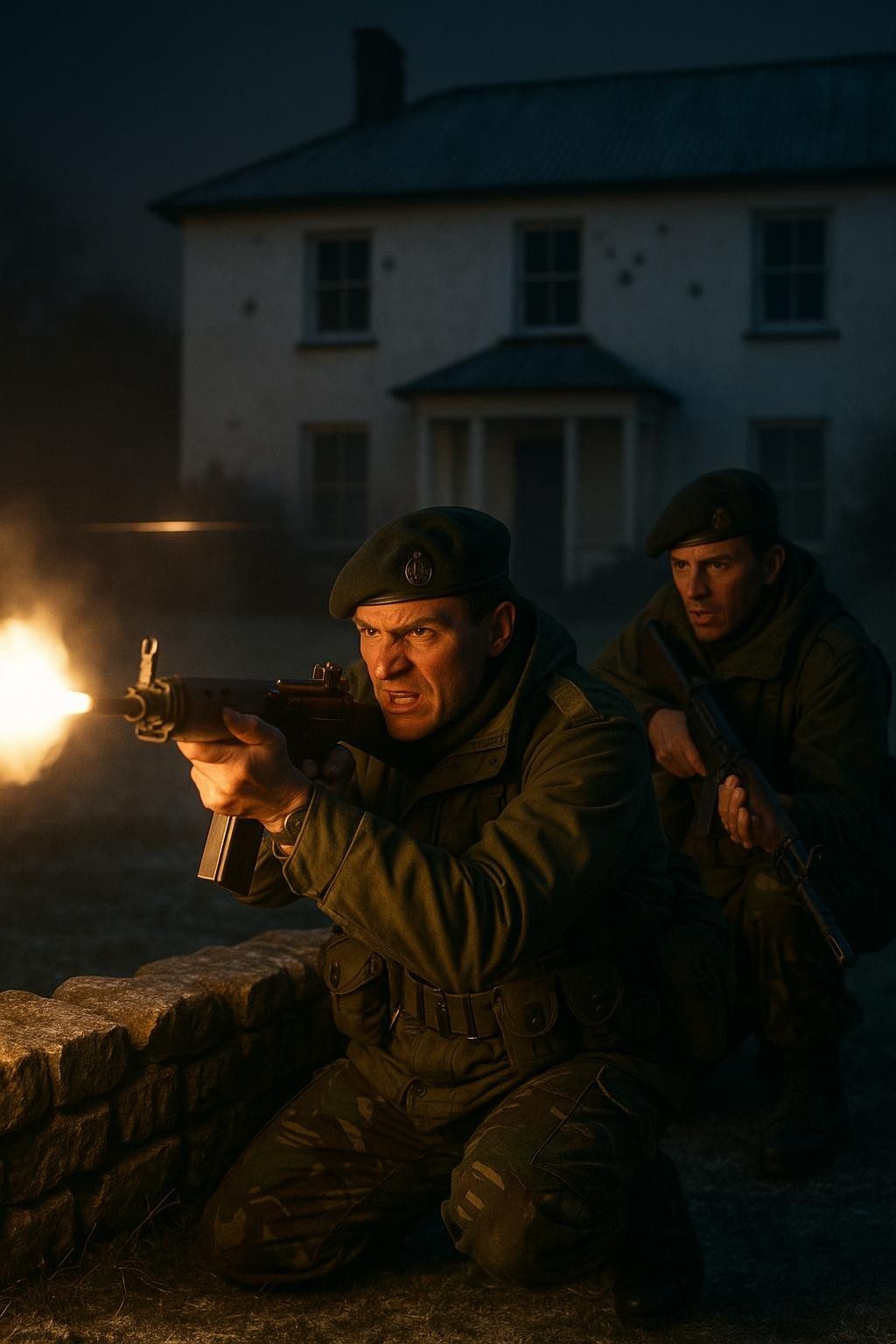
The first signs of the impending siege broke the chilly morning silence with the rattle of automatic gunfire. Argentine commandos slipped through the garden that bordered Government House, seeking a swift and decisive victory. But as one commando climbed the wall, ambition met its match. A Royal Marine, hidden among the shadows, opened fire, eliminating the vanguard of the attack. This initial confrontation exemplified the kind of fatal resolve that the invaders would encounter on this day.
Read next: The Day Napoleon Surrendered to the Ship That Shot at Him
For the Royal Marines, the enemy’s approach over the garden wall was more than just an attack; it was a test of their mettle. Every man knew that Government House was both a symbol and a prize. The defense was not merely about holding a building; it was about defending the honor of their nation and bringing might through tactical brilliance. As they crouched low behind sandbags and makeshift barricades, each Marine understood what was at stake, ready to fire until their last round was spent.
The Sound and Fury
As morning turned to noon, the quiet Falklands reverberated with the cacophony of battle. A staggering 6,450 rounds were expended in an attempt to repel the Argentine forces. Yet despite their valiant defense, the weight of numbers and the clamor of battle began to take its toll. The Argentine troops, too numerous and with heavier artillery, were battering the reinforced position with relentless intensity.
But inside the lines, a camaraderie forged in the fire of adversity held the Marines together. They moved like synchronized dancers amidst the chaos, loading and firing in unison, a testament to the rigorous training that had prepared them for this very moment. Even as the pressure grew and positions shifted, their defiance only flared brighter, each Marine believing their effort could shift the tides.
The Weight of Sacrifice
Despite a defense worthy of legend, it became clear that further resistance would only lead to unnecessary bloodshed among the civilian population. Governor Rex Hunt, aware of looming catastrophe, made the solemn decision to order surrender. The order, an unavoidable necessity, hung heavily over Lieutenant Mills and his men. They had stood against overwhelming odds, providing a stirring story of gallantry and fortitude that would echo through the corridors of history.
As they were led away under the watchful eyes of their captors, the Marines' spirit remained unbroken. They sang — a song of defiance, a song of unity — reminding each other that while the battle was over, their story would not end here. This scene was not one of defeat, but a profound statement of resilience and solidarity. It signifies how a small band of well-trained and determined individuals can rise up even in impossible circumstances, a message that transcends the immediate conflict and speaks to the broader human spirit.
This tale of courage and stubborn resistance highlights how the principles of strategy and valor hold as much weight as superior numbers or firepower. It reminds us that history is often shaped by those willing to stand firm, showcasing the relentless human capacity for courage against the towering facades of adversity. In these three extraordinary hours, the Royal Marines etched the Falkland Islands into memory as a theater of profound heroism, too vibrant to be left out of any textbook.