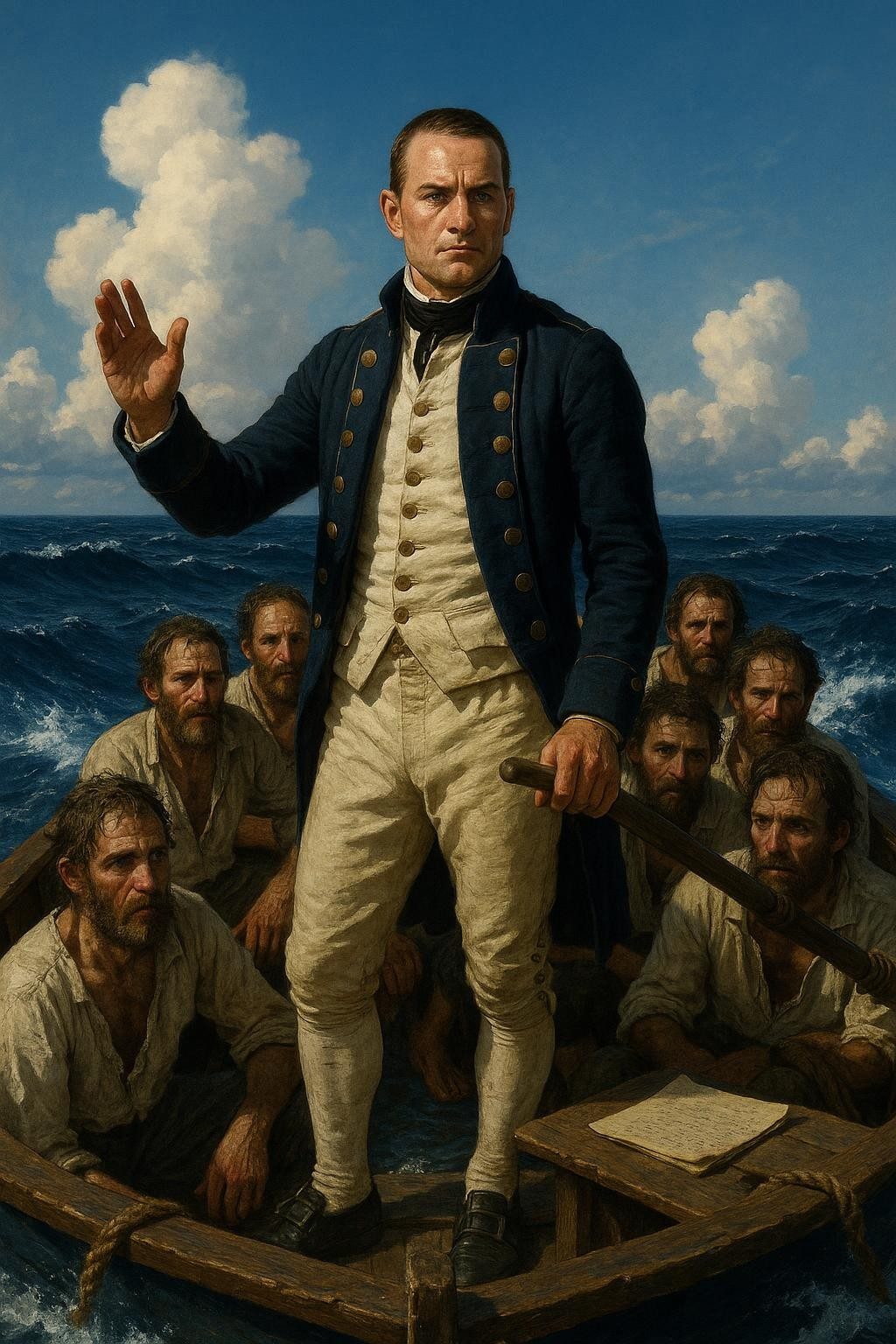
The salt spray stung their faces as the small open boat lurched over the swelling Pacific waves, the horizon stretching endlessly ahead in a daunting azure expanse. Civilized society seemed like a distant memory in this makeshift vessel where Captain William Bligh stood resolute, squinting against the noonday sun, his mind racing over the predicament they faced. The Bounty was gone, captured in mutiny, leaving Bligh and eighteen loyal souls marooned with scant supplies and a treacherous journey of survival looming ahead.
The Decision That Changed the Voyage
This perilous saga began on a fateful April dawn in 1789, when clouds brooded over the tumultuous waters of the South Seas. Bligh, an experienced mariner, awoke to the cold steel of a mutineer's blade. The mutiny, led by Fletcher Christian, had come — swift and brutal. Stripped of command and tossed into an overcrowded launch with his followers, Bligh was doomed to drift among the waves, not destined to return. Yet, it was amidst this chaos that he made a pivotal decision ensuring their slim hope for survival: rationing what little they had by allocating just 1 ounce of bread, wine, and a measly quart of water per day.
With only a sextant and a pocket watch to guide them, Bligh's navigational ingenuity would become their beacon of hope. They headed west, aiming for the Dutch settlement on Timor nearly 4,000 miles away, not merely driven by desperation, but steered by Bligh's unrivaled determination and sheer nautical prowess.
Survival on the Edge of Starvation
The open boat, small and fragile, carried them across the vast ocean while the sun tinted both the waves and skies in hues of fire during the mornings and evenings. Their journey was one of grim resolve, where even the scant rations became an everyday savior and torment alike. Men whispered prayers as they chewed slowly on their stale bread, conserving every crumb as a sacred necessity.
Read next: The Night the British Ate the President's Dinner
Bligh imposed a rigid regime of discipline to maintain hope and order. Rowing through the waters, the crew faced threats from scurvy and starvation, tempered only by Bligh's insistence that they remain optimistic and vigilant. The subtleties of their diet changed when seabirds chose unwisely to rest on their craft. Each catch represented a morsel of revitalization, though too rare to be relied upon as sustenance.
Staring Death in the Face
For those cramped in the little launch, storms brought both terror and a twisted form of sustenance. When torrents of rain descended, tepid water swallowed eagerly by parched throats offered transient relief from dehydration. Yet, the ominous shadow of death lingered in every tempest, the waves towering and threatening to swallow them whole, but with deference to Bligh’s steering, they persevered, finding islands occasionally to supplement their meager provisions with native fruits and roots.
Each day that stretched into another test of patience nudged them closer to the boundaries between survival and surrender. The resilience of Bligh and his men colored the relentless cycle of despair, their spirits tested as both courage and fortitude were stretched thin beneath the relentless tropical sun.
Loyalty in the Time of Trial
Amidst adversity rarely conceived by those securely swathed in comfort at home, bonds forged in hardship proved unyielding. The unity of Bligh and his crew manifested, defying the notorious stereotype of the defamed mutineer captain. Bligh, despite his stern reputation and struggle for authority, was a guardian to his men. His uncanny aptitude for recalling the treacheries of distant waters — honed through a lifetime at sea — transformed into a bastion of hope for his desperate cohort.
Read next: The Day a One-Eyed Admiral Sailed Into the Line of Fire
His leadership sealed within the crucible of crises not dwarfed by misfortune, Bligh's each command ceaselessly propelled them through the doubt shadowed distance of nautical miles. It was Bligh’s perception and constant reassurance that prevented them from surrendering to maritime despair until finally they beheld the lush coast of Timor, a sight almost too glorious to comprehend after such trials.
An Incredible Return Against All Odds
On their forty-seventh day at sea, the weary mariners sighted the long-awaited coastline — Timor. Bligh had delivered them across the merciless span of the ocean without casualty from starvation, an extraordinary feat deserving a chapter of its own in the annals of naval history. Such resilience proved that the human spirit, steered by an unwavering leader, could transcend hardship unseen by those who know of only comfort.
William Bligh's remarkable navigation and survival tale is more than a mere maritime echo; it is a reflection on the indefatigable spirit woven into the human psyche. It raises questions about the boundaries of endurance, leadership, and hope — sending ripples back through time from that surging Pacific, whispering of resilience that serves as a timeless lesson transcending pages and lifetimes. The sea had tried to swallow Bligh and his men, but he fed them strength and navigated them to safety, etching a legacy far more enduring than his mutinous misfortune.