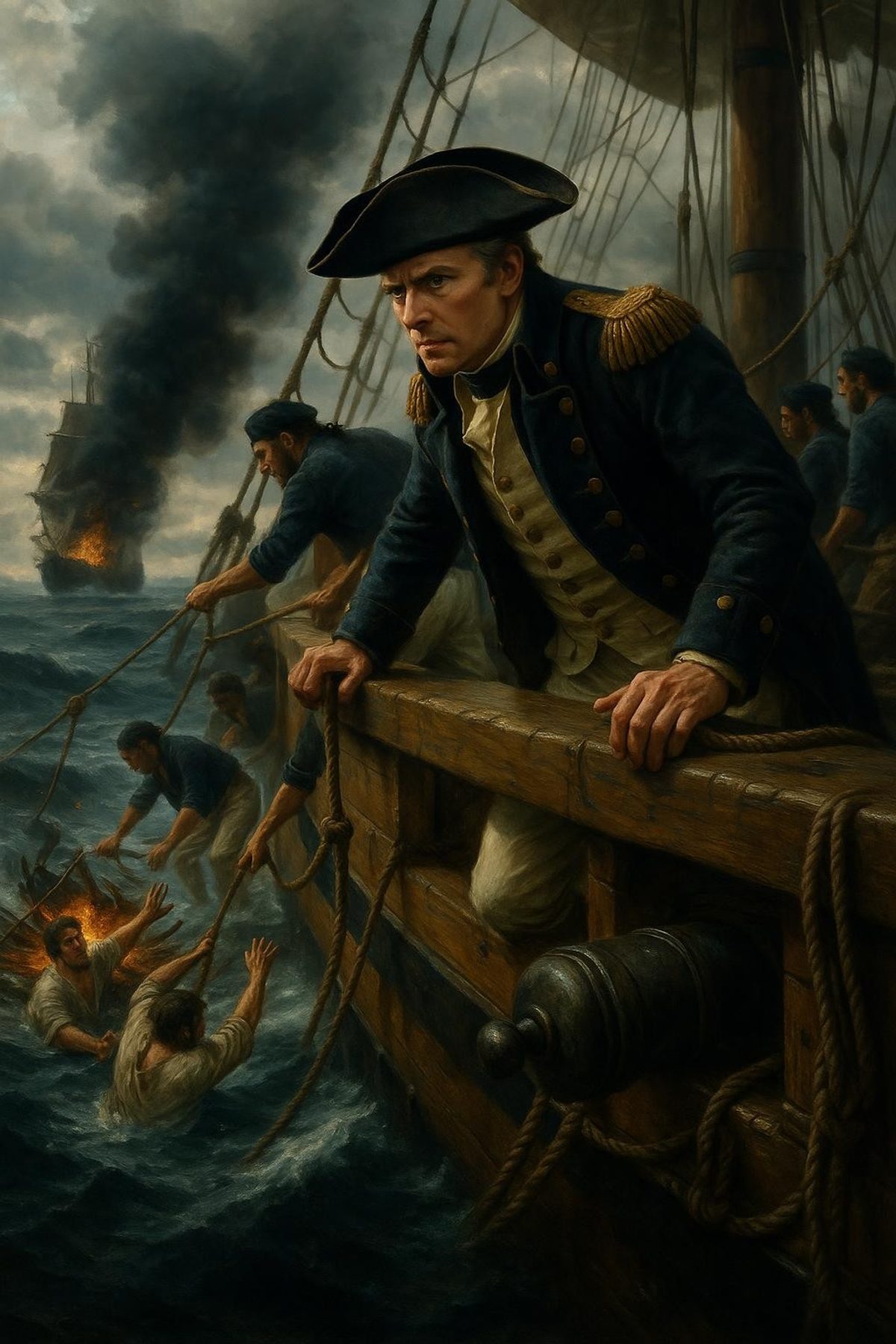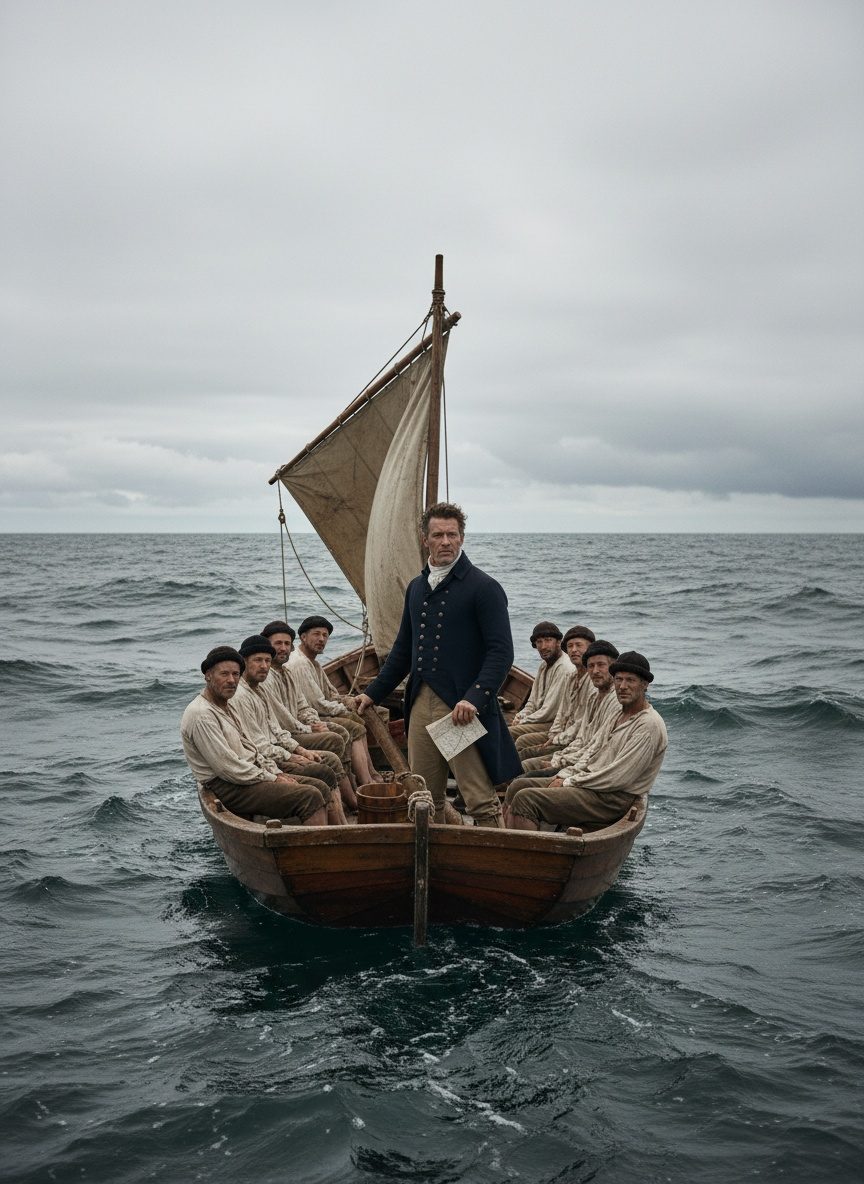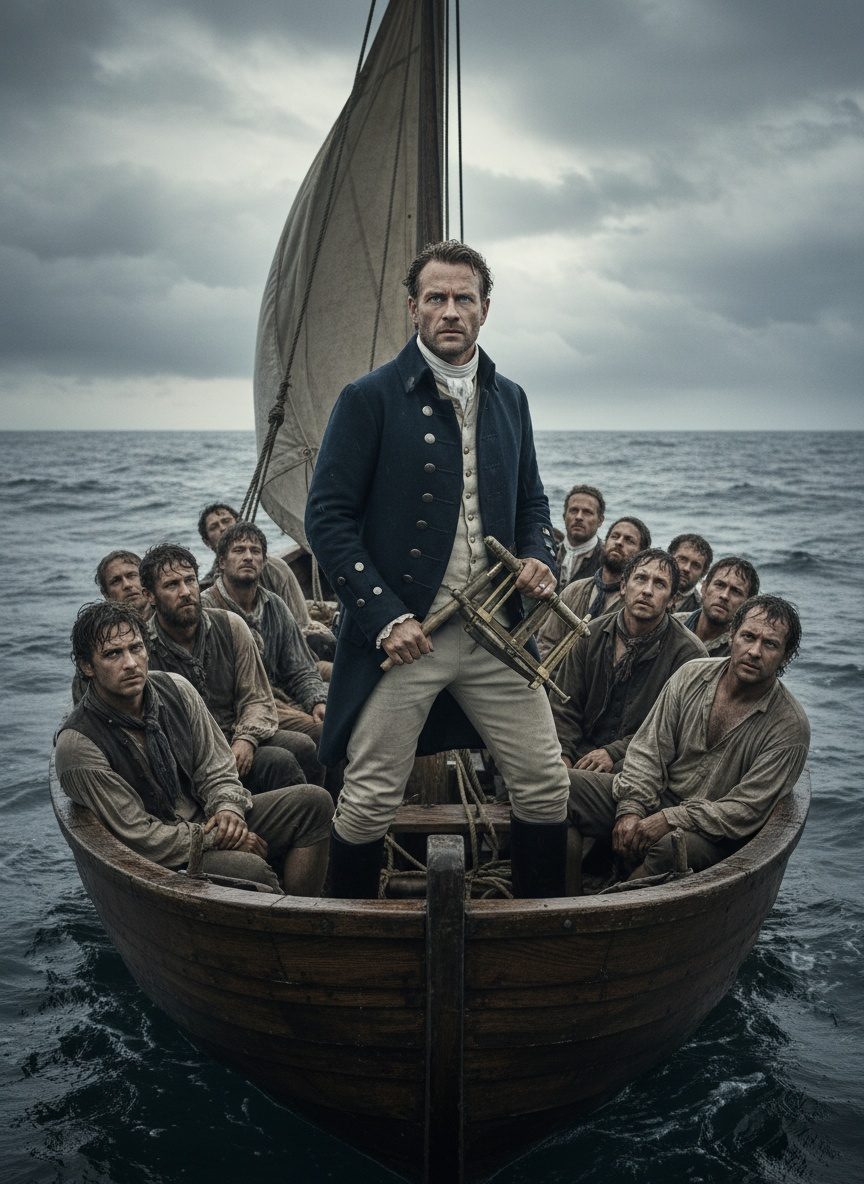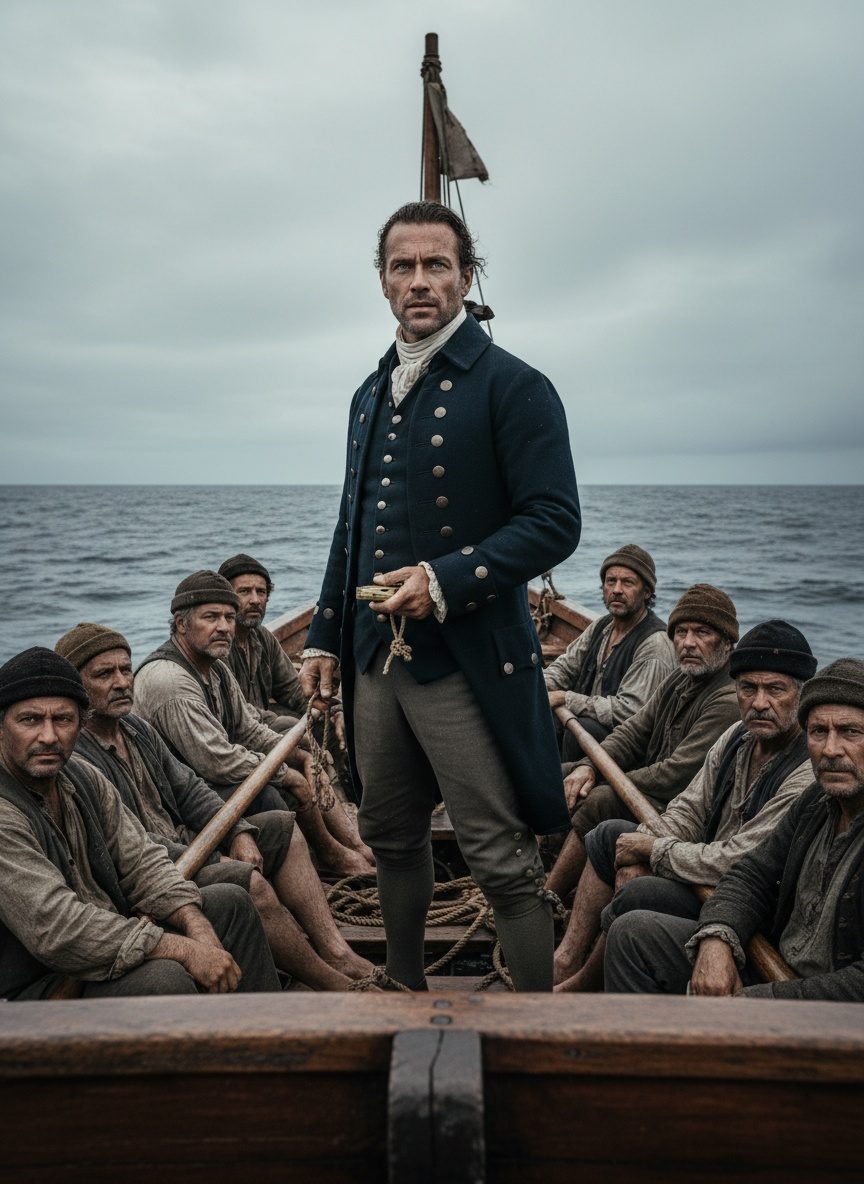
The ferocious waves pounded relentlessly against the fragile wooden launch as the relentless rain blurred Captain William Bligh's gaze. The howl of the wind screamed in his ears, threatening to swallow the pitiful cries of the seventeen other men huddled around him. With every ounce of resolve, Bligh clutched the rudder, steadying the small boat that tossed like a leaf on the vast open Pacific. Yet, amidst the chaos, his mind remained laser-focused on a singular task: survival.
The Mutiny That Cast Them Adrift
In April 1789, the world of HMS Bounty was turned upside down. A mutiny led by Acting Lieutenant Fletcher Christian forced Captain Bligh and his loyalists into an overloaded launch with limited provisions. It seemed like a death sentence to many—a perilous expulsion onto the open sea with no maps, scant rations, and more than 3,600 miles to the nearest European settlement. Yet, the mutineers inadvertently placed their victims into the hands of a man whose extraordinary leadership and unparalleled seamanship would defy the odds.
Bligh was no stranger to the unforgiving grasp of nature's fury. As a seasoned seafarer under the tutelage of the legendary Captain James Cook, he had charted treacherous waters. Now, facing a different kind of fray, Bligh had to navigate not only the tumultuous Pacific but the fracturing morale of his starving men. He quickly assumed a mantle of authority amid desperation, knowing that their survival hinged on crucial leadership from the outset.
Every Crumb a Lifeline
With only one week's worth of provisions, Bligh masterminded a ruthless regime of rationing that remains one of history's most remarkable acts of leadership under duress. Each man received a daily allowance of just a fraction of a pint of water and a meager 1-ounce of biscuit. As sustenance in the vast, salty abyss, these rations were both a cruel joke and a precious lifeline.
Read next: The Day Napoleon Surrendered to the Ship That Shot at Him
To maintain discipline and morale, Bligh meticulously recorded each crumb and drop—a practice not only of necessity but as an anchor of normalcy amid chaos. His constant encouragement and stern demeanor held a mirror to hope; each rationing ceremony served as a reminder that they were still alive, still fighting, still on a path to salvation.
Bligh knew that every decision counted—whether to search for rainwater or when to consume the limited supply of raw fish or occasional seabird that came their way. His steadfast self-control, refusing to partake more than any of his men, fostered a begrudging respect that bound the group in a reluctant but vital unity.
The Art of Navigation and Desperation
Navigating the open Pacific without charts simply added another layer of madness to their voyage. Yet where others saw an insurmountable obstacle, Bligh's experience shone. Relying on an astrolabe, quadrant, and his innate knowledge of the stars and currents, he plotted a course that scholars likened to threading a needle in a storm.
What made Bligh’s accomplishment exceptional wasn't just navigational prowess but his relentless psychological forethought. To combat boredom and despair, he tasked the weary men with small roles—watching the skies for landbirds or surveying the horizon for perilous reefs. By involving them in the journey's minutiae, Bligh set a rhythm that denied hopelessness a foothold.
Throughout the passage, moments of desperation loomed. Tropical storms lashed at their unity, while scorching sun and open blisters gnawed at resolve. Each day was a battle against the tangible specter of death and an exercise in the endurance of the human spirit. Yet, through scorned palms and lips, the cries of "land ahead!" eventually broke the grip of despair.
Miracle at Timor
Forty-eight grueling days later, against all conceivable odds and predictions, Bligh's crew sighted the distant peaks of Timor. Exhausted and skeletal but triumphantly alive, the journey culminated in one of the most remarkable feats of survival ever documented in maritime history. More than just a tale of seamanship, it was a testament to the indomitable power of the human will—the courage, leadership, and discipline needed to navigate adversity without losing one's humanity.
From that little launch on the unforgiving sea, the image of a lone figure struggling beneath a violet sky resonates today, more a lighthouse of leadership in turbulent times than ever before. As a commander who shepherded his men from the brink of oblivion to endurance redefined—William Bligh's legacy became an unforgettable benchmark for survival, singular determination, and unparalleled maritime expertise. His story, pulled from the forgotten pages of British naval history, reminds us that even when set adrift by the whims of fate, the resilience of the human spirit can steer us toward home, triumphing over adversity with unyielding grace.