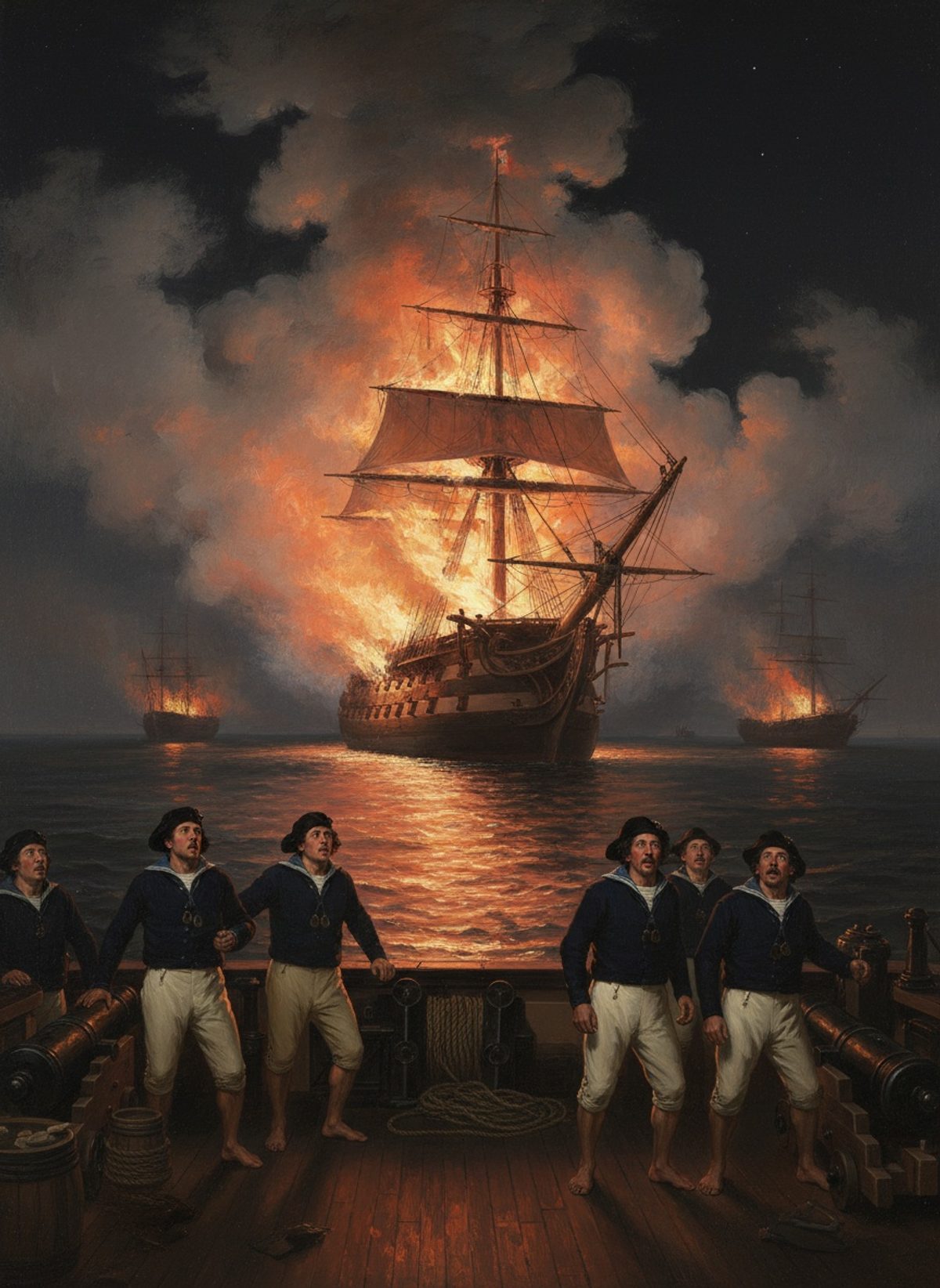
August 1, 1798. The full moon cast a silvery glow over Aboukir Bay.
This night, beneath the Egyptian sky, the tangle of fate and courage intertwined aboard the Orient, the grand French flagship. She was the pride of the French fleet, her decks flanked by towering masts, her hull bristling with cannons ready to unleash fury upon the enemies. Yet, the echoes that pierced through this serene moonlit scene were not that of gunfire, but cries of desperation and orders barked amid chaos. Napoleon Bonaparte's ambitions had carried the French Navy to this distant corner of the world, embroiling them in conflict with the formidable British forces led by Admiral Nelson.
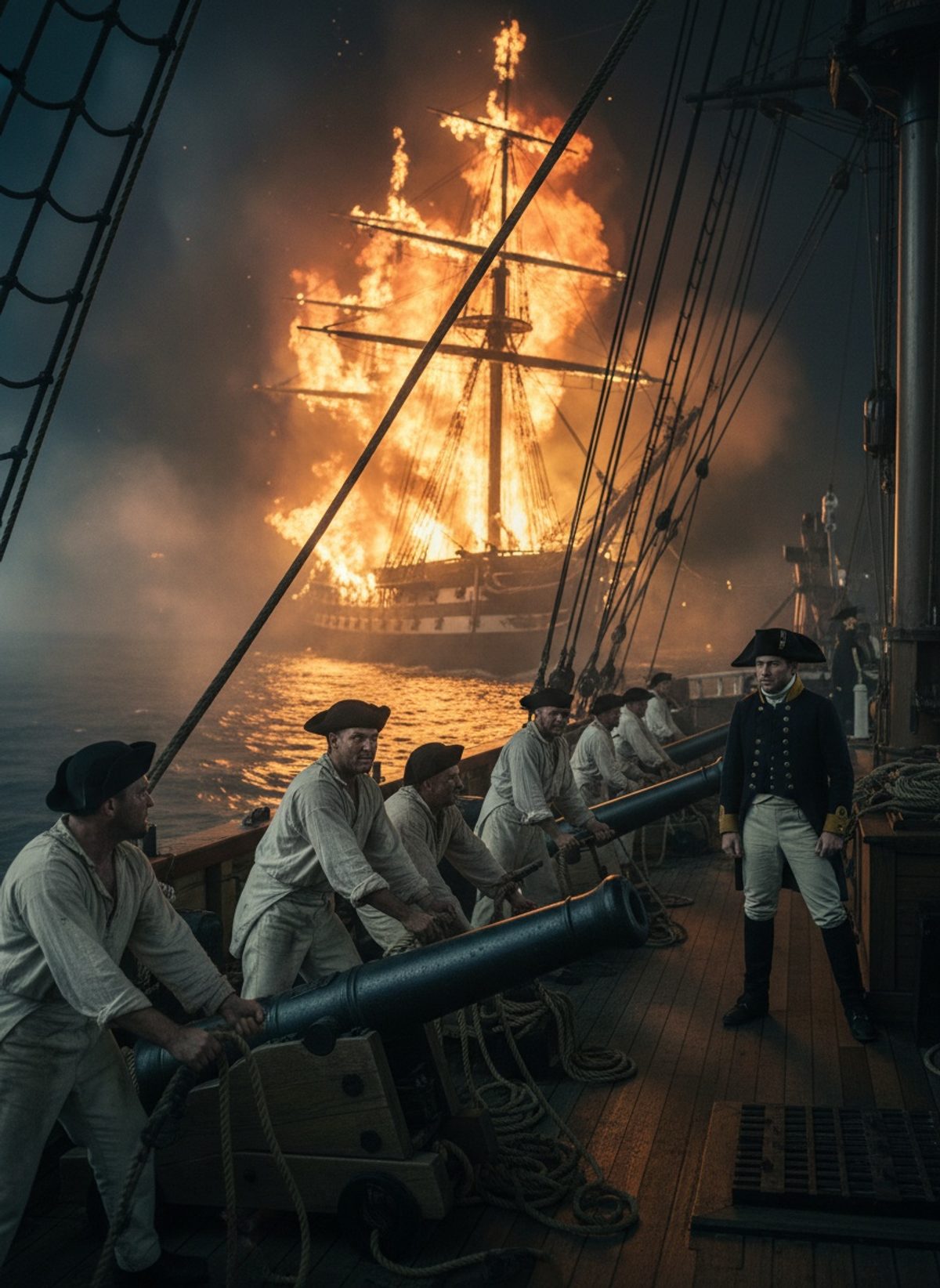
It was a deadly dance set to the rhythm of cannon fire. The British fleet, undaunted, had sailed into the bay, catching the French by surprise. Ships clashed as darkness fell, and the Orient, with her 120 cannons, played the part of the majestic yet vulnerable titan. As the battle reached its zenith, a terrible fate awaited the mighty vessel — one borne from a stray shot that found its nemesis below decks. There, whispering through the heart of the ship, was the fire that would soon transform her into a floating inferno.
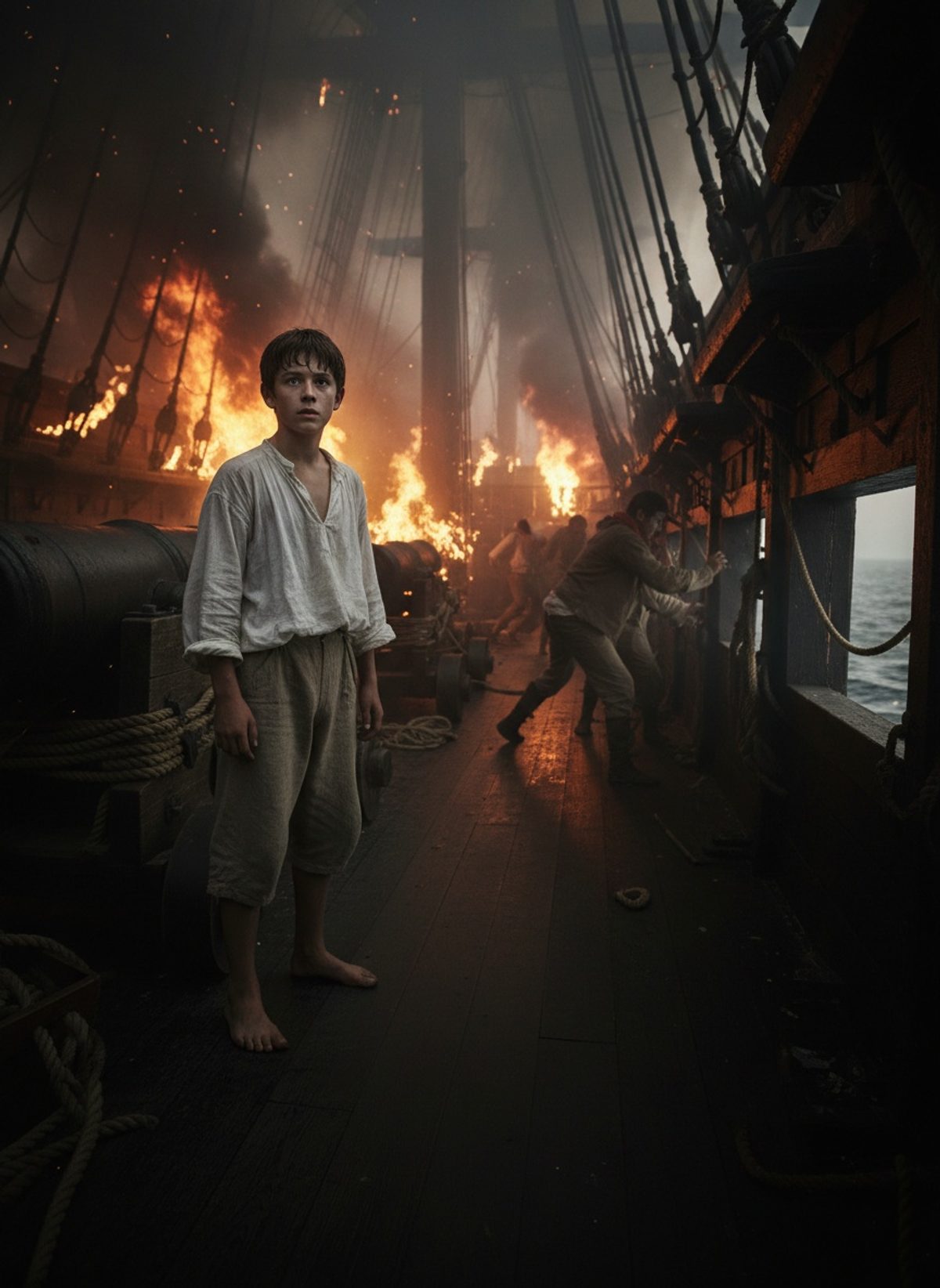
Amongst the tumult and tumultuous throng of sailors fighting to survive, a twelve-year-old boy stood his ground in the gunpowder-stained dimness of the ship’s magazine. Giacomo Casabianca, son of the ship’s captain, was a powder boy — a critical cog in the machine of naval combat, charged with ferrying gunpowder from the magazine to the ship's cannons. For a powder boy, speed and accuracy were lifelines, but this night, Giacomo’s task took on a grave, silent weight. Flames above deck threatened the ship, and smoke belched through the corridors where echoes of orders seemed to tremble on the brink of despair.
Read next: The Day a British Captain Shielded the Wounded From His Own Guns
The chaos was deafening, each explosion a terrifying reminder of what lay beneath those wooden planks. The deck was alive with frenzy; men dashed and clambered over each other in a desperate bid for safety. The crackling fire devoured the Orient, its presence growing malevolent and inescapable. With every breath, the air grew thicker, its acridity clawing at throats, and the relentless heat licked at skin like a pitiless sun bearing down upon all.
Amidst this deadly cacophony, young Giacomo stood resolute, refusing to abandon his post. His grip on duty was as unyielding as the bonds of family. He awaited orders from his father, Captain Louis Casabianca — orders that could never come. Unknown to the stalwart boy, his father had long succumbed to the chaos above, yet Giacomo's loyalty held him, a solitary sentry against the tide of fate.
Others pleaded and entreated, urging him to flee, but Giacomo’s heart heard only the duty instilled in it — the steadfastness of familial love intertwined with a sailor's creed. As the ship’s soul devoured itself, the youthful powder boy became a tragic pharos, guiding us through the twilight moments of human resolve that pierce through the darkest hours.
The Orient's fate was sealed. The blaze spread with insatiable hunger, reaching the very belly of the beast where Giacomo and his lifeblood task lay. At last, her sturdy timbers gave way, her masts crumpling in a thunderous cascade of shattered wood and embers, surrendering to the water that claimed her as its own. In her heart, the ammunition stores detonated in a monstrous crescendo, a brutal symphony that illuminated the midnight sea with a hellish flare, forever engraving this moment into the annals of naval lore.
Those looking upon the scene from the British ships were awestruck, their breaths stolen by the fire from God itself, lighting the heavens with its fury. As word spread, this tale of young Giacomo's valor became a poignant symbol of steadfast duty and the complexities of human emotion amidst unimaginable chaos.
The sacrifice of Giacomo Casabianca resonated through the corridors of power, echoing down the decks of many a ship. His story inspired not only the men of the sea but also stirred the hearts of those on land. For them, this tale wasn't just woven into the fabric of naval history but served as a grim reminder of the cruel interface between innocence and the brutality of war. His story transcended the details of a forgotten conflict, reminding generations of the enduring power of duty, honor, and familial bonds.
This night, remembered in poetry and prose, illuminated truths left behind in the darkness of the bay. Humanity's spirit, soaring or shattered across time, asks of us what we are willing to hold to our hearts when the storms rise. Would we, like Giacomo, remain steadfast in the face of our own battles, unswayed by the ravages encroaching around us? Perhaps that youthful beacon from ages past still beckons us, urging us to stand firm where we feel most called, awaiting our own higher orders amid the maelstroms of life.