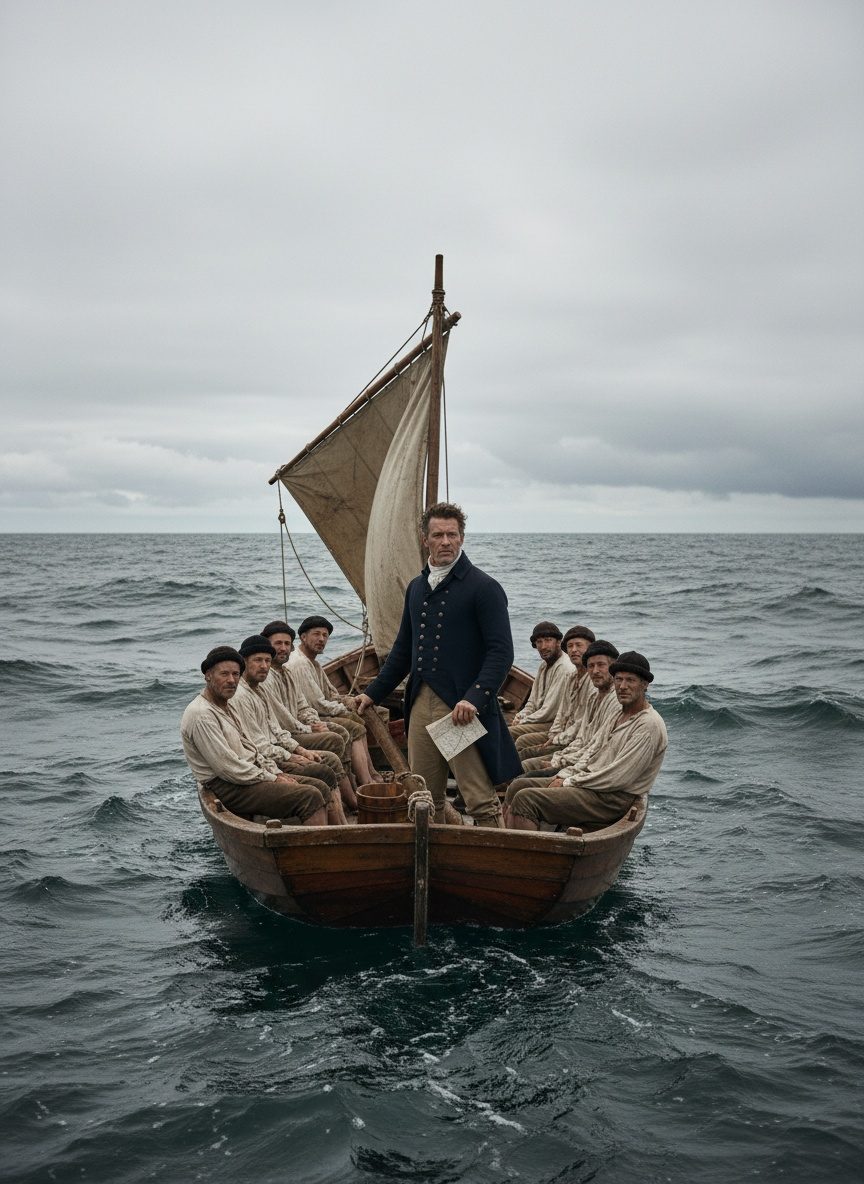
The evening of 1 August 1798 was one of oppressive heat and tension in Aboukir Bay. The Mediterranean sun had dipped below the horizon, leaving a sky awash with bruised purples and fading embers. Gentle waves lapped endlessly against the French and British vessels anchored or prowling the waters, almost as if heralding the brewing tempest. Here, off the coast of Egypt, natural stillness belied the explosive confrontation that was about to shatter the night. For the French, this was a crucial foothold from which Napoleon Bonaparte hoped to strike at India's riches and British dominance. For Rear-Admiral Horatio Nelson, it was a chance to cripple his most formidable enemy before they realized their imperial ambitions.
Napoleon's Ambitious Dream
In 1798, the world watched as Napoleon Bonaparte sought to expand his territorial grasp beyond the European continent. His audacious plan was to invade Egypt, not merely to make it a jewel in France's crown but to carve out a backdoor route to British India, undermining British trade routes and colonial interests. With 40,000 men, the French army marched through the desert, aiming to establish dominance over the region. Aboukir Bay was central to this scheme, a strategic location meant to cement French influence in the East.
However, these ambitions unwittingly painted a target on their naval backs for Horatio Nelson, the eminent British Rear-Admiral who had been tirelessly stalking the Mediterranean in search of the elusive French fleet. Napoleon's campaign was bold, almost recklessly so, assuming that once Egypt was secure, the riches of India would be within his grasp. Yet, it leaned precariously on maintaining naval superiority — a fact not lost on Britain's strategic masterminds or the eagle-eyed Nelson.
The Hunter Strikes in Ragged Twilight
Nelson's reputation for audacity was well-earned, and his decision to engage the French fleet at Aboukir Bay proved no exception. Once the topsails of the French ships were spotted, he disregarded the recent setting of the sun, launching an attack that defied the conventional rules of naval engagement. Darkness would usually halt even the bravest admirals, but Nelson understood the value of surprise and chaos. He had found the French at anchor, potentially at their most vulnerable.
Read next: The Day a Crippled Sailor Held the Line at Trafalgar
The British fleet pressed the attack with fierceness, engraving the skills of seasoned mariners into the annals of naval warfare. As cannon fire echoed across the water, sparks flew in the encroaching night, casting fleeting illumination on the faces of sailors. To attack despite dwindling daylight was a daring gamble, one most would consider risking everything on. Yet, it was a risk wrapped in calculated shrewdness; Nelson knew that disrupting the French positioning during nighttime could spell a strategic coup against Napoleon.
Fire and Fury: The Fall of the Orient
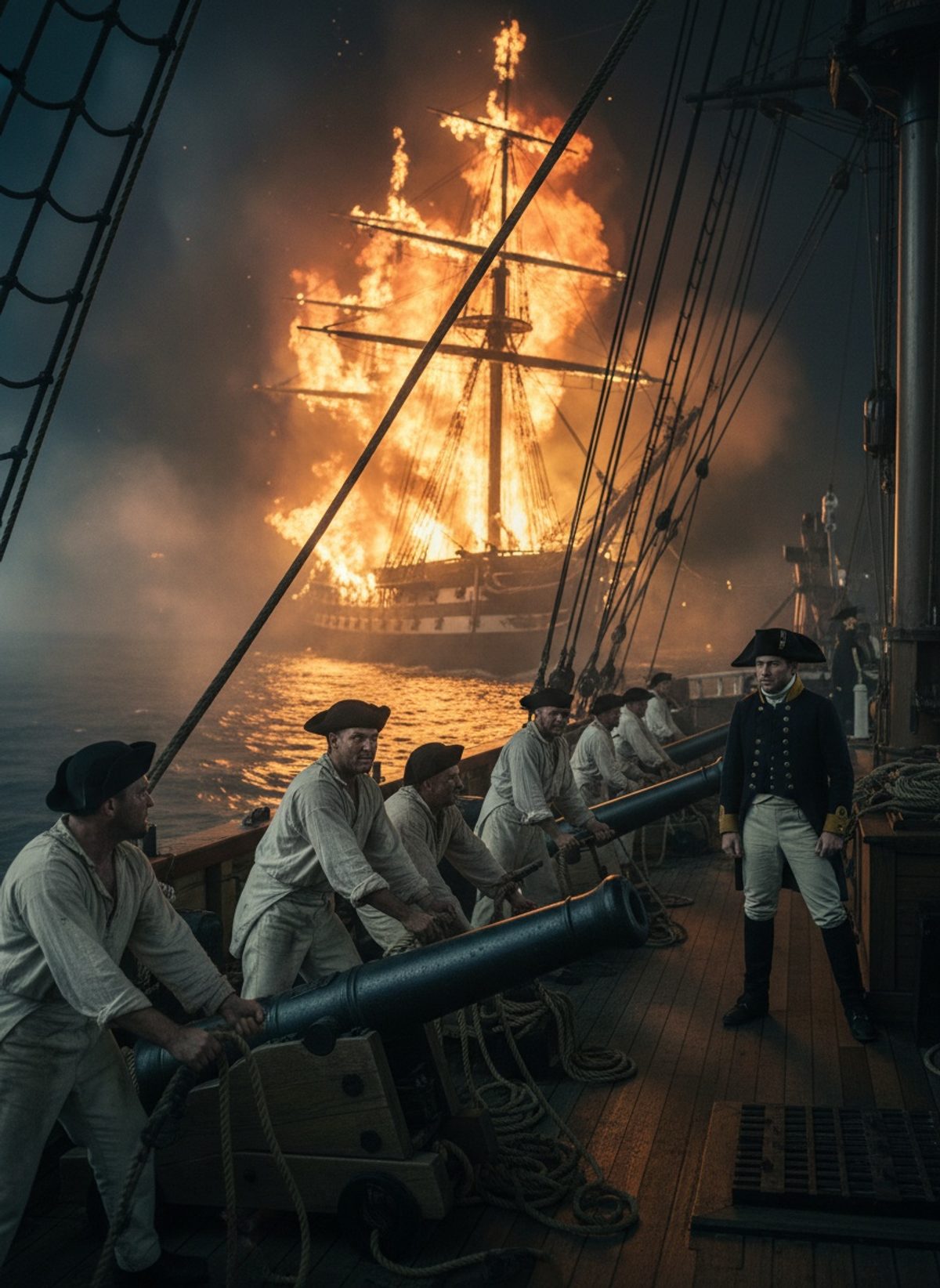
Amongst the chaos of the battlefield, a spectacle of horrific beauty and tragic might transfixed both fleets. The French flagship, the Orient, stood as the largest warship in the world, a proud symbol of naval strength and engineering prowess. Yet, even the mightiest vessels fall to iron and gunpowder. As the inferno consumed the ship, it culminated in a cataclysmic explosion that would etch itself into the memories of all those present.
The destruction of the Orient was violently majestic; the fireball reached for the heavens as if the very air seared with its heat. Its loss was more than just a tactical defeat — it signified the unraveling of Napoleon's Eastern dreams. So significant was this loss that fighting ceased momentarily; even amidst the battle, sailors on both sides paused in awe, their eyes drawn to the unscripted grim opera that played out before them. In most battles, the gunfire and clashing swords might dominate their recollections, but here, in Aboukir Bay, it was fire and devastation that stole the show.
A New Dawn, A Shattered Dream
When dawn broke, it was over a transformed theater. The sun revisited Aboukir Bay to unveil a scene drastically altered by the night’s chaos. Once-rigid lines of warships were reduced to skeletal hulks. Thirteen French ships of the line had been reduced to two, and alongside them, Napoleon’s grand aspirations lay alongside their wreckage on the seabed. The Battle of the Nile, as it came to be known, was a tactical masterpiece of unexpected strikes and daring holds.
Yet, this was more than a military triumph — it was a reshaping of geopolitical landscapes. The defeat sealed the fate of France's influence in the East and safeguarded British dominance in Asia. The implications of Nelson's victory rippled far beyond the waters of Aboukir Bay. His legacy was not just written in the lines of ship manifests and battle reports but in the strategic rethinking it forced upon nations.
In the annals of history, the events of that night become a poignant example of how resolve and ingenuity can flick the burning torch of ambition from one imperious hand to another. The story of the Battle of the Nile is not just about who controlled the seas but about how the blows of a single night can set empires adrift and cast dreams into an ocean of uncertainty. This unfaltering daring reshaped the future — altering trade, dictating the course of nations, and flickering to life against a backdrop of fire, war, and a chance seized with fearless determination.