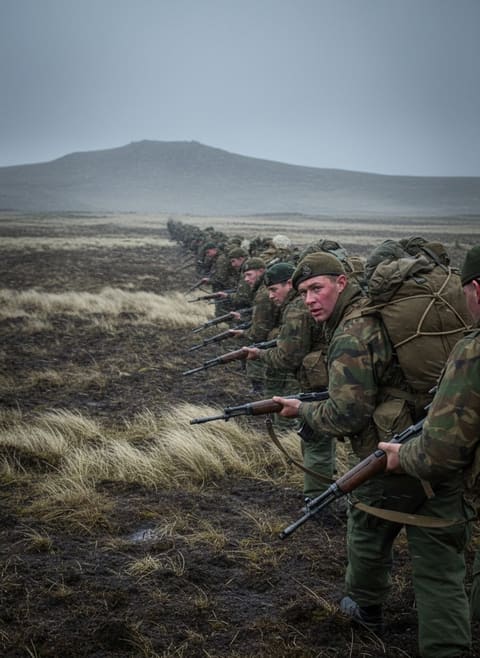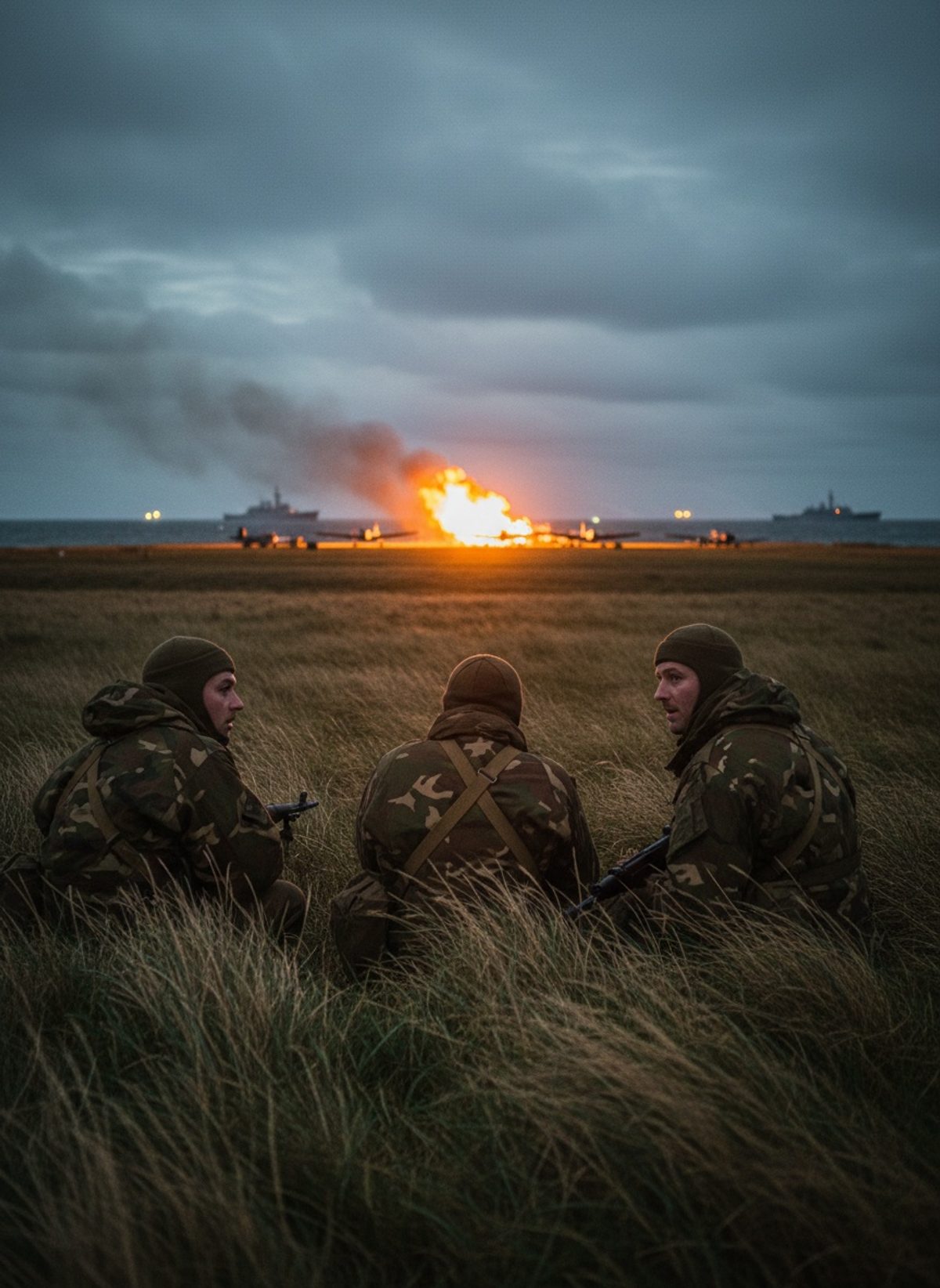
The night sky over Pebble Island was shrouded in a cloak of thick clouds, obscuring any glimpse of moonlight. A chilling wind whispered across the barren landscape, carrying with it the distinct scent of the sea. Shadows danced like phantoms across the rough terrain as waves crashed relentlessly against the shore. It was a night that begged for stealth and silence—both of which 45 men from D Squadron, 22 Special Air Service (SAS) had mastered over their storied history.
At stake was the Royal Navy's strategic maneuverability in the Falklands War. As the Argentine Air Force set up makeshift operations on this desolate strip of land, including fierce Pucará ground-attack aircraft and T-34 Mentor trainers, the British forces knew they had to act swiftly. One mission stood clear: disable these air assets before they endangered further operations. And so, under the cover of darkness on 14 May 1982, three Sea King helicopters knifed through turbulent winds towards their target.
The Prelude to an Extraordinary Raid
In the days leading up to the operation, reconnaissance had been crucial. On 10 May, 8 members from the Boat Troop, D Squadron, conducted a daring infiltration via Klepper canoe, their silent approach revealing valuable insights about the terrain. They found that strong headwinds would slow the helicopter fly-in from Hermes, and that the time available for the raid had shrunk to a mere thirty minutes, instead of the ninety they had hoped for. Priorities were adjusted: neutralizing the aircraft became imperative, with other targets deemed secondary.
Positioned on the HMS Hermes, the elite force prepared for their mission. The stakes were high; reconnaissance flights from the Argentine aircraft based on Pebble Island could compromise the impending British landings on the East Falkland. The decision was made to undertake a high-risk, high-reward operation reminiscent of the SAS's World War II sorties in North Africa. The outcome of the raid could tilt the balance in favor of the British, shaping the course of this contentious island conflict.
Read next: When the First Gurkha Recruits Earned Their Cap Badge, 1816
A Calculated Insertion into Hostile Territory
The three Sea King helicopters, designated from the 846 Naval Air Squadron, departed from HMS Hermes with the precision of a well-oiled machine. The men of D Squadron were a mosaic of steely focus, their gear rattled softly as they neared their drop point—a mere 3.7 miles from the target airstrip. Once on the ground, they split into groups: Mountain Troop was tasked with aircraft destruction, while others formed a protective cordon.
The element of surprise was their greatest ally. As the raiding party crept towards the airfield, they spotted a solitary sentry. Luck favored the SAS; they went unnoticed as they methodically laid charges on seven aircraft. The demolitions involved thermite grenades, wrapped deftly in PE-4 explosives, which the operatives placed within the cockpits. Coolly, they moved with the urgency of men who knew the weight of their mission rested on their shoulders.
The Cascade of Controlled Chaos
As planned, the operation exploded into life with the silent synchronization of a ticking clockwork. The SAS opened fire with M16 rifles and M203 grenade launchers, the air thick with the acrid smell of gunpowder. Cockpits shattered, aircraft undercarriages disintegrated, and a cacophony of destruction echoed across Pebble Island. Five aircraft were immediately destroyed; others were left battered and unfit for flight.
Following the ground assault, HMS Glamorgan’s guns roared to life. The artillery pounded the airfield with high-explosive shells, targeting the Argentine positions, an ammunition dump, and fuel stores. Confusion reigned among the Argentine troops, who sought shelter from the blistering barrage. The defending forces were unable to effectively retaliate, marking the raid as an indisputable tactical success.
Departure Under Duress
As the smoke of destruction mingled with the night air, the SAS team regrouped. It was time for their exfiltration—on the same helicopters that had dropped them off, lifelines back to the floating fortress of HMS Hermes. The mission had seen one casualty: a British soldier wounded by an improvised explosive device set by the Argentines. Despite the injury, their resolve remained ironclad as they carried their wounded comrade back to the recovery site.
The raid's timing was immaculate; every member of the raiding party boarded the Sea Kings before dawn broke over the Atlantic. Lifting off under the cover of the receding night, they left nothing but chaos and disabled aircraft in their wake. The Argentine air capabilities on Pebble Island lay in ruins—yet another feather in the cap for the storied regiment of SAS operatives.
The Long Shadow of Valor
In the ensuing days, as British forces focused on the Falklands, the raid on Pebble Island was lauded as a textbook example of precision and daring. From the six FMA IA 58 Pucarás to the final dust settling over the empty airfield, the mission highlighted the SAS's unique blend of tactical innovation and audacity—fueling their reputation as one of the most formidable units ever formed.
Read next: When the Far East Prisoners Heard the Guns Go Silent, 1945
Captain Gavin Hamilton, one of the officers involved in the operation, would go on to demonstrate similar valor at the skirmish at Many Branch Point, although tragically he would not survive the conflict. The SAS troopers’ stories of gallantry, sacrifice, and unyielding resolve continue to echo within the annals of military history.
As clouds disperse and sunlight begins to tinge the horizon, the tale of the Pebble Island raid fades into the realm of memories yet remains ever poignant. It stands not only as a paragon of military precision but as a reminder of the relentless human spirit poised against adversity. Such stories—deftly hidden in between chapters of grand history—are the threads that weave the larger tapestry of an empire's journey. For those who read, listen, or remember, these threads create the intricate patterns of our past, the lessons yet untold by textbooks or conventional narratives.
Last week, British paratroopers were back on the Falklands, rehearsing a landing for the first time in years.
Part 6 of 24: One Falklands story a day until Remembrance Sunday