Bravo November was just one of 30 Chinooks ordered by the British in 1978. It became legendary.
To anyone not familiar with military aviation, ZA718 would have seemed like just another Chinook helicopter—a hulk of metal with spinning blades, its form neither graceful nor sleek. In reality, across its decades of service, it ferried troops, plucked wounded soldiers from combat's grasp, and was piloted by some of the bravest aviators of its time. Yet, its legend was launched into the skies on a fateful day during the Falklands War.
The Sinking of Atlantic Conveyor: A Critical Blow
In April 1982, Bravo November, along with three other Chinooks from No. 18 Squadron RAF, embarked on their journey south to the Falkland Islands aboard the container ship SS Atlantic Conveyor. The atmosphere was thick with tension as news broke that Argentine forces had invaded the islands. The rapid response of British forces, under Operation Corporate, was vital.
Inside the Atlantic Conveyor, the Chinooks were enveloped in rubberised jackets for protection, their rotor blades carefully stowed inside their airframes. While en route, technicians refitted the blades at sea—a first for such a complex job in transit. Alongside the helicopters, the ship was laden with other air assets: six Wessex, eight Sea Harriers, and six Harrier GR.3s, as well as the maintenance equipment and vital stores necessary to sustain warfare at the world's edge.
Read next: When McLellan Raised His Camera on the Western Front, 1917
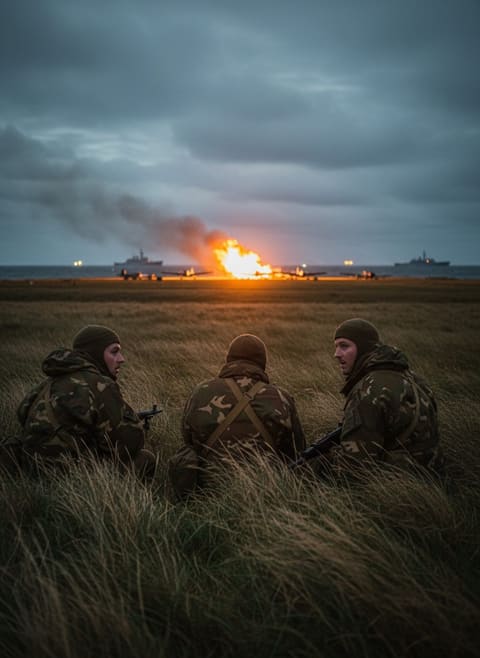
But on 25 May, Argentine Navy Super Étendards swooped in to unleash a deadly duo of Exocet missiles. The attack was swift and the devastation severe. Fires consumed the Atlantic Conveyor, resulting in a tragic loss of 12 brave crew members and an irreplaceable load of military hardware. Three of the four Chinooks went down with the ship, their potential never realized. Yet, by some unforeseen chance, one had escaped—Bravo November was in the air when disaster struck.
The helicopter landed aboard HMS Hermes, the aircraft carrier that itself was a hub of activity and adrenaline. In the blink of an eye, Bravo November transitioned from one of many to an irreplaceable asset, quickly earning the moniker: "The Survivor."
On the Wings of Survival: A Lone Chinook's Burden
The crew of Bravo November, confronted with a daunting reality, resolved to make the most of the single heavy-lift helicopter the entire British force had left. Without spares, without service manuals, lubricants, or even the necessary tools, the Chinook's mission profile was daunting. The stakes were massive, and the responsibility each flight carried might have been enough to weigh down lesser aviators. But this was no ordinary operation, and these were no ordinary men.
Throughout that grueling campaign, Bravo November flew tirelessly, compensating for the ominous absence of its sister helicopters. Over the Falkland terrain, often inhospitable and unpredictable, she ferried roughly 1,500 soldiers into the cauldron of war and hauled 95 battered and bruised casualties away from it. She took 650 prisoners of war and conveyed 550 tonnes of essential cargo where vehicles couldn’t tread.
Yet in an environment marked with hazards, the closest brush with eternity occurred one starless night. Squadron Leader Dick Langworthy controlled Bravo November with Flight Lieutenant Andy Lawless as co-pilot, their mission obscured by an encroaching snowstorm. With the altimeter malfunctioning, the Chinook descended unforgivingly until it impacted the sea surface at about 100 knots. The ramifications were immediate: water drenched the engines, the co-pilot's door was ripped clean off as antennas and communication went dark.
Langworthy's prowess in disaster saw them through. By harnessing instinct and skill, he succeeded in salvaging the Chinook from the watery grave within which it was destined. Bravo November limped back for repairs, proving its determination for a second time. This resilience was acknowledged when Langworthy received the Distinguished Flying Cross for his valor and composure—a decoration with tragic irony, as he would succumb to a heart attack less than a year later, still stationed at Port San Carlos.
Legacy Above the Clouds: A Chronicle of Valor
The significance of Bravo November’s endurance didn’t end with the Falklands. Instead, her story extended over the threshold of 20 years into the new millennia and new wars. She was the first British helicopter to land troops in Iraq during Operation Telic, airlifting Royal Marines to the Al-Faw peninsula to wrest control of strategic oil facilities before they could be annihilated. Squadron Leader Steve Carr at her helm then added the second Distinguished Flying Cross to the aircraft’s storied legacy.
Read next: When Flight Sergeant Kane Dropped a Flag Into the Dark, 1945
Years meandered onward, yet Bravo November soldiered on, adding Afghanistan to her operational theatre. In 2010, during action under Taliban gunfire, she graced turbulent skies as Flight Lieutenant Ian Fortune braved not only enemy fire but a round that struck his helmet's night vision goggle attachment. Despite the bludgeon, he completed a hazardous evacuation, the third Distinguished Flying Cross testimony to both man and machine.
The end came in March 2022, when Bravo November, subtly transformed through myriad upgrades but still inherently the bastion that survived a missile strike's fallout, was retired. Her journey would pause to await exhibition in 2027 at the RAF Museum Midlands—a silent homage to what she embodied.
Why does the tale of Bravo November resonate with such permanence? Because there’s wonder in a machine transcending its utility. Because amid the relentless push and pull of conflict and peace, an engine embodied by metal and rivets can remind us of the relentless human spirit and an unyielding quest for survival against unforgiving odds. Sometimes, in the annals that whisper louder than the textbooks, a machine finds life—a breath that transcends the elements from which it is amalgamated, inspiring stories recounted for generations.
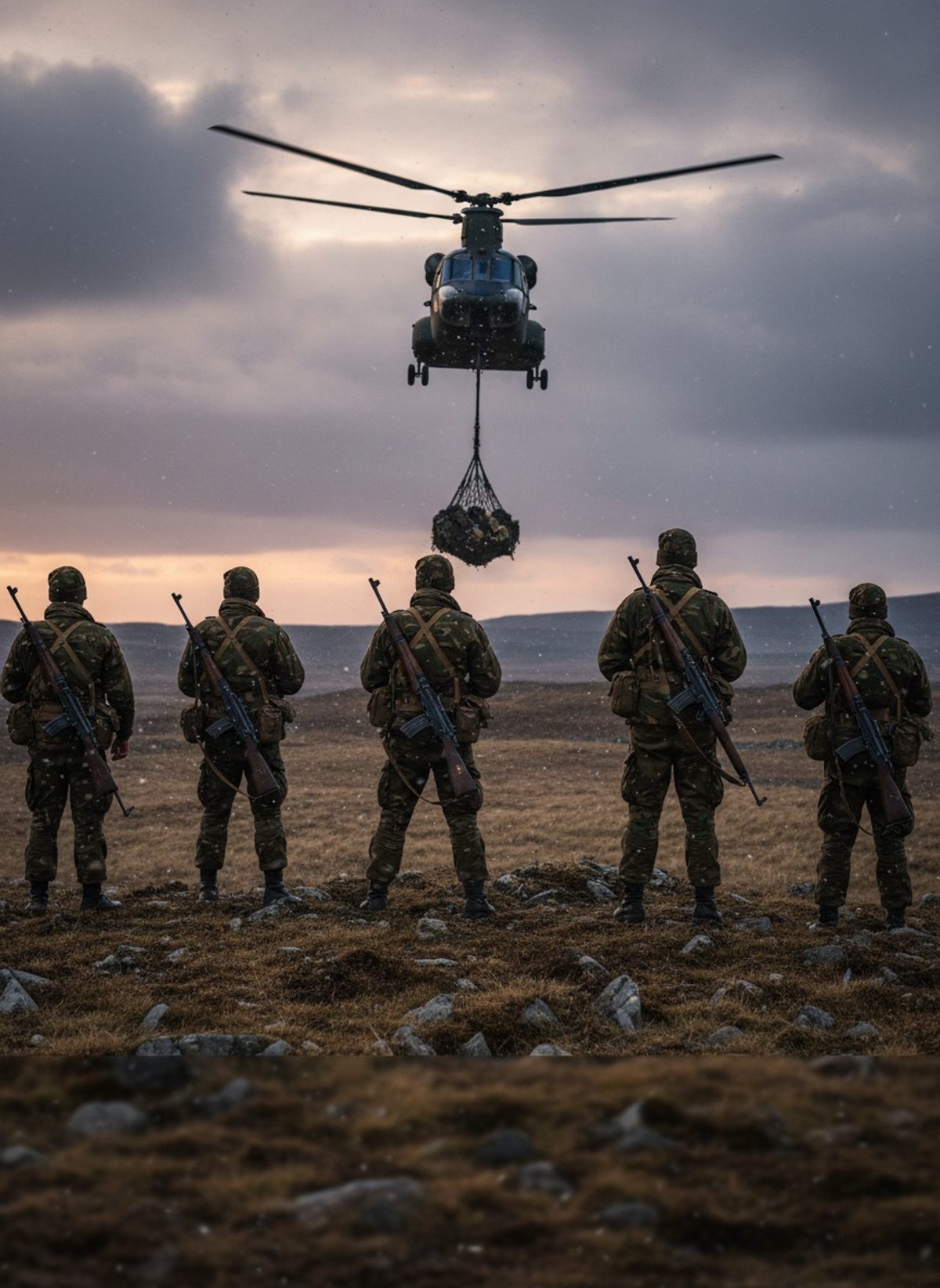
Earlier this month, British paratroopers rehearsed a landing on the islands where it earned its name.
Part 12 of 24: One Falklands story a day until Remembrance Sunday