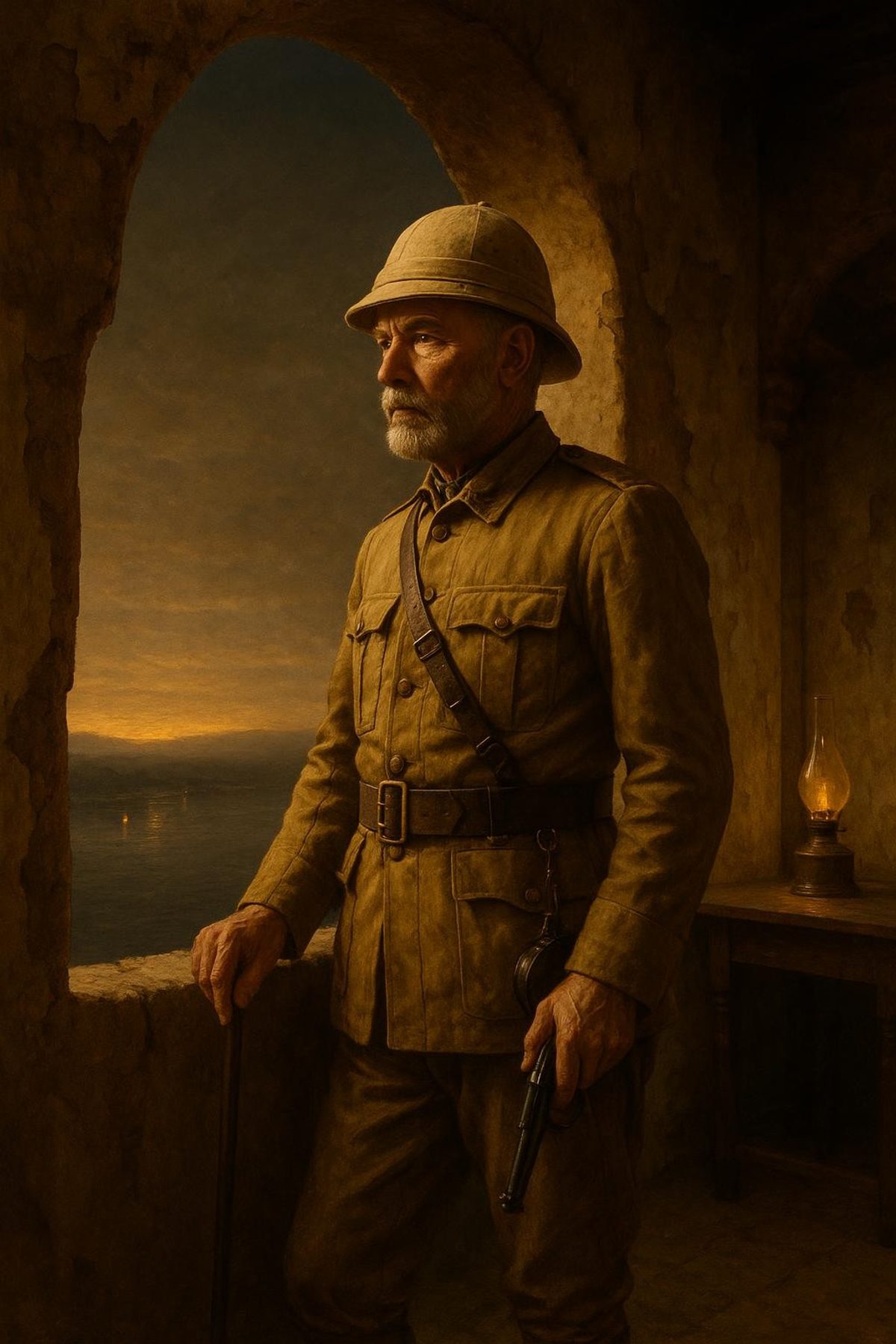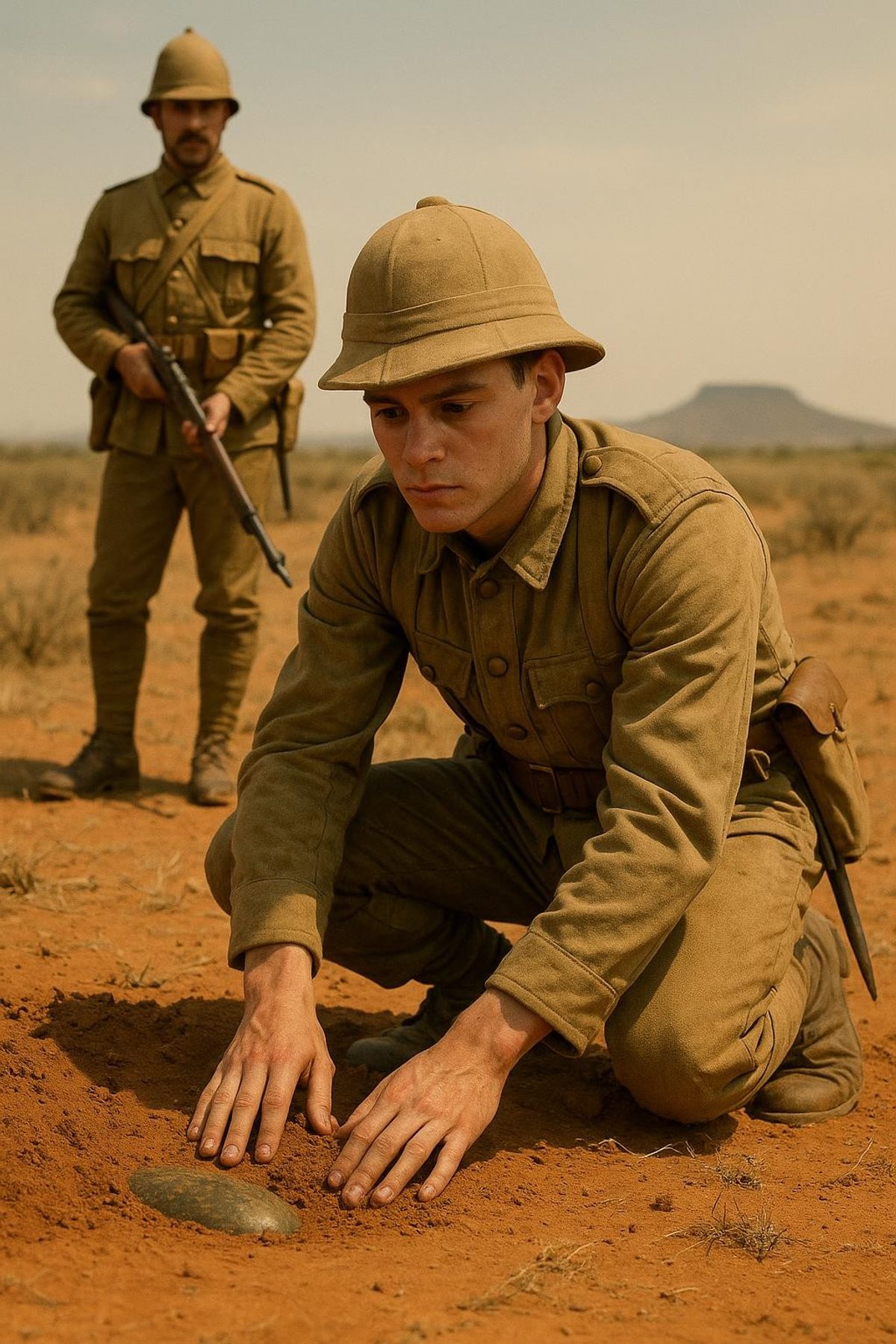
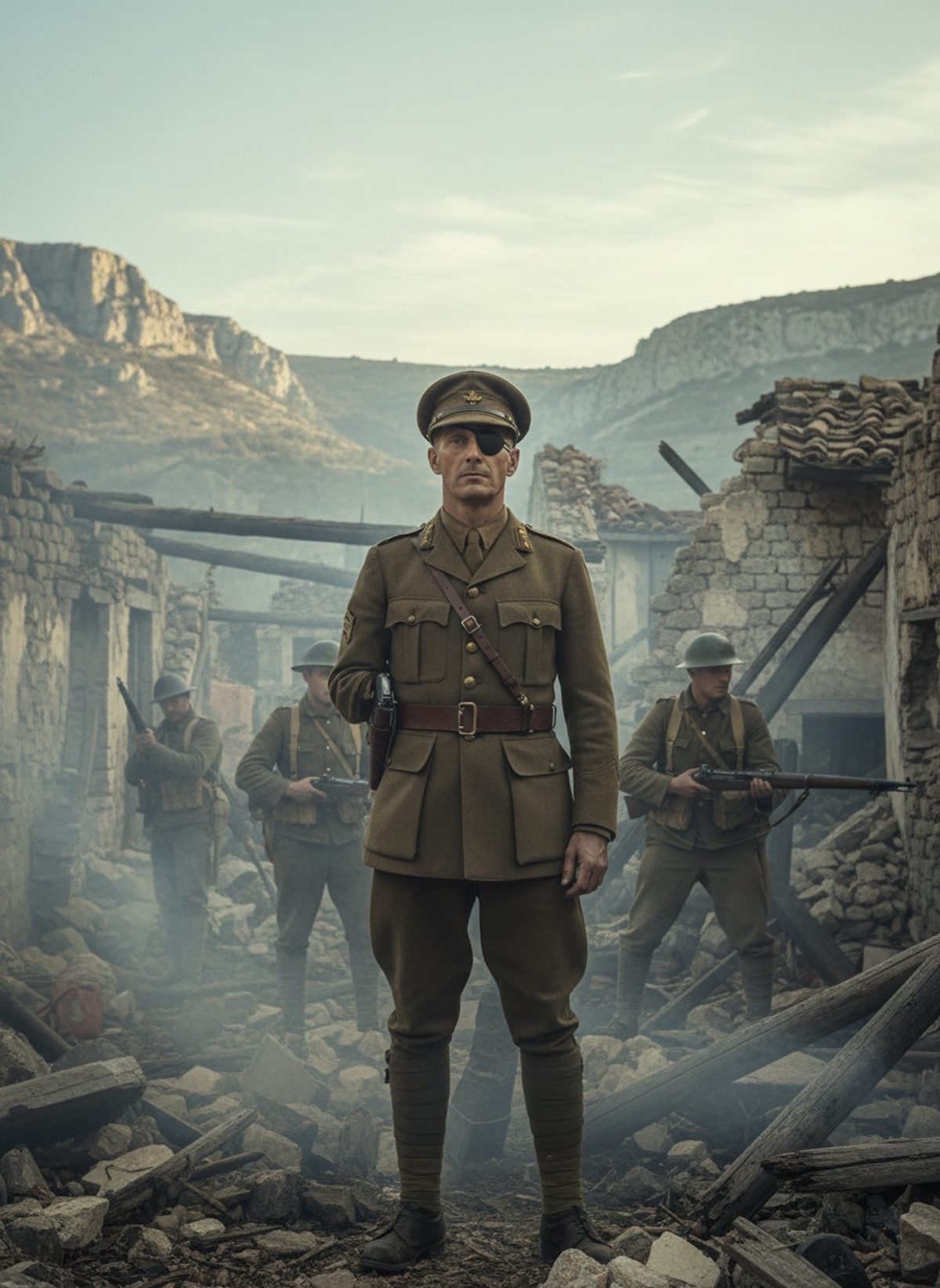
To say Adrian Carton de Wiart was resilient is a drastic understatement. He often seemed more myth than man, yet he was very much flesh and blood—despite the scars and stories that indicated otherwise.
The Unyielding Soldier
The Asiago plateau, nestled amid the haunting beauty of northern Italy, was no stranger to the echoes of cannon fire by 1918. It had witnessed battles that tested the very limits of human endurance and strategy. Among the many figures of World War I, few stood out like Adrian Carton de Wiart. With a body bearing the maps of past wounds, some fresh and others old, he marched into battle once again. His right hand was but a memory, and a black patch covered his absent left eye. Yet, his spirit was unbowed
Carton de Wiart was not a figure who embraced caution. When most generals of the era led from behind, Carton de Wiart charged forward, rallying his men by example. It was 15 June 1918, and the Austro-Hungarian forces were on the move, hoping to reclaim strategic ground on the Italian Front. The Battle of the Asiago Plateau was not simply about land; it was a testament to willpower and resilience, both of which Carton de Wiart embodied fiercely.
His command of the 8th Battalion, Gloucestershire Regiment, was not from the rear lines. He put himself at the forefront, thrusting himself into the heart of the battle. With bullets raking the air, he led the surge against machine-gun nests that spit death and fury. His battle-hardened body saw more, survived more, than what statistics and tactics could predict. Soldiers followed him out of respect, but also because they understood that their general would never ask them to do anything he wasn’t prepared to do himself.
Read next: When Piper Muir Played the Black Watch Into Lucknow, 1857
The Battle Scarred Veteran
Adrian Carton de Wiart's life up to 1918 reads like a tragic, absurd comedy of errors if not for its brutal truth. His first taste of war came as a soldier for the British Empire in the Boer War. When World War I began, he had already seen the shadows of death. Yet, the Great War dealt him blows most would not endure. His toll: shot through the face, the hand, multiple extremities, and surviving all odds – including tearing off his own fingers when doctors refused to amputate them in India. He was no stranger to hospitals, and each recovery was just another step to his return on the battlefield.
Despite his condition, Carton de Wiart's effectiveness remained unquestioned. Winston Churchill famously described him as "a model of chivalry and courage." His leadership style was unmarred by his physical injuries, which only seemed to enhance the mythical aura surrounding him. His men called him "the unkillable soldier," a moniker that suited his legendary stature. This seemingly indestructible leader defied physical limitations, and through the chaos of blood and artillery, he stood tall.
It was this unshakable willpower and blunt disdain for danger that led him to the heights of command during the Italian campaign. The landscape of Asiago Plateau was a mire, the terrain a quilt of danger. Yet, in every skirmish and every charge, Carton de Wiart was a viscerally human representation of British resistance. It wasn't simply about duty; it was a personal engagement with destiny where he risked his life without a second thought.
The Human Legend
The conclusion of the Austrian advance on the Asiago Plateau marked a pivotal moment in the war, and Adrian Carton de Wiart's part in it was a reflection of his fearless character. After his incredible military career, which included a stint as a prisoner of war in World War II and an extraordinary escape attempt, his memoir candidly stated, "Frankly, I had enjoyed the war." These words echo not as bravado, but a profound insight into a man who found purpose amid chaos.
Carton de Wiart's ability to inspire transcended his formidable battle exploits. On the quiet, hallowed battlefields of Asiago Plateau, faded memories of soldiers cast long shadows, among them the remarkable shadow of a one-armed, one-eyed man who knew no fear. His life became a testament to resilience—not because of invincibility, but because he understood both the power and frailty of the human spirit.
Adrian Carton de Wiart's story is more than a tale of war; it challenges perceptions of physical limits and leadership. His fierce, unwavering spirit led waves of recruits through the ravages of one of history's bloodiest conflicts. Today, his story reminds us that history is molded not only by broad strokes of strategy or numbers but profoundly shaped by individuals whose courage refuses to be obscured, whose lives urge us to recognize that valor often wears an unlikely guise.