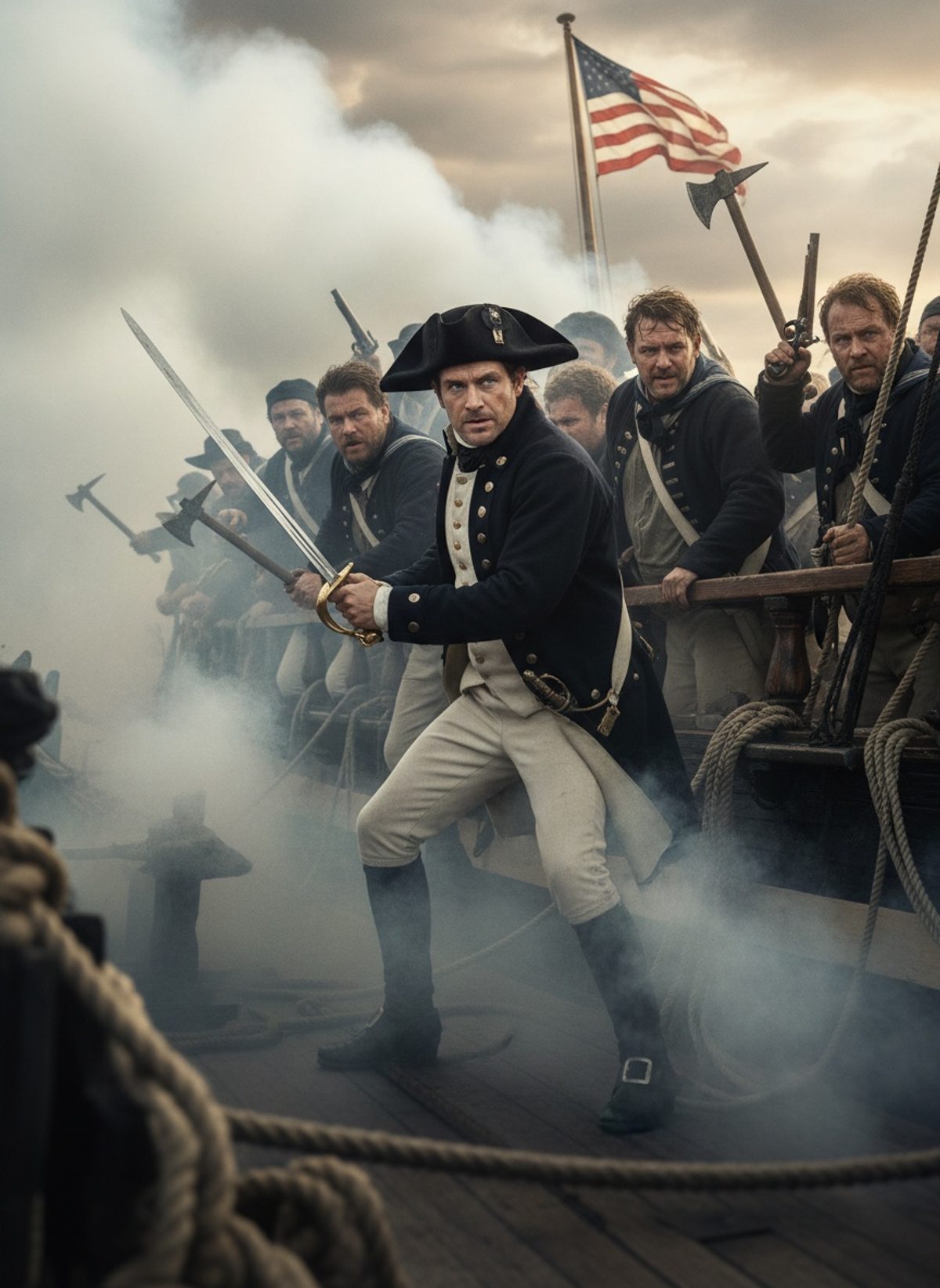
The frigid winds cut like knives across the deck of HMS Bellerophon, a majestic bastion of British naval might, as sailors scurried to prepare her for sale. The ocean's embrace felt colder than usual, a tangible precursor to the doom that awaited the Royal Navy of the late Victorian era. Unaware of the coming tide that would trade their sea dominion for short-sighted fiscal gains, these men worked meticulously, oblivious to the profound implications of their task.
The Age of Iron and Indecision
In the mid-19th century, the very thought of the British Empire surrendering its maritime supremacy would seem absurd. With the Revered Admiralty at the helm and shipyards abuzz with activity, Britain had confidently sailed into the ironclad era, its navy unmatched and feared across the globe. Giant warships like the HMS Warrior and the inimitable HMS Devastation boasted cutting-edge technology, dominant gun turrets, and armor that dared any adversary to test their might. A crescendo of innovation and national pride, these vessels were the very reflection of Britain's stature as the world's maritime ruler.
Yet, the Crown's staunch guardians of the purse strings, the Treasury, had a different vision. While technological advances promised a perpetual reign over the seas, the inherent costs were equally dramatic. Britain had outspent itself creating these great leviathans of the sea, and suddenly, the Parliamentary focus turned to the bottom line. The Treasury's sword, wielded with a zeal for austerity, demanded savings and reprioritization. The Airy, by then a more politic-powered than patriotic institution, acceded. The choice was stark: maintain the glamour of an iron fleet or submit to fiscal restraint. Reluctantly, the Admiralty obliged, progressively initiating what some might call an economic culling.
So began a decade-long danse macabre with Britain's imperial legacy. Between 1860 and the cusp of the 1880s, ironclad vessels, many still in their infancy, found their fates sealed in government accounts rather than on the high seas. The reality onboard differed vastly from the ledger: rows of retired, scrapped, or audaciously auctioned ships were the growing testament to a hawkish fiscal policy overshadowing martial prowess.
Read next: When Hoste Flew His Flag at Lissa, 1811
The Illusion of Strength
Fascination with ironclad giants soon became a mirage, the Admiralty's once-adorned fleet now something akin to ephemeral shadows. Ships like HMS Dreadnought, once synonymous with unyielding power, found themselves decommissioned or sold off at meager rates. Paraded before prospective buyers, each vessel carried more than its weight in metal; they were laden with truncated careers, their armaments commercialized tokens of pride squandered. The decision often left experienced captains and crew bewildered, as their erstwhile seaborne bastions transformed into commoditized relics. These great battleships, sold for pennies, stripped Britain not just of naval supremacy but the very spirit that rendered the Royal Navy feared far and wide.
While financial arithmetic portrayed an entirely different cost-benefit analysis, the strategic treatises painted a halcyon view, cascading into voids of perceived security. It was a time when steam propulsion transitioned from wonder to regularity; however, peace became the assumption, not preparation. The effect on morale was palpable, as the sense of betrayal marinated within the ranks. Command officers, observing their fleets gutted piece by piece, could only rue decisions made far above their sanctioned orders. The responsibility of defending the Empire with a dwindling fleet became a haunting rationalization.
Yet, in the hulls of these ships lay not just iron but history pregnant with tales and achievements. Each sailing—or rather sale—signaled a page ripped from the annals of maritime dominance. By reducing its imposing fleet to ledger lines, the Admiralty misplaced significance over specter, an illusion for the reassurance of fiscal rectitude. This paradox preceded the inevitable; submarine threats, illicit naval build-ups, and emergent powers waited silently in their embryonic stages, preparing to rewrite the language of naval warfare. The vanity of economic prudence over foresight drew near its climactic reckoning.
The Clash of Reality and Perception
The Franco-Prussian War (1870-1871) drew Europe's attention, emphasizing the supremacy of land power but also subtly highlighting naval vulnerabilities. Britain's yardstick of sea control remained dated, one which fancied a bygone era's strength without realizing its obsolescence in a landscape of shifting allegiances and modernizing navies. The Victorian ethos of progress, draped in innovation but burdened by skeins of cost-consciousness, threatened to erode the core pillars of Britain's imperial narrative.
The 19th century's tail cast dim light across the Atlantic, where America, with audacious trailblazing and copious natural resources, turned its focus to maritime assertions. For the first time since Trafalgar, the Royal Navy found itself reconsidering its strategic axioms. Historical partnerships and sometimes uneasy alliances could not negate the visible emergence of America as a naval contender willing to breach Britain's sphere of influence. Meanwhile, in the east, the Russian expansion and burgeoning Japanese interests formed a silent vortex of maritime eyes fixed on the Pacific.
As echoes of clipped sails gave way to propellers, the world's stage sizzled with renewed tensions. The Admiralty's ledger kept brimmed with currency but starved of foresight, would render this hand-engineered hollowing detrimental. The taken steps incised scars deeper than fiscal line items—they mirrored a burden of responsibility gone awry. By the decade's end, the shimmering gaze of luminescent sea-based empire cowered in the shadow of a nascent arms race—a race wherein titans traded commitment and geopolitical placement for the fleeting comfort of ledger propriety.
The warships, carved from Britain's very sinew, were more than tactical units suspended at sea. As each vessel slipped into retirement or foreign registry, the Empire unwittingly compromised its intrinsic capacity for defense. The specter of bricks and gunmetal cannily transfigured into transient paper records. Still, as history would arbitrate, the Admiralty's compulsion toward balancing accounts became the fulcrum upon which strategic folly and historical awakening would pivot, forever casting a wisp of somber reflection upon an illustrious sea-bound legacy.