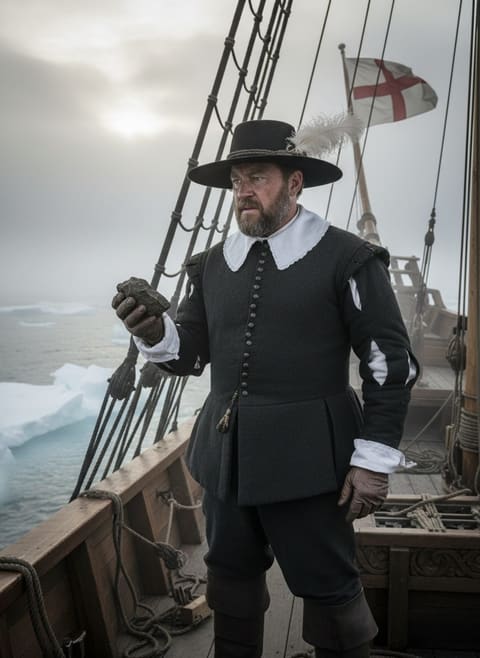
April 1587. The air was filled with a chilling tension that hung over the bustling port of Cádiz. Just beyond the horizon, a storm—both literal and political—was brewing.
On that fateful day, the meticulous hum of maritime activity was suddenly shattered by the ominous silhouette of English warships gliding into the harbor. This was no ordinary show of force; this was Sir Francis Drake, the feared and audacious privateer, whose reputation for audacity and cunning was known across oceans. As Spain feverishly assembled its formidable Armada, intent on subduing England and its Protestant queen, Elizabeth I, Drake, unaided by any formal declaration of war, launched what would become one of the most daring maritime raids of the era.
Cádiz, a fortified jewel and bustling nexus of Spanish naval prowess, was hardly where one might expect an Englishman, let alone a man like Drake, to brazenly appear. Yet, what unfolded in those crucial hours was nothing short of extraordinary. The Spanish sailors, busy with preparations for the Armada’s grand campaign against England, found themselves scrambling as decks creaked and men shouted, desperately attempting to mount an effective resistance against a foe who knew no fear.
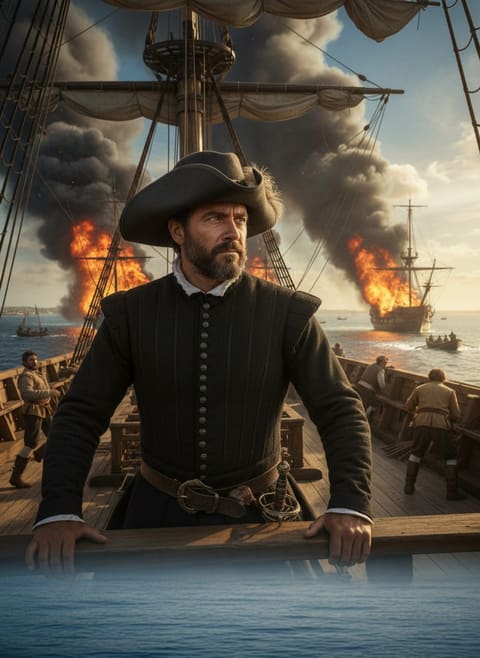
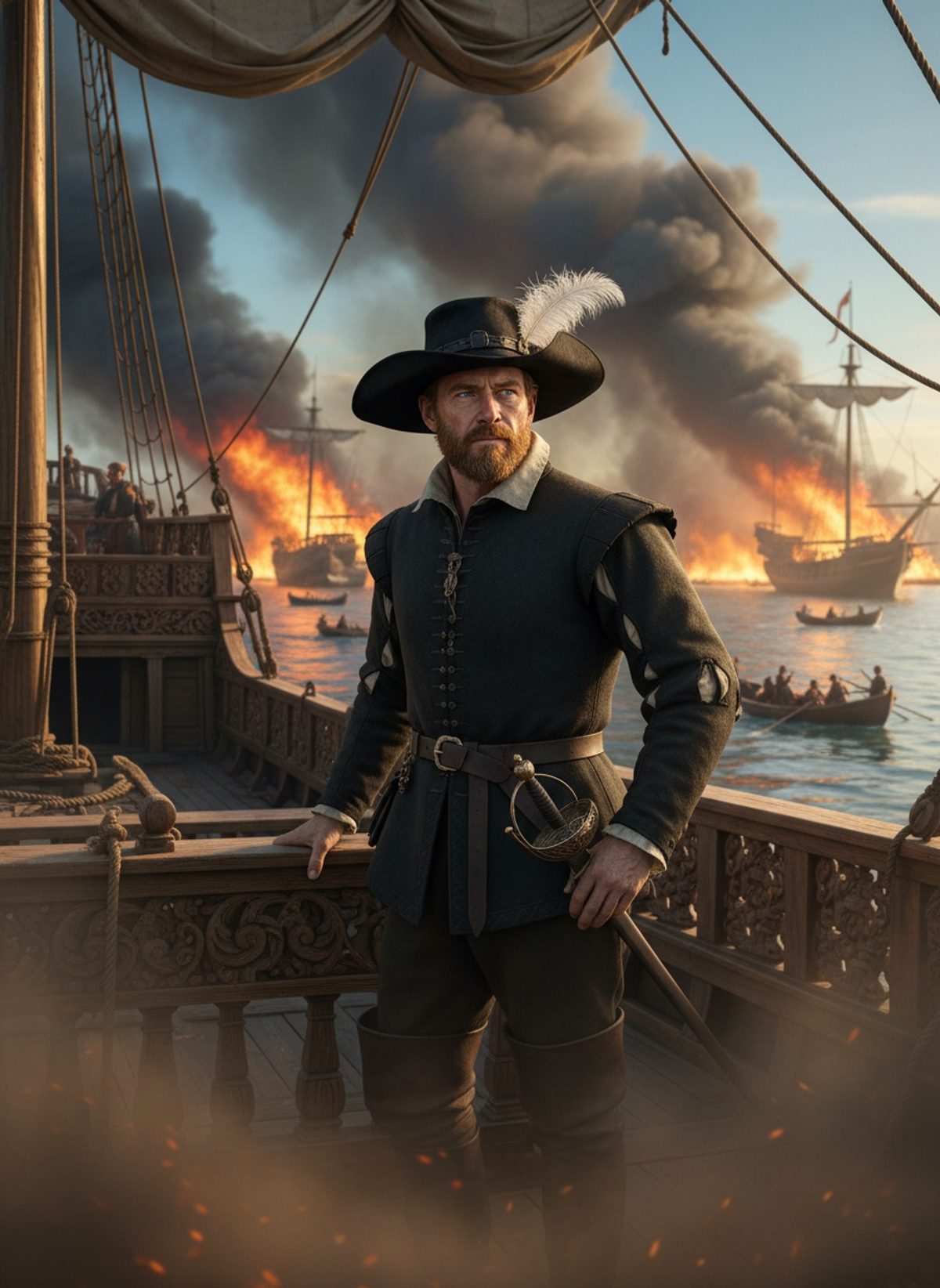
Drake’s arrival in Cádiz was marked not by the clash of cutlasses or the roar of cannon alone, but by a strategic brilliance that underscored his legendary status. The very audacity of his venture was both his weapon and his shield. As the English ships sailed boldly into the harbor, they unleashed a fury that felt like the wrath of gods—sails billowed, flames danced across the water’s surface, and the air was thick with the cloying scent of burning wood and tar. Thirty-seven Spanish ships, some laden with the treasures and provisions intended to fuel Philip II's grand campaign, were reduced to smoldering ruins in an afternoon’s work.
Read next: When Hugh Willoughby Sailed Into the Arctic and Never Came Back
The Spanish were stunned, their fleet scattered, their pride bruised. This was no mere skirmish; it was a tactical masterstroke that bought England precious time. Time that would prove essential for bolstering defenses, time for strategizing, and, perhaps most importantly, time to sow the seeds of doubt within the Spanish Empire. The delay it enforced upon Philip’s ambitious plans to subdue England was to be a wound slow to heal, and Drake knew this well, famously dubbing his raid the “singeing of the King’s Beard.”
Drake’s confidence was matched only by the swiftness with which he executed his plan. This wasn’t just an attack—it was a chess move, sacrificing heavily for greater gain. Wrapped in the chaotic embrace of smoke and shouts, it was easy to overlook the strategic brilliance that made such a brazen assault possible at all; the ability to enter, unravel, and exit with purpose, leaving behind nothing but destruction and fear.
The English, to their credit, relished this victory not just for its immediate successes but for the psychological edge it gave them. To have dared so boldly in the face of one of Europe’s most powerful maritime powers was as great a testament to individual courage and skill as it was to the growing naval might of England. This display in Cádiz was a harbinger of change—a shift in naval warfare, a precursor to England’s eventual ascension on the world stage as a formidable maritime power.
Yet, the legacy of Drake’s intervention was more than just a tactical delay for the Spanish Armada. It was a clarion call to a nation, a tantalizing taste of what the sea could hold for a country unafraid of its depths and challenges. Drake’s actions in the harbor at Cádiz didn’t only “sing the King’s Beard”; they set ablaze imaginations and ambitions back home as well. The daring privateer was no pirate—it was his Queen’s face on every coin he spent, and it was in Elizabeth’s name he struck.
Read next: When Francis Drake Knelt in a Stolen Ship, 1580
What followed after Cádiz, history tells in broad strokes. The Armada would sail, eventually, not with the triumphal ease initially planned, but burdened, beleaguered, and too late. By then, England’s defenses, as ready as they could be, were standing by, ready to turn the tides of conflict. Without the year Drake had bought them, the tapestry of European power might have been woven quite differently.
In retrospect, those flames that licked at the hulls in Cádiz did more than scorch Spanish pride or ships. They called into question the very fabric of a planned conquest—a testament not just to strategy and timing, but to human courage in the face of immense odds. It speaks to an era where the world was a chessboard and the players were bold, their moves dictated by the reach of their ambition and the courage of their convictions.
The story of Francis Drake at Cádiz reminds us that history’s tide is often turned not by fleets, but by individuals with the audacious courage to face the seemingly insurmountable. In our own reflections on this momentous episode, we are reminded that the strategies we employ and the risks we take shape not merely battles, but the very course of our journey forward. Drake’s tale is legend precisely because it is a testament to the potential within each of us—to see beyond the horizon of our own doubts and to act, decisively, in the pursuit of a vision that ignites our souls and changes the course of history.