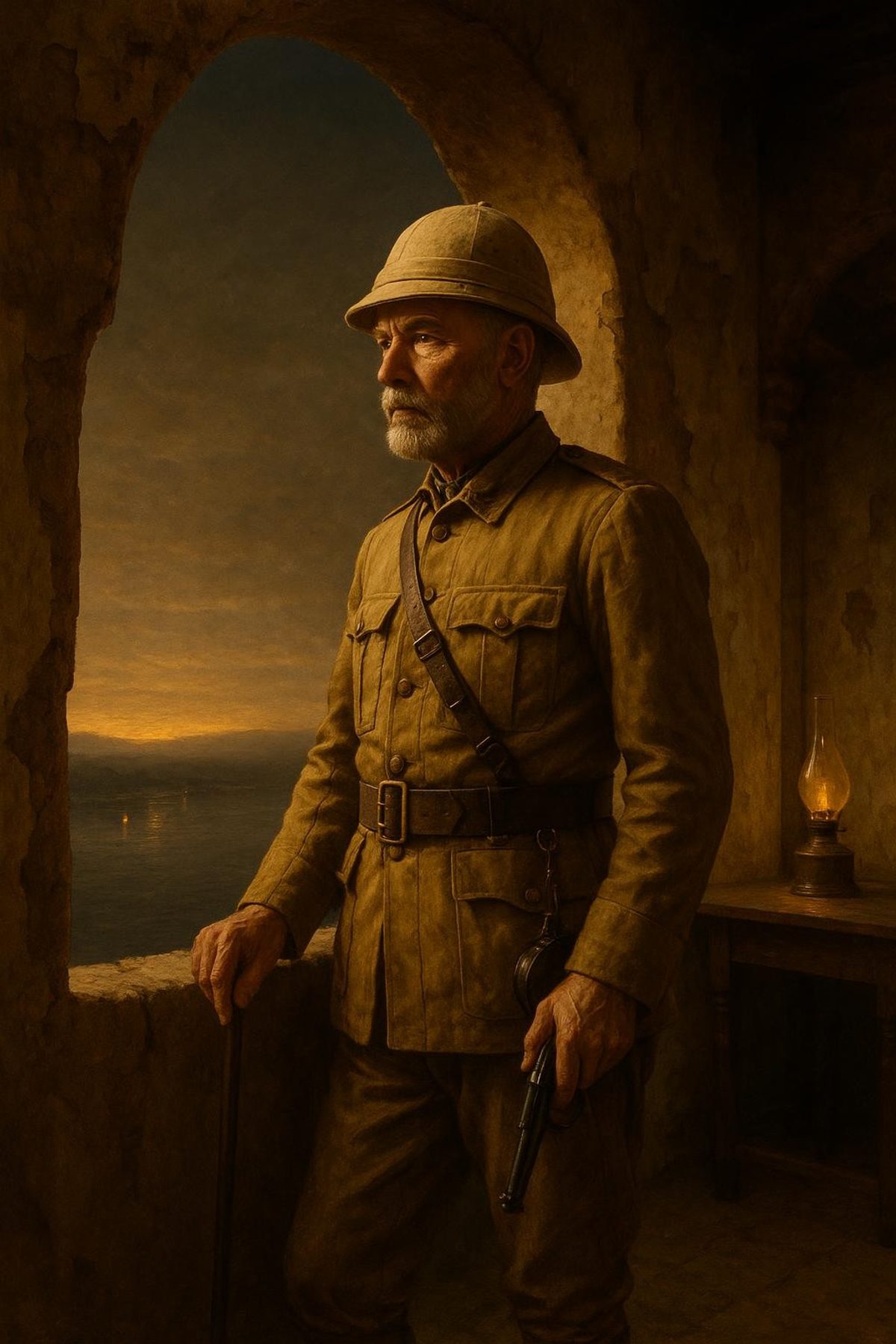
The first light of the morning strained against the dusty windows as General Charles Gordon leaned closer, peering through the glass as if he might see past the swarming streets of Khartoum below. The muffled clatter of gunfire echoed in the distance, an all-too-familiar symphony over the past ten months. The air was heavy with the scent of anticipation mixed with the acrid smoke of distant burning, both a reminder and a prelude of what loomed ahead. Somewhere far beyond those walls, a relief column promised salvation, its progress frustratingly out of sync with the urgency of his predicament.
The Siege Begins
In early 1884, Charles Gordon arrived in Khartoum under orders to organize an evacuation. Yet, upon seeing the plight of the city and its people, he defied expectations, choosing instead to set up a staunch defense against the Mahdist forces, led by the charismatic religious leader Muhammad Ahmad, who had declared himself the Mahdi, the guided one. The siege was relentless. Surrounded and cut off from supplies, the city endured nearly a year of pressure as the Mahdi’s army besieged it, waiting for the imperial power stationed across deserts to stir to action.
Gordon, known both for his steadfastness and his eccentricities, found himself isolated not just physically but also politically. As newspapers in London reported on the "Hero of Khartoum," backroom deliberations and bureaucratic hesitations punctuated the political climate. The delay in deploying a relief expedition was not only a matter of logistics but also of priorities — an error in both judgment and humanity that stretched through the arduous length of time.
The Defense Holds Steady
The complexity of Khartoum’s defense lay in its very geography. Nestled at the conflux of the Blue and White Nile, the city was both strategically vital and precariously placed. Gordon, whose reputation was built on both daring and defiance, orchestrated the city's defense with vigor. Makeshift fortifications were erected, local militias were rallied, and every available resource was harnessed to repel the vastly superior forces encircling them. His presence became a source of morale for the besieged, his iron belief in divine providence a steel buttress against despair.
Read next: When Bravo November Became the Only Chinook Left, 1982
Nevertheless, supplies dwindled, hunger bit sharper, and disease followed hunger as reliably as night followed day. Gordon’s own resilience became symbolic; if their general could hold faith that salvation approached, then so too could the exhausted citizens and soldiers under his command.
The Final Assault
The events of January 26, 1885, unfolded in a crescendo of chaos as the Mahdists launched a ferocious assault. Breaching the southern defenses before dawn, they surged into the city with an unstoppable fervor. The streets once bustling with resilience now echoed with cries and confusion. Victory was within sight for the invaders, and retreat was no option for those defending their homes.
Read next: When Wideawake Became the Busiest Airport in the World, 1982
From his post, the quiet resolve in Gordon's stance betrayed not fear but rather a profound acceptance of the moment’s gravity. As the swirling battle drew nearer, he maintained his watch at the window, aware perhaps that even in these last moments of impending defeat, a different kind of victory lay in the courage he had chosen to embody.
A Legacy of Delay
Two days. That’s how long it took before the relief column’s arrival—two days that spanned continents and more than the breadth of desert sands. When they came, it was not the hero’s welcome they had expected but instead a haunting revelation of too-late heroism. The British public, now aware of the tragedy, seethed with mourning and outrage. Fingers pointed, blame shifted, and lessons were learned too late.
Gordon’s stand at Khartoum underscores a narrative all too familiar in the annals of history — the convergence of bravery and bureaucracy, and the cost of delay borne by fortitude. He left an imprint beyond mere strategy and resilience, carving into the narrative of Empire not what was won, but what was lost. As time wove forward, his legacy became not just the retelling of a forlorn defense but a reflection on leadership, resolve, and the price countries pay when they gamble with time instead of seizing it.