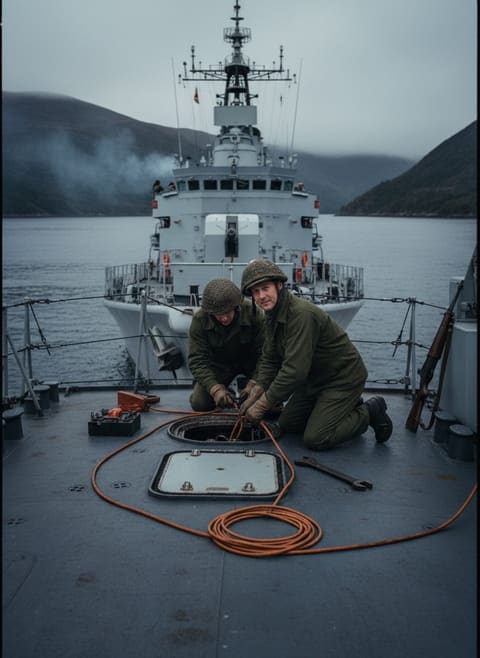
December 2, 1949. The cold, resolute waters of the English Channel held a ship not sailing to fight, but rather to meet her final fate.
The Once Indomitable Survivor
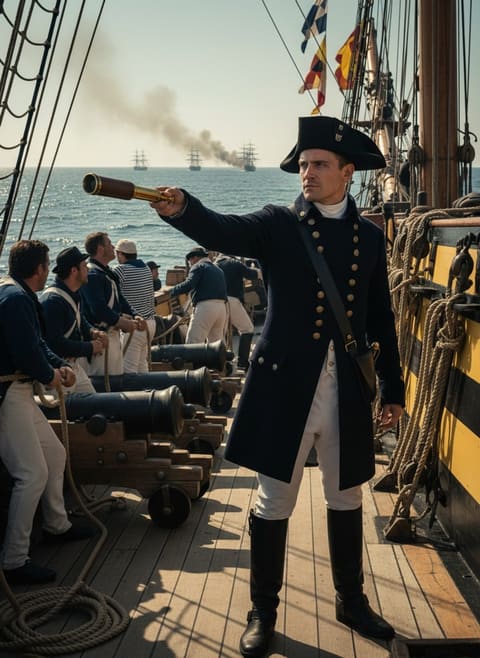
The HMS Implacable was more than just a ship; she was a tapestry woven with threads of glory, tragedy, and sacrifice. Born in 1805 at the hands of French craftsmen, she was launched under the name Duguay-Trouin. Her first trials by fire came quickly as she was thrust into the choppy waters of the Napoleonic Wars. Under Ney's tricolor banner, she sailed fearlessly, until the fateful meeting with destiny at the Battle of Trafalgar in 1805, where Admiral Nelson, aboard the HMS Victory, carved his own legend into history.
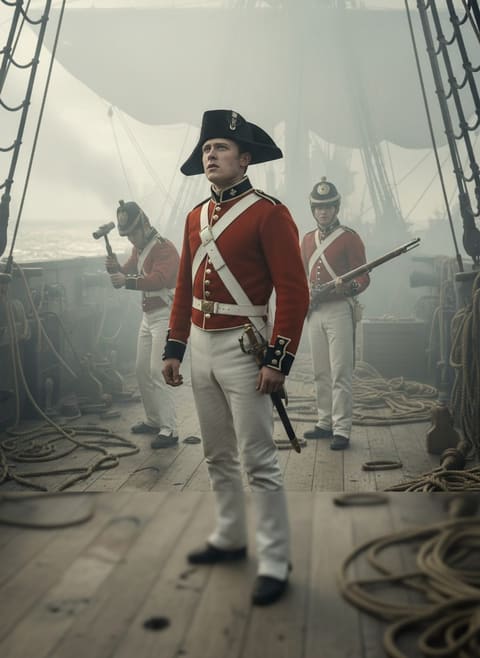
In the aftermath of Trafalgar, this French frigate changed her allegiance, taken as a prize by the British Navy. As the HMS Implacable, she carved a niche within Britain's naval fleet, participating in blockade duty and deploying the iron will of the British Empire across Europe's wavering coasts. Her timbers creaked with the tales of decades past, marred by the murmurs of the crew now lost to time, yet their echoes still carried across her decks.
A Vessel for Rebirth and Training
As one century faded into another, Implacable bore witness to seismic shifts in global politics. By the Second World War, the venerable vessel, once cutting edge, now served as a training ship for naval cadets in a world that bore technologies beyond her wildest wooden dreams. Her decks were trod by another generation, those learning how to steer a nation through a conflict bruising the earth on a scale previously unimaginable.
Read next: When HMS Coventry Drew the Jets Away From San Carlos, 1982
Here, history's irony flourished; a ship that once fought against Britain for France was now cultivating the sailors who would defend against Germany's might. Her presence was symbolic — a bridge between epochs, a testament to endurance. Yet, as the war ended and the bells of peace tolled across Europe, the winds whispered a different future for the Implacable; a fate neither glorious in battle nor quietly forgotten.
The Decaying Relic of Glory
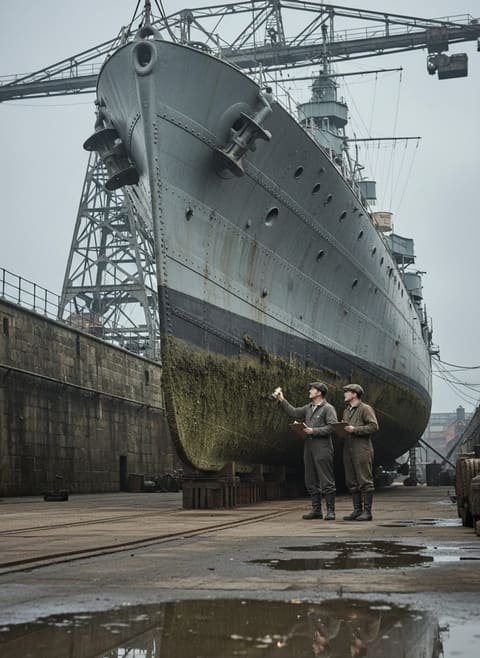
In post-war Britain, the economic strains were palpable. Resources had to be allocated judiciously and priorities re-evaluated in the cold light of peacetime pragmatism. For Implacable, this meant that despite her illustrious past and symbolic importance, there was no budgetary space for the upkeep of a wooden relic in an era increasingly defined by modernity and its demands.
The decision to scuttle arose not from a desire to erase her history, but from a resigned acceptance of new realities. Naval historians, enthusiasts, and former naval personnel launched fervent campaigns for her preservation. However, the funds required to maintain such a grand dame of the sea were insurmountable against the backdrops of rebuilding cities and equally rich historical legacies threatened by the sands of time.
The Final Voyage — A Spectacle at Sea
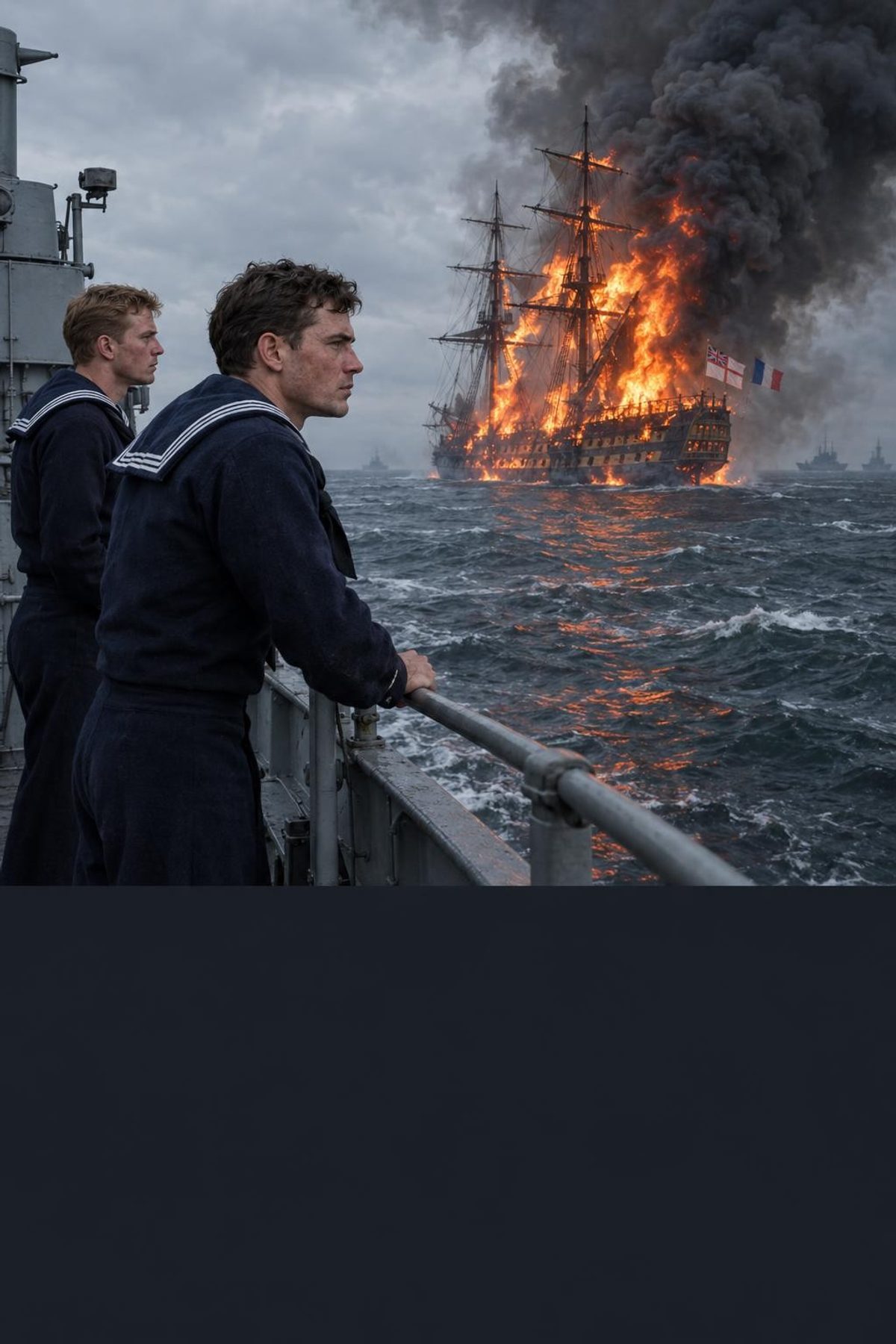
So it was, on the crisp, overcast morning of December 2, 1949, that she was towed to her funeral at sea. As the salvage tugs guided her to her final resting place, she bore a unique distinction: two flags waved to the rhythm of parting winds — the French tricolour beside the White Ensign. It was a ceremonial nod to her binary legacy; a vessel with a foot in two worlds whose stories crossed crosshairs of nations.
Read next: When the Archer Class Was Born and Remade Itself, 1886
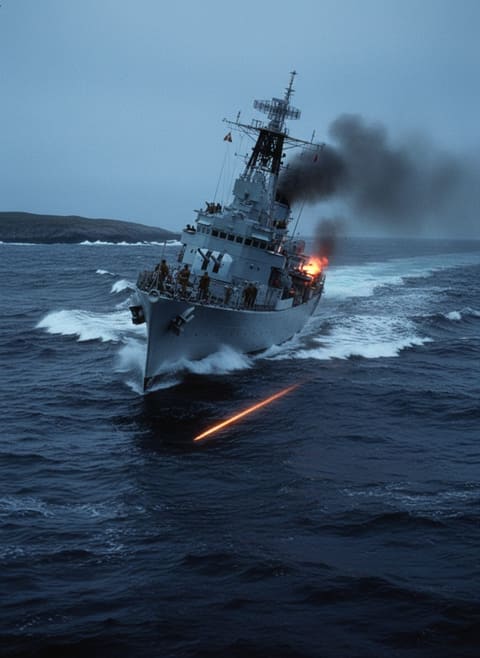
As the ignition flared, the vessel's visage appeared through a haze of smoke and flickering flame — a solemn pyre paying homage to her era. The Implacable's bones, fire-kissed, awoke memories of Trafalgar, of seas braved and sailors marched into the annals of history. Her burning hull was more than a retreat into oblivion; it was an indelible moment igniting the hearts of onlookers with thoughts of impermanence and the march of progress.
The flames that consumed the HMS Implacable did more than efface wood and iron; they transported spectres of naval warfare, the echoes of cannon-fire, and the salt-glazed cries of commands lost beneath the smoke-soaked skies.
Today, her story serves as an evocative illustration of how, in the continuum of time, past distinctions dissolve into shared heritage. The burning of the HMS Implacable was not an act of destruction but a vivid reminder of the ships and souls whose narratives sail us closer to understanding our shared histories. In the choices societies make about what to preserve and what to let go, they unwittingly shape the stories carved into the collective consciousness of future generations. The scuttling of the Implacable reminds us that legends — no matter how grand or humble — all find their anchor in the tides of history.