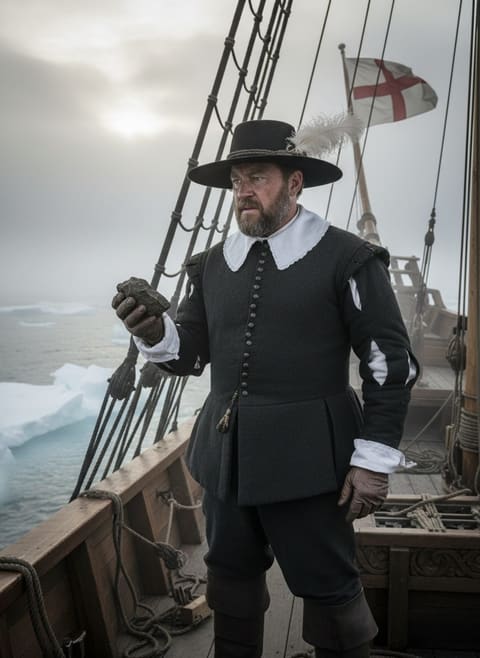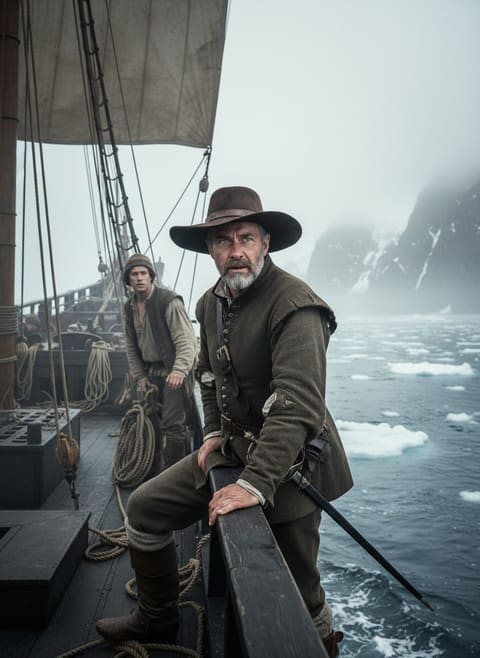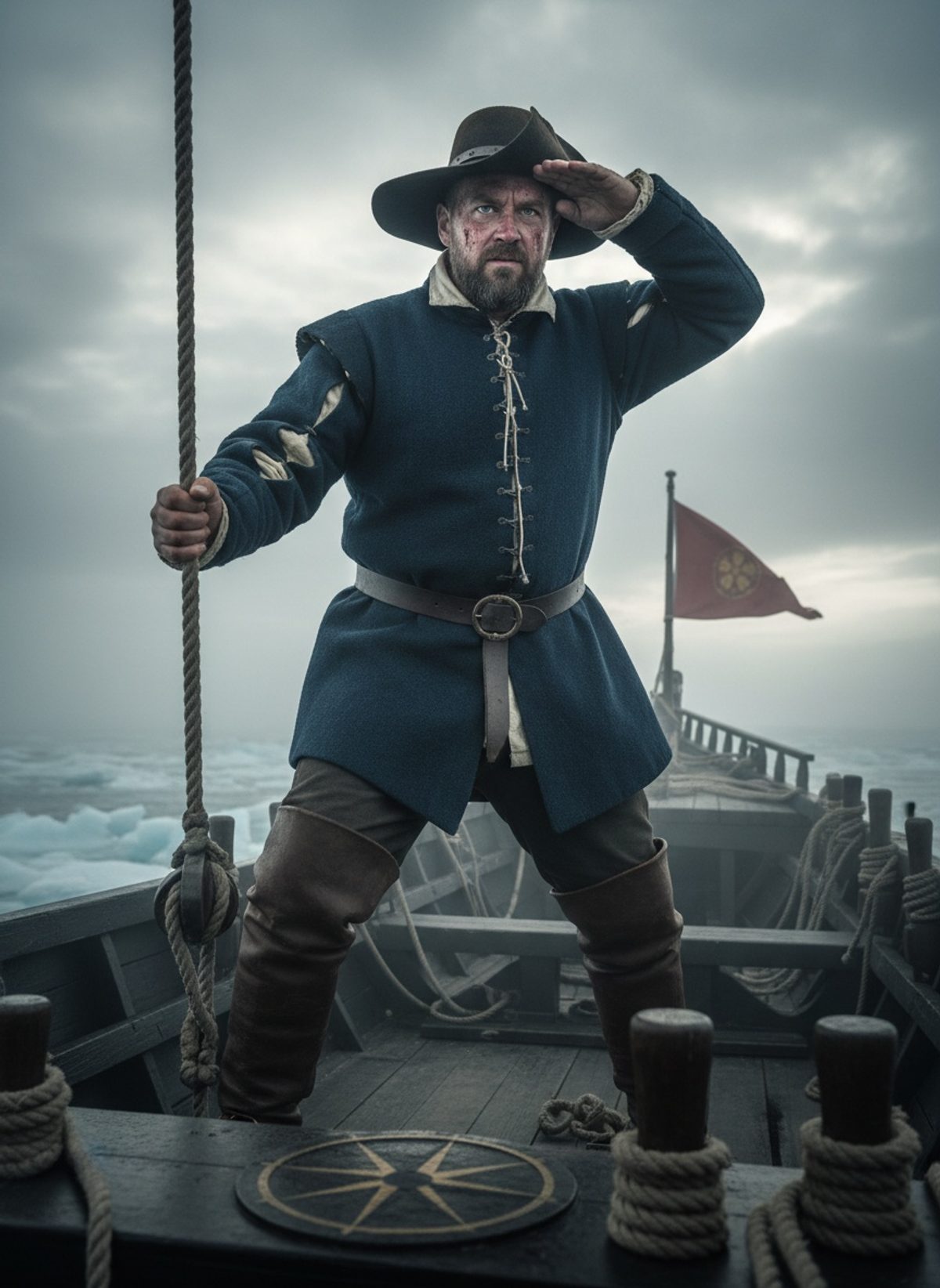
The July sun dangled above the horizon, casting an eerie glow over the choppy waters of the North Atlantic. Waves, restless and unyielding, lashed against the wooden hulls of Martin Frobisher's fleet, as they had done to countless vessels before. This far from England's shores, the only sounds were the cries of seabirds and the creaking timbers that seemed to groan in protest against the uncharted waters ahead. Yet for Frobisher, the stakes were too high to turn back.
In 1576, under the auspices of Elizabethan England's burgeoning desire to expand its influence across the globe, Frobisher, a rugged Yorkshire mariner known for his tenacity, embarked on a daring expedition. His mission was not just one of discovery, but of destiny. He set sail in search of the elusive Northwest Passage, a maritime route that promised trade and riches by linking Europe to Asia without the need to navigate around Africa. This bold venture was underpinned by dreams of wealth and glory, dreams that soon would be tested by the cruel realities of exploration.
Frobisher's fleet began with three small ships, hardly more than nutshells in the grand expanse of the ocean. Almost immediately, misfortune struck. One ship succumbed to the merciless grip of the sea, lost beneath the waves, its men and timber swallowed whole by the abyss. Another ship, overwhelmed by the trials of a hostile ocean and weakened morale, turned back to the safety of familiar waters. Frobisher, undeterred, faced the unknown with just his flagship, the Gabriel, carrying the weight of Elizabethan aspirations upon his lonely mast.
As he pressed onward through frigid winds and ice-strewn waters, Frobisher's journey took him to lands no Englishman had yet charted. The stark and inhospitable Arctic landscapes loomed into view, their rugged beauty alluring yet forbidding—a testament to nature's power. Here, the icy fingers of the north clawed at his vessel, each day a reminder of the peril that came hand in hand with pioneering exploration. However, Frobisher's resolve was fueled by whispers of treasures beyond imagination, visions of golden fortunes that beckoned him ever farther.
Read next: When Hugh Willoughby Sailed Into the Arctic and Never Came Back
His venture culminated in the discovery of a vast bay, a crescent of water strewn with icebergs, which Frobisher would claim for England. This bay, icy and untamed, was unlike anything recorded in English annals. It stood as a gateway to an Arctic world shrouded in mystery and possibility, promising to rewrite the narratives of known geography. Yet it was not the discovery of a new land that would capture the imagination of an eager nation, but rather the heavy, black stones strewn along its shores.
What Frobisher took back to England was far more than the promise of a navigable passage. Within the holds of the Gabriel lay rocks, deceptively dull yet enticingly heavy, believed to harbor gold. It was a miner’s folly, a fool's gold in the most literal sense. Yet, when Frobisher returned to London, triumphant and bearing these stones, England erupted in feverish anticipation. Through the alchemy of dreams, these plain stones were transmuted into the prospect of unimaginable wealth.
The rocks were quickly sent for analysis, and England's greed-fueled imagination was allowed to run riot. Though skeptical voices questioned the true value hidden beneath the dark exterior, the Siren call of gold was too intoxicating to ignore. Frobisher’s voyage lit a fire that would have the promise of riches drawing investors in droves, fueling further expeditions that saw more ships laden with hopeful miners bound northward into the frosty unknown.
Read next: When Francis Drake Knelt in a Stolen Ship, 1580
In the years that followed, the English embarked on several voyages back to the bay, each teeming with renewed but misplaced hope. The rocky shores, so easily dismissed as harsh and barren, became a focal point of dreams for England’s restless empire-builders. Yet with each return, the glitter of gold promised remained elusive, slipping through grasping fingers like sand. Frobisher's Bay became synonymous not with a portal to Asia, but with the unfathomable caprice of fortune.
Frobisher's endeavors, ambitious and aromatic with the scent of enterprise, once more emphasized the undeniable truth that exploration was more than mere pursuit of wealth. It was the very fabric of national identity, woven with the strands of ambition and adventure. While the riches that fueled Frobisher's legend were ultimately comprised of illusions, the expeditions kindled an unquenchable thirst within English hearts—a call to the sea that would lead to further exploration and, eventually, the establishment of a global empire.
In the frosty expanse of Frobisher's Bay, we hear echoes of the trials and triumphs faced by those who dared to meet the horizon. His voyage etched a new chapter into the annals of history, a lesson taught not in the pursuit of gold, but in the tenacity of the human spirit that drives us to explore, to understand, and to boldly claim a place on the world stage. Behind the legend of the first Englishman to breach the Arctic's icy grip lies a narrative that speaks to the soul of what it means to venture forth into the unknown—a reminder that in pushing boundaries, we find not just new worlds, but new futures.