Courage in battle is often celebrated in history books. Mercy is not.
The Fateful Encounter: A Clash of Seapower
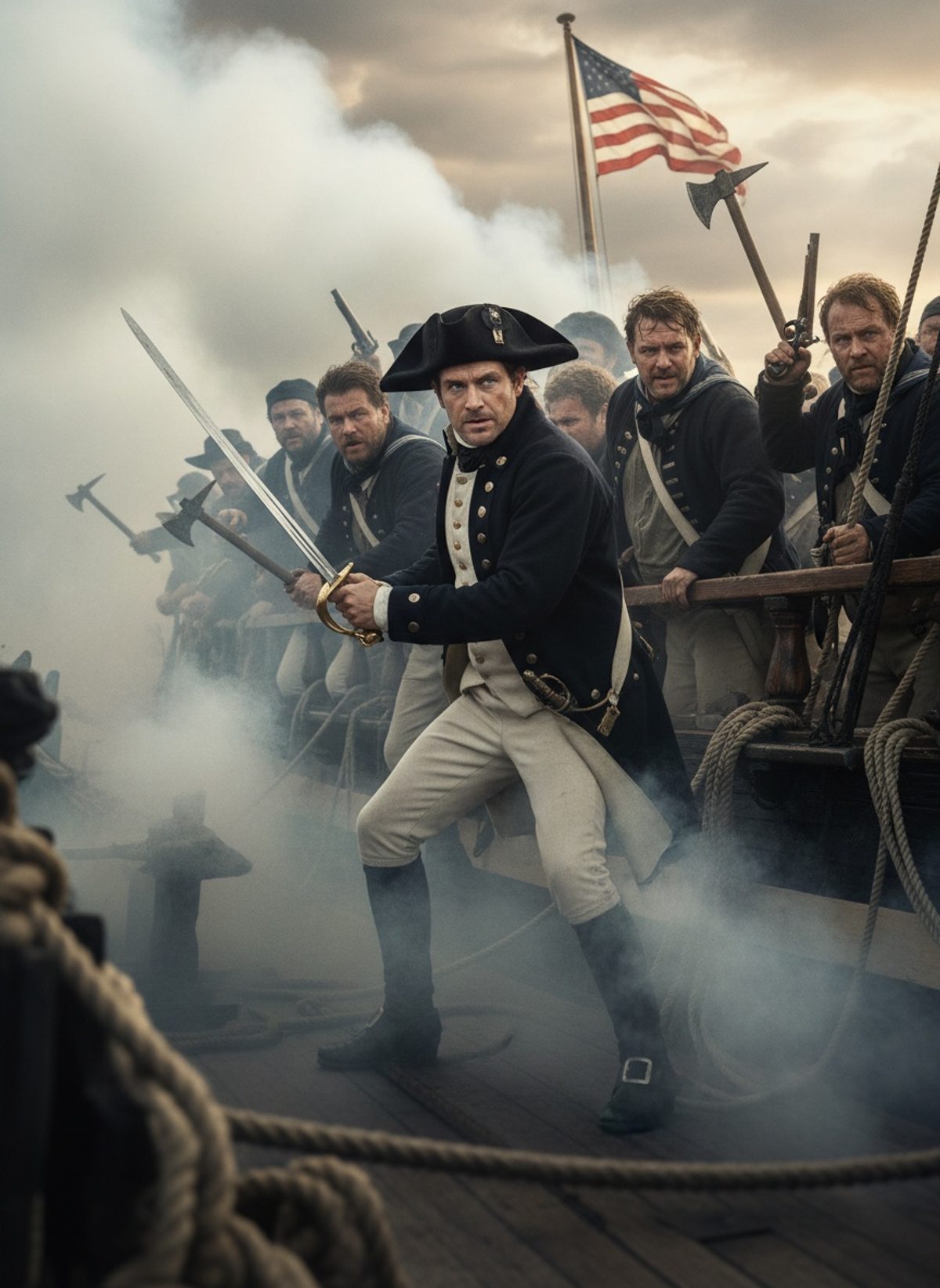
On a stormy night in January 1796, the rugged coastline of Brittany bore witness to an intense naval battle between two formidable foes. The British frigate HMS Indefatigable, commanded by the indomitable Captain Edward Pellew, faced off against the French ship-of-the-line Droits de l'Homme. This grand vessel, with her imposing 74 guns, represented the might of revolutionary France. Yet, as the towering waves pounded and the winds howled, neither her firepower nor her seasoned crew could withstand the relentless pursuit of Pellew, a man who had already earned his reputation as one of England's finest naval tacticians.
Under the shadowed veil of storm clouds, HMS Indefatigable chased the French giant with dogged persistence. The British frigate, though outgunned, maneuvered with deft agility, weaving through the tumultuous seas to deliver a barrage of precise, punishing blows. As the battle dragged into the night, the Droits de l'Homme found herself crippled and driven toward the treacherous reefs off the French coast. This was the moment of apparent victory for Pellew, a triumph against the odds secured through sheer audacity and naval brilliance.
Into the Depths: A Mission of Mercy
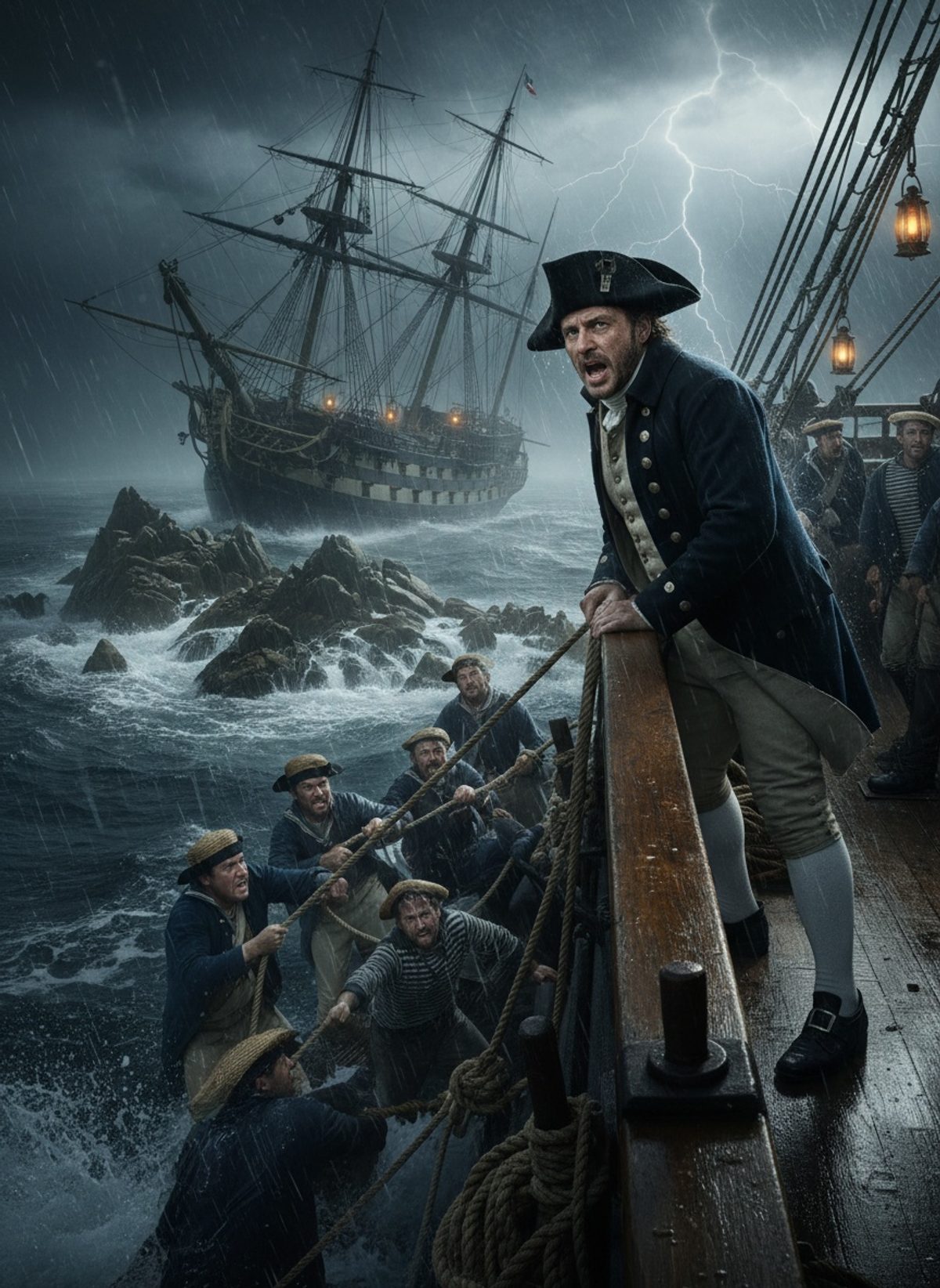
As dawn broke, revealing the harrowing sight of the French ship torn apart by the relentless surf, Pellew faced a new and unexpected challenge. The Droits de l'Homme was stranded, her hull dashed against the unforgiving rocks, and hundreds of French sailors were cast into the icy embrace of the Atlantic. Where most would have sailed on, content with the devastation wrought on their enemy, Pellew's gaze turned back to the sea of wreckage and desperation.
Read next: When Pellew's Sailors Pulled a Burning Fleet from the Sea
With an empathy uncharacteristic of the era’s brutal naval warfare, Pellew ordered his men to risk their lives once more—not to fight, but to save. Despite the perilous conditions, HMS Indefatigable's crew braved the tempestuous waters to extract their erstwhile adversaries from the jaws of death. Through Herculean effort and defying the limits of their own endurance, they managed to rescue 547 French sailors, each one plucked from the swirling doom with a palpable sense of urgency and compassion.
The Man Behind the Legend: Edward Pellew Unveiled
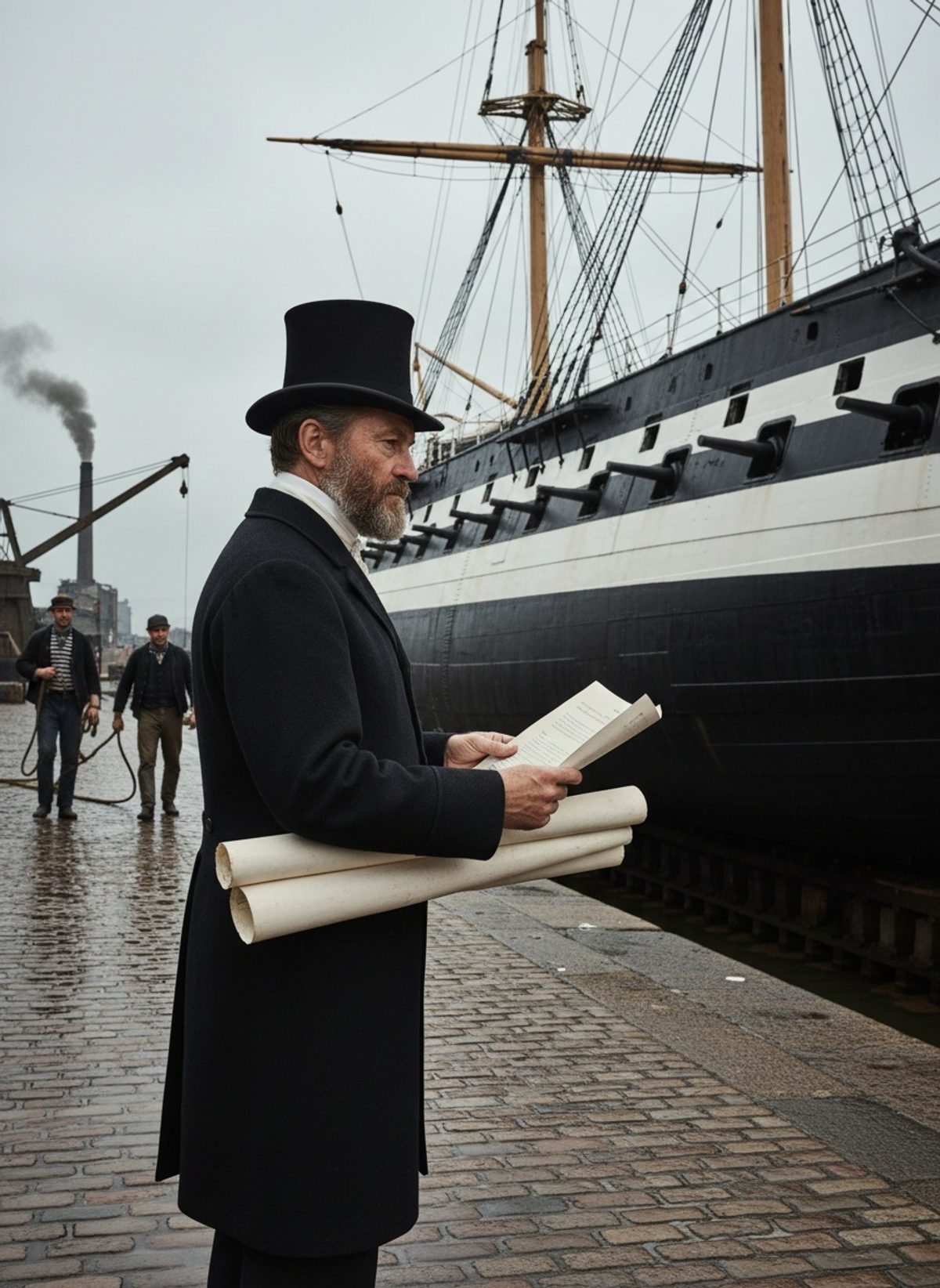
Who was this man, Edward Pellew, whose actions defied the brutal norms of his age? Born into modest beginnings in 1757, against the backdrop of the Georgian era’s maritime expansion, Pellew's rise through the Royal Navy ranks was as much a product of his seafaring skill as his unyielding determination. Known for his charismatic leadership and unorthodox tactics, Pellew carved a name for himself during pivotal battles, earning respect and admiration from friend and foe alike.
Pellew's decision to save the French crew was remarkably emblematic of his character—a man whose compassion extended beyond the heat of battle, transcending the rigid boundaries of enmity. It spoke of a vision of warfare where humanity was not overshadowed by the clamor of cannon fire. This act of bravery not only captured the attention of the British populace but also sent ripples across the international stage, challenging the perceived nature of naval conflict.
Why This Story Matters: A Legacy of Humanity
In an era where ruthless conquest was often the ultimate goal, Captain Pellew's rescue of the French sailors offers a poignant lesson in humanity. His actions served as a stark reminder that even amid the fierce rivalry of the Napoleonic Wars, compassion and camaraderie could prevail over mere victory. Pellew’s choice to place lives above triumph transcended national allegiances, illustrating that the true measure of heroism lies not just in valor but in empathy.
The tale of Pellew's mercy resonates deeply today, urging us to reflect on the timeless values of dignity and respect, even under dire circumstances. It challenges us to reassess the narratives of history, looking beyond the glorified tales of conquest to uncover the stories of courage that are less about glory and more about the shared threads of humanity that unite us all. In a world persistently at odds, this lesser-known legend teaches that the greatest victories are those that bridge divides, redefine foes as fellow souls, and illuminate the path to peace.