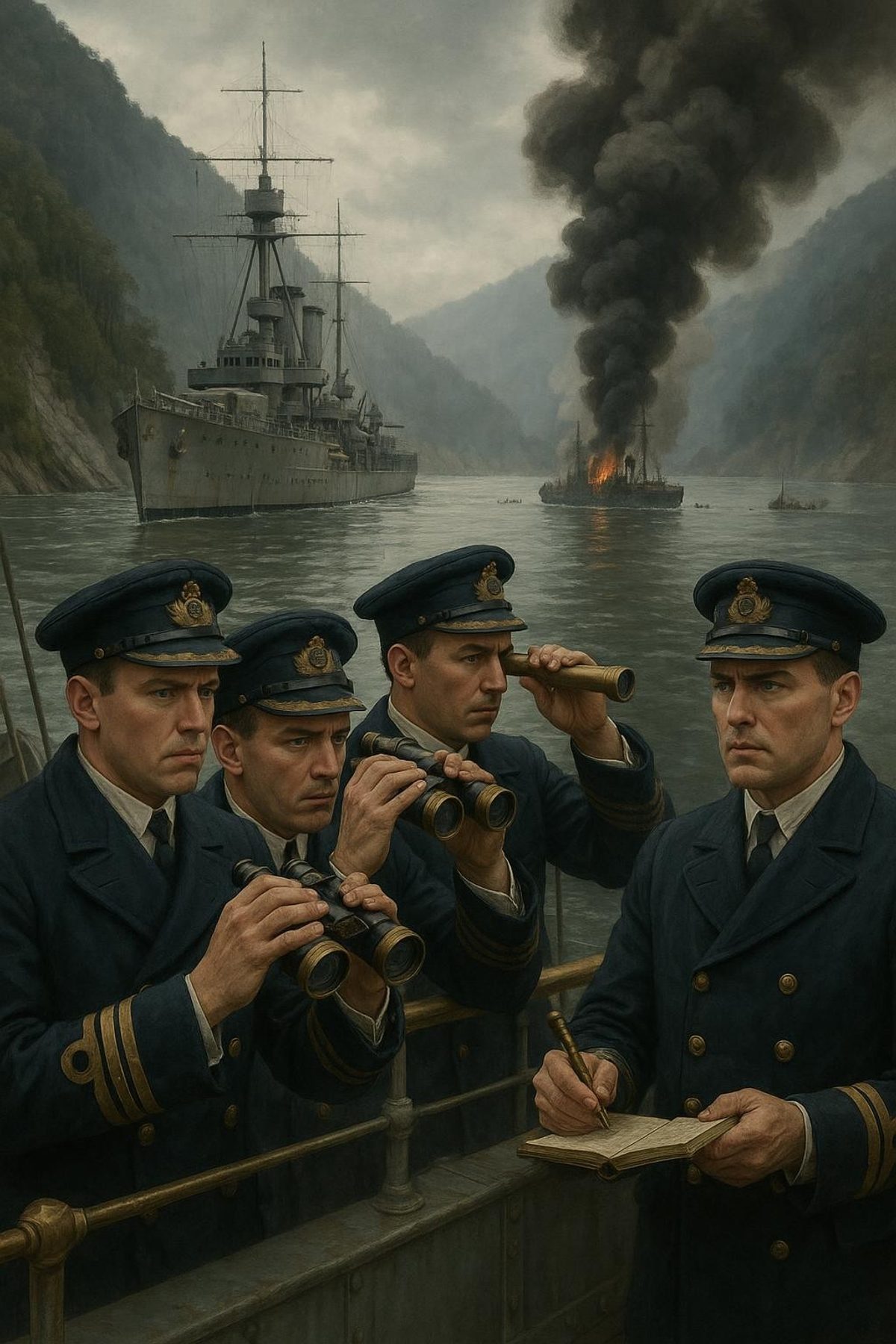
March 14, 1915. Mist hung low over the entrance to a narrow Chilean inlet.
Last Bastion of a Daring Squadron
In the midst of the First World War, vast oceans became theaters where nations vied for supremacy, and none was more desperate than the chase across the South Atlantic and Pacific. This particular morning saw the climax of such a high-seas pursuit. The German cruiser Dresden had become one of the most pursued ships of the great war, the final holdout of the once-feared East Asia Squadron. Her saga was one of endurance and audacity, surviving not only the hostile waters of the South Atlantic but also the fierce naval engagements that saw the decimation of her fleet at the Battle of the Falklands.
The tale of Dresden began as she fled the Falkland Islands in December 1914, just managing to evade the British naval cordon that saw her sister ships consigned to the icy depths. With the sinking of Scharnhorst, Gneisenau, and others in Von Spee’s squadron, Dresden was a lone wolf on the run, a marked vessel with the Union Jack snapping at her heels. For three grueling months, she zigzagged through some of the wildest and most desolate waters on Earth, making a haunting figure against the desolate Patagonian seascape.
Running short on coal and provisions, her adventures took her to the unlikeliest of sanctuaries in the isolated fjords of southern Chile. With their supplies dwindling and their crew weary, the German sailors hoped for a respite. But such hopes were in vain, for British vigilance never slackened, and the weight of empire unremittingly pressed.
Read next: When Cornelius Drebbel's Submarine Sailed Beneath a British King
The Final Engagement
As dawn broke on March 14, the Lieutenant Commander of HMS Glasgow peered through his binoculars, the shadowy outline of Dresden stark against the muted backdrop of Chile’s rocky cliffs. The British cruiser, along with HMS Kent, had finally caught up with their adversary. Despite the Dresden's strategic position within neutral waters, the Orders were clear: eliminate the threat.
The opening salvo from Glasgow cut through the somber morning air with thunderous ferocity. White sprays erupted around the German cruiser, signaling that the respite was over. Within moments, a rain of shells began landing dangerously close to the beleaguered Dresden. The German crew, realizing the intricacies of diplomatic statutes would not stay British guns, frantically prepared for what would be their last stand.
Dresden had no means to fight back effectively. Her coal bunkers were nearly barren, her hull marked by the long chase across the ocean. In these cold, unforgiving waters, the energies of her crew were focused not on battle but on survival. As fires began in her engine rooms, Captain Fritz Lüdecke commanded the crew to abandon ship. One by one, they plunged into the icy embrace of the Chilean waters, the bitter waves lapping over steel and skin alike, as survival became their sole command.
Legends from the Depths
With no other recourse, Lüdecke signaled the scuttling of the ship. Explosions rent the air as charges were set, intended to deny British hands from capturing their last Pacific adversary intact. Within minutes, Dresden slipped beneath the surface, consigned to the same watery fate as her sister ships.
Gentler gestures of humanity came amidst the chaos; British sailors, once adversaries, became rescuers. Boats from the Glasgow and Kent pulled German sailors from the frigid currents, a fleeting moment where the sameness of seafaring men overshadowed the flags they sailed under. These survivors would find temporary refuge in internment in Chile, while others would wait for repatriation, tales of their escape legendary enough to etch their saga into the unofficial annals of maritime history.
The destruction of the Dresden marked the end of Germany’s naval raiding presence in the Pacific. Her demise was more than a tactical failure—it was symbolic of shifting tides in naval warfare. Several decades later, when divers unearthed relics of the once-proud cruiser beneath the Chilean blue, they recovered more than artifacts; they reclaimed narratives of resilience and endurance, stories hastily left out of textbooks but deeply engraved in the annals of naval warfare.
Today, the tale of the Dresden stands not only as a thrilling adventure of the high seas but as a testament to the human spirit's resilience amid war's capriciousness. As fog dims memory's eye, we are reminded that history’s heartbeat often resonates strongest in the legends it leaves untold.