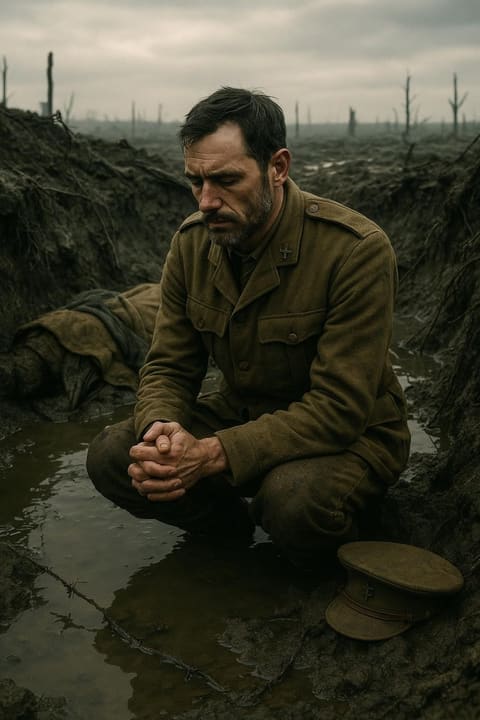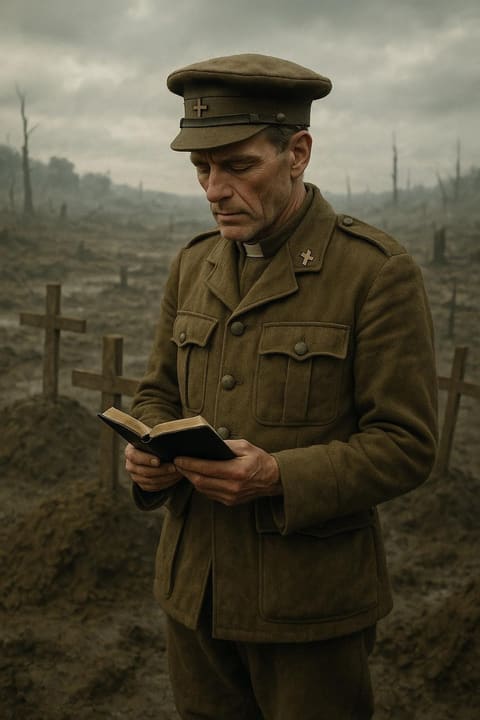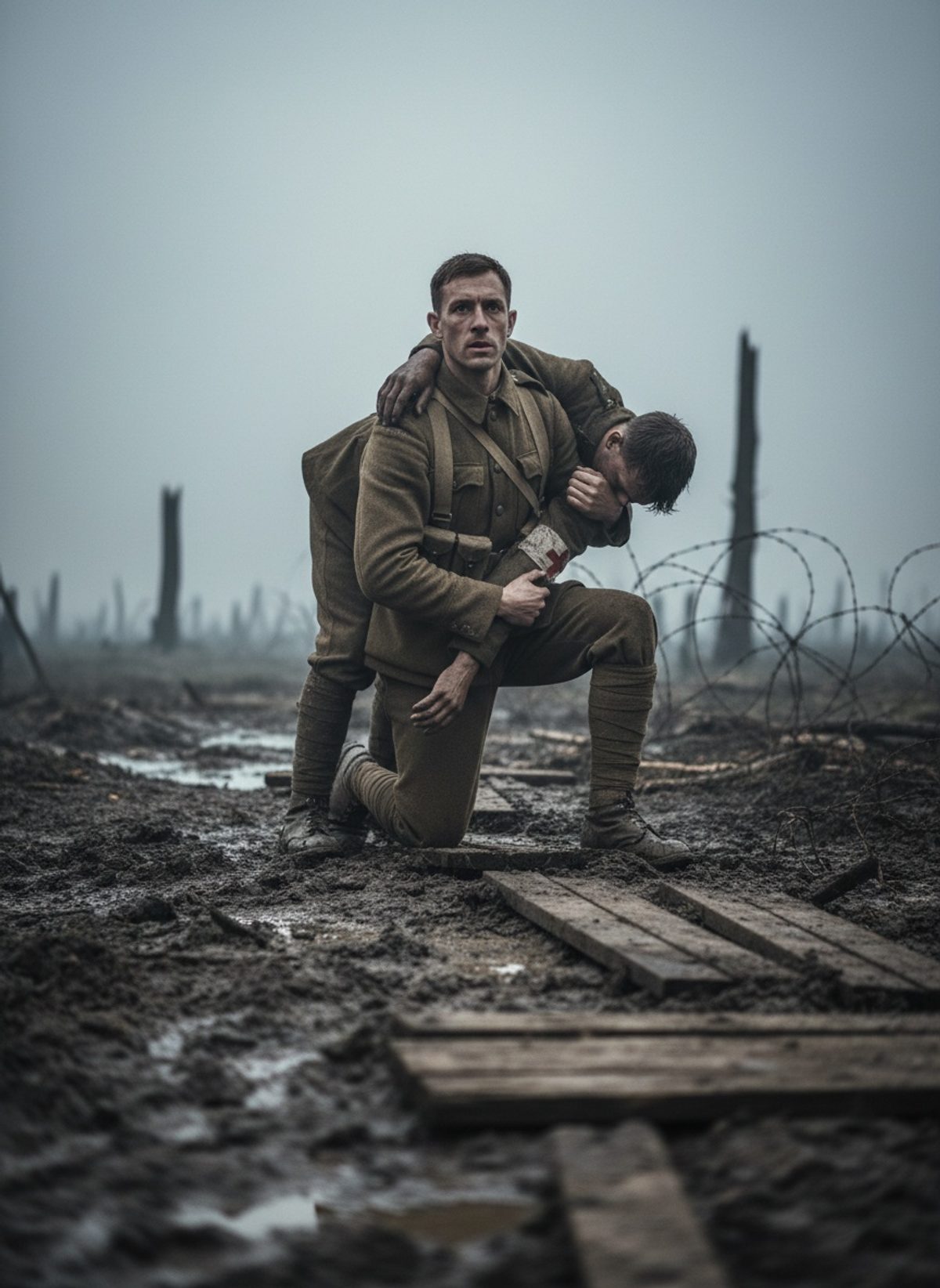
The whistle of bullets sliced through the air, the cries of wounded men emanating from the battered landscape of no man's land. Mud clung to every inch of his uniform as William Coltman crawled on his belly, each yard he gained a test of will against the whine of artillery and the weight of the dead around him. Amidst the chaos of the Somme in July 1916, when a regiment's fate could change in an instant, Coltman rose alone, like a specter emerging from the earth, and began his perilous journey once again.
The Humble Beginnings of an Unlikely Hero
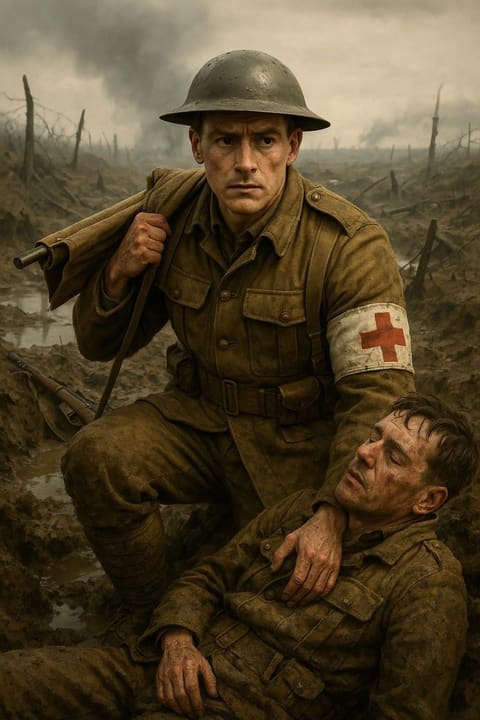
Born in a modest home, far removed from the violence of war, in Burton upon Trent, William Harold Coltman had lived a life of quiet simplicity. Before the Great War tore apart Europe, Coltman was a gardener, a man more accustomed to nurturing life than confronting death. His fervent Christian faith guided him unwaveringly, shaping him into a dedicated pacifist despite the fury raging across the continent. When many would have opted for the rifle, Coltman chose to bear the red cross of a stretcher-bearer, vowing to preserve life rather than take it.
On the battlefields of Europe, this decision placed him amidst constant danger. While soldiers around him carried the tools of war, Coltman's essential armament was a simple stretcher and his unwavering courage. The first day on the Somme was a baptism of fire for the unassuming private, his convictions staving off fear as he darted between the fallen. Each trip into no man's land to retrieve the wounded was a dance with death, yet Coltman never hesitated, his steady hands emblematic of the selflessness to come.
Through terrain pocked with craters and strewn with barbed wire, he moved with an uncanny grace. Not for glory, nor medals, but for the men who lay helpless under the merciless barrage. He believed every life was sacred. It was this fundamental belief that compelled him to crawl out from safety more than thirty times during that harrowing July offensive. Those who watched from the trenches muttered among themselves about his bravery, their whispers celebrating his unsung heroics even as the ground trembled beneath them.
Read next: The Day a British Padre Fed the Enemy's Wounded First
Through Mud and Blood: A Journey of Relentless Compassion
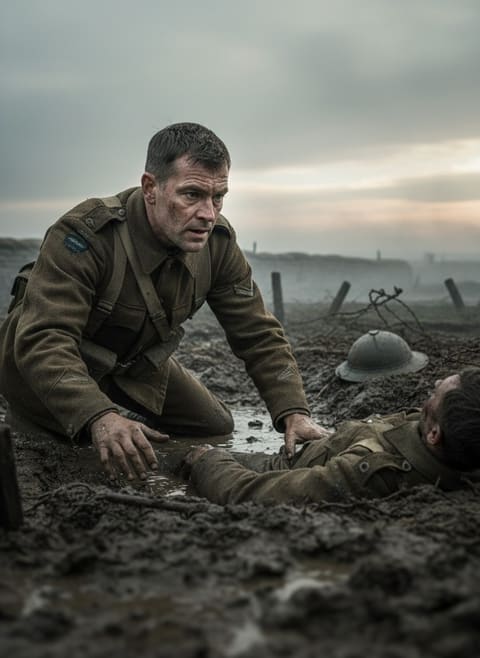
The Somme, where death seemed to lurk in every shadow, became Coltman's testing ground. With each rescue, he defied the cold calculations of mortality that hung over the battlefield. Mud-caked, weary beyond words, he shouldered the weight of wounded comrades, oblivious to the madness surrounding him. Here, in the drumroll of battle, Coltman crafted his legend without a single shot fired in anger. He was a lifeline extended into the abyss, a solitary figure crossing paths with ruin yet emerging time and time again, escorting his charges to the sliver of safety that lay beyond the parapets.
Those he carried often clung to consciousness, eyes wide and glassy, their gratitude etched in fleeting glimpses of sanity amidst the mayhem. Each stretcher-load was a story—a bullet intercepted, a man returned from the void, a life salvaged by Coltman's stubborn humanity. His unyielding presence amidst the melee lent hope to those who had measured time only in shell bursts.
Coltman’s deeds transcended the clash and clang of arms, his actions a testament to the power of compassion in the face of war’s cruelty. Here was a soldier who embodied the paradoxes of battlefield gallantry: the fiercest courage coupled with the gentlest soul. The fabric of his bravery was woven into the morale of his peers, and tales of his rescues traveled beyond his own battalion, whispered over fires and at field hospitals where the whispers grew into awed reverence for the stretcher-bearer from Staffordshire.
Read next: The Day a British Padre Knelt in the Mud and Saved His Men
A Quiet Resolve: The Legacy of One Man's Valor
As the war ground inexorably on, Coltman's resolve never wavered. By the war's end, he had become the most decorated other rank in British military history, his chest adorned with accolades. Yet, despite honors that could swell a lesser man's pride, Coltman's humility remained his most striking feature. To him, the decorations were but symbols of duty fulfilled—the self-imposed charge of bringing the wounded home.
He shunned the limelight in the years that followed, returning to the quiet life he had known before the war. Coltman’s story endured not in the records of military strategy but in the hearts of those he saved and in the silent spaces between history’s loudest moments. His legend was kept alive by the families who welcomed sons home and by the comrades-in-arms who never forgot the man who risked everything to break the wire time and again.
In a conflict famed for its grim tally of lives lost, Coltman's chapter is a narrative of lives reclaimed—a reminder that even the darkest hours can be punctuated by extraordinary acts of courage. His actions on the Somme illuminate the capacity for extraordinary humanity in unspeakable circumstances. Coltman's story whispers to us still, urging that the mightiest weapons we possess are compassion and an ironclad dedication to do what is right, regardless of the cost. His legacy challenges us to question the bounds of bravery, to remember that in the annals of war, the truest victories often come through acts of peace.