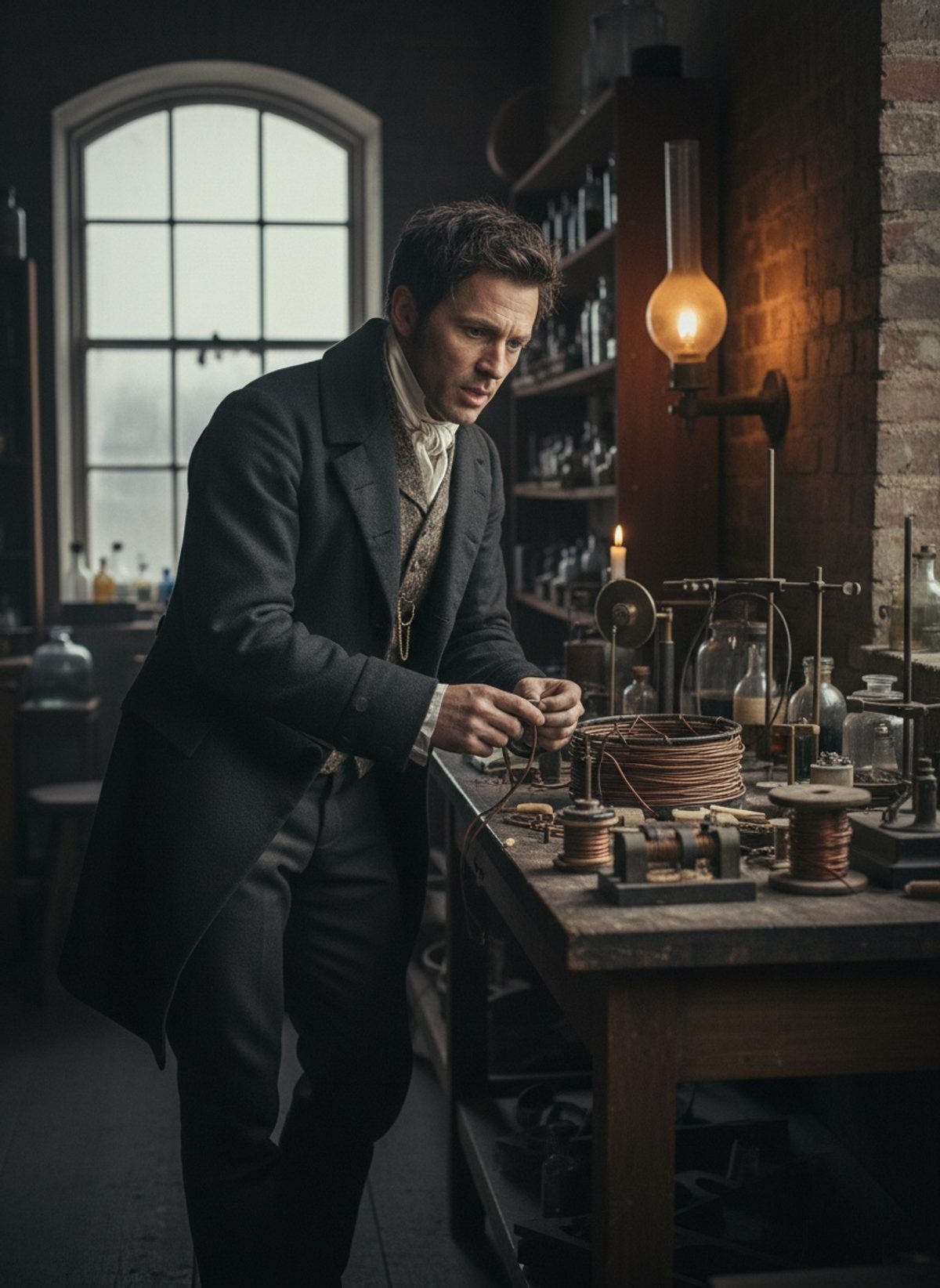
May 14, 1796. The sun rose gently over the rolling hills of Gloucestershire as morning dew glistened on the pastures.
A Cure Conceived in a Farmyard
In the heart of the English countryside, a small village named Berkeley was about to become the unlikely setting for a medical revolution. Edward Jenner, a country doctor, had a radical belief that had captured his imagination for years. As he walked the muddy paths between farmhouses, his thoughts were occupied not by grand laboratories or scholarly debates, but by a curious phenomenon he had observed among the local milkmaids.
These young women, hardened by work and exposure, carried with them a secret immunity. They contracted cowpox, a relatively mild affliction, yet somehow remained untouched by the scourge of smallpox. This observation, seemingly simple, was a revelation. It hinted at a natural form of protection against a disease that had ravaged humanity, claiming more lives across history than nearly any other plague. Jenner, with the quiet confidence of a man on the brink of discovery, knew what must be done.
Milking a Scientific Revolution
The gentle hands of Sarah Nelmes, a dairymaid, were as familiar with the udder of a cow as they were with the signs of cowpox. Pustules dotted her fingers, innocuous to her but significant to Jenner, who had long hypothesized their protective powers. He saw the proof of his theory etched upon her skin and felt the urgency to act. This was the raw material of a grand experiment.
Read next: The Day a Weaver's Son Gave the World Its First Photograph
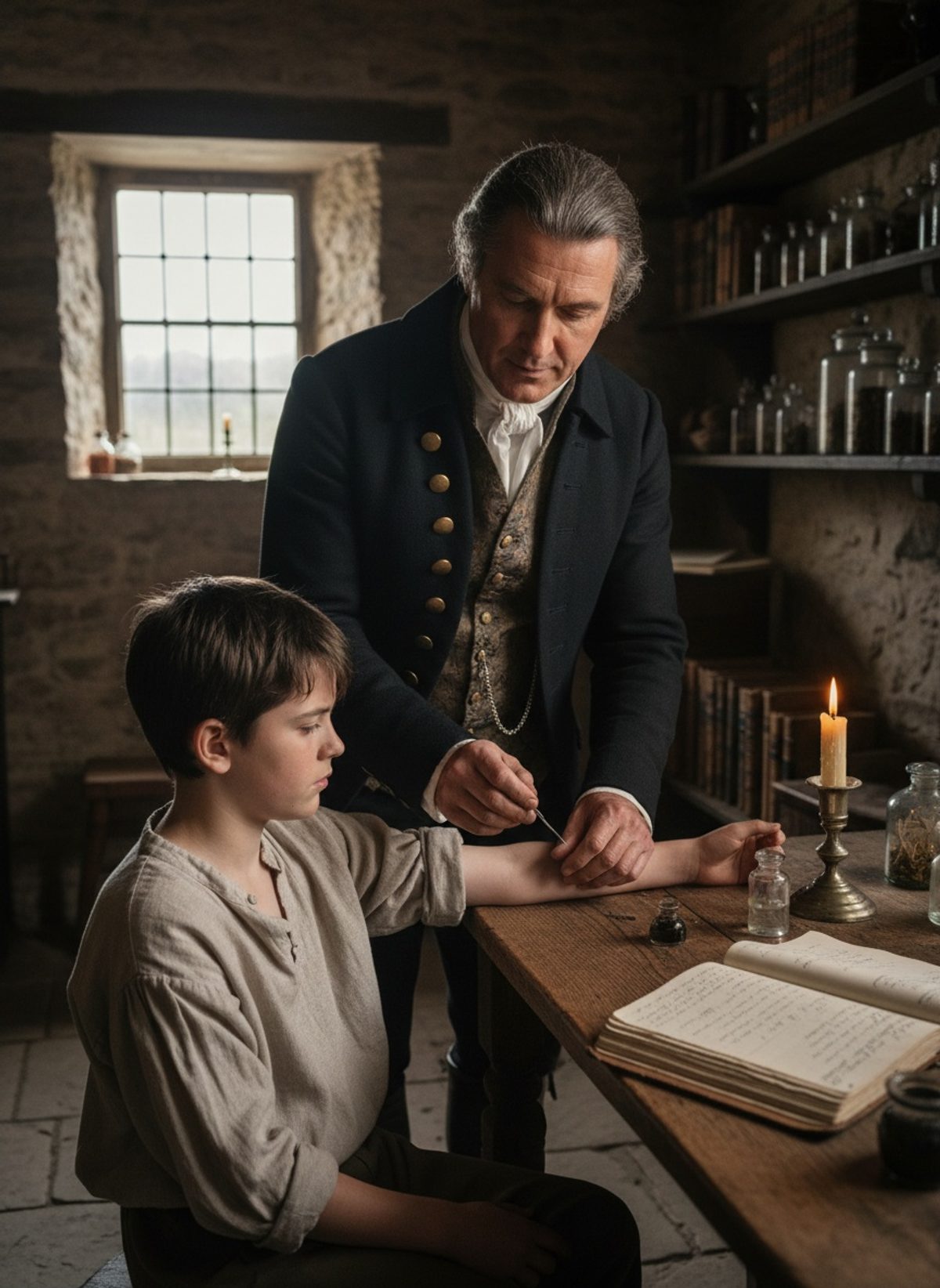
Then, there was young James Phipps, the farmer’s son, who became the linchpin of Jenner’s daring case study. On this May morning, Jenner performed a procedure that would echo through history. With a small incision in Phipps' arm, Jenner introduced material taken from Sarah’s cowpox pustule. The act was simple, almost mundane in its execution, yet unimaginably profound in its implications. It was the world’s first vaccination.
A Documented Miracle
In the following days, every detail of the boy's condition was meticulously recorded by Jenner. The initial reaction was slight—an expected fever and discomfort as Jenner anticipated. As the days wore on, Phipps recovered swiftly, unfazed by the benign nature of cowpox. A few weeks later, Jenner exposed James to smallpox, a true test of his theory.
The outcome was astonishing. The dreaded symptoms never appeared. Phipps remained resilient against the disease, his body fortified by the cowpox exposure. Jenner's hunch, spurred on by whispers in village alleys and sustained by his keen scientific curiosity, had paid off. While the notion of inoculation was not entirely new, having seen some use earlier in the century, Jenner's method marked a watershed moment—a move from potential danger to safe, systematic prevention.
Tremors Across the Medical World
Jenner’s findings, published in 1798, were met with skepticism and even derision in some circles. Yet the earth beneath the feet of the medical community had shifted irrevocably. Doctors across Europe and beyond, driven by the hope of eradicating smallpox, began to emulate his methods. The impact of Jenner's work spread like a wave, crossing seas and touching continents, laying the foundation for modern immunology.
What began as a rural experiment expanded into a global movement. The technique of vaccination gradually gained acceptance, demonstrating that the horrors of smallpox could indeed be curbed. No longer were people resigned to the loss and suffering inflicted by the disease. Perhaps more impactful than the discovery itself was the hope it imbued in humanity—a dawn of possibilities where disease might be conquered by science.
A Legacy Written in Lives Saved
Today, Edward Jenner's audacious act and James Phipps' unwitting contribution pervade the ethos of medicine. Vaccination has become a cornerstone of public health, the simple procedure developed on that farmyard spring day now saving millions worldwide each year. The eradication of smallpox is a testament to the power of observation and the courage of conviction.
Yet, it's crucial to remember how this monumental change began—not in an ivory tower, but in verdant fields and humble homes. The sight of a milkmaid with calloused hands inspired a revolution that changed the destiny of humanity. In an era defined by great thinkers and grand endeavors, it was a quiet English village that reminded us that solutions to our greatest challenges sometimes begin with a question and a farmer's son.