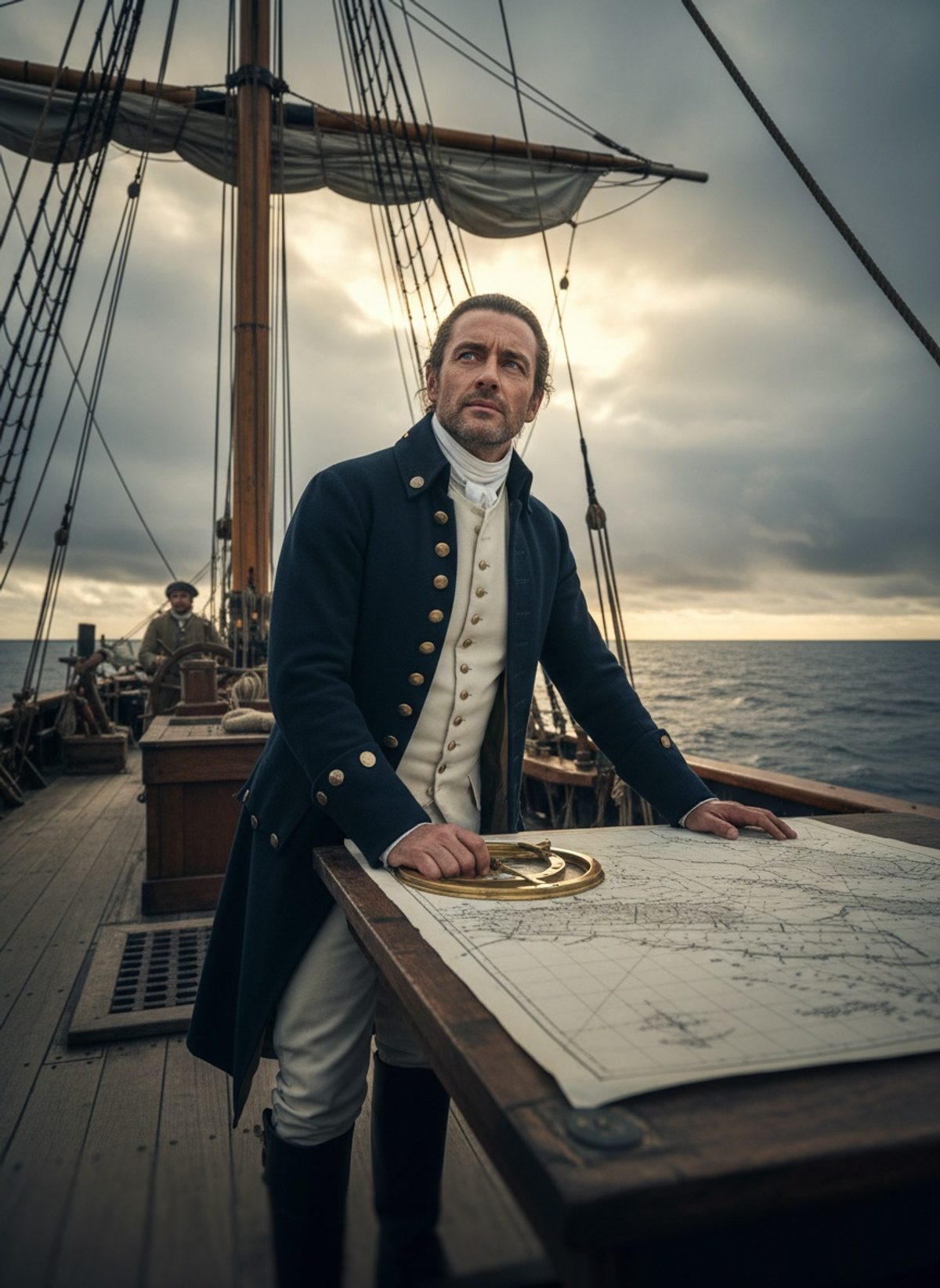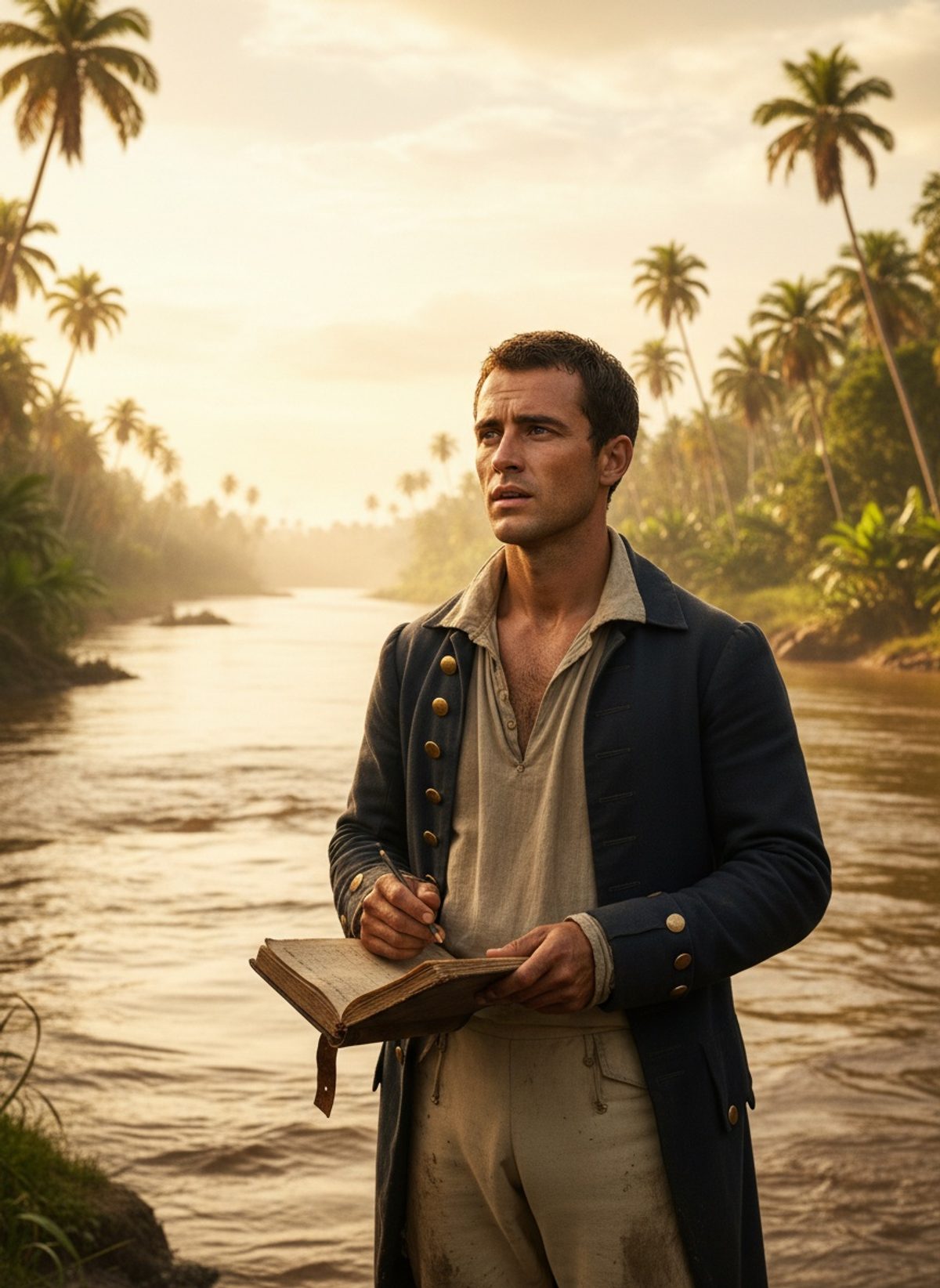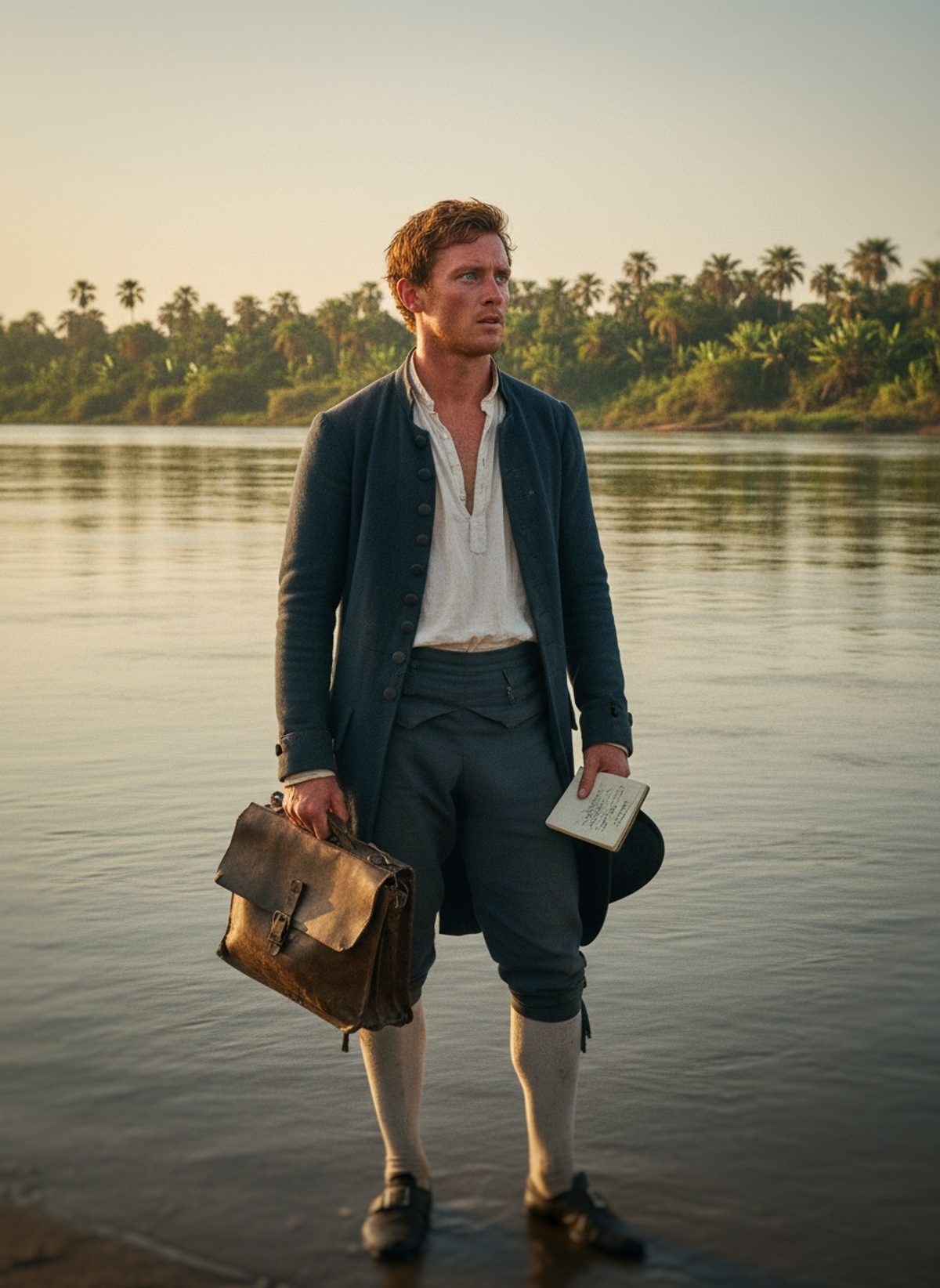
June 21, 1795. The sun blazed mercilessly over the bustling port of Pisania on the Gambia River. The humidity was stifling, almost a tactile presence pressing against the skin, as a lone figure disembarked from a small wooden boat.
A Bold Step into the Unknown
On that day, Mungo Park, a 23-year-old Scottish surgeon, set foot on African soil with a singular mission: to trace the course of the Niger River. He carried with him the barest of essentials — a few clothes, simple navigational tools, a diminutive supply of medicine, and a handful of trade goods thought to appease potential hostility from local tribes. His demeanor was unassuming, his presence almost swallowed by his surroundings, yet his determination was anything but diminutive.
Park's expedition was not sanctioned by empire nor escorted by troops. It was a venture sponsored by the African Association, a group intent on demystifying the continent's geographical enigmas. His voyage into Africa's interior was fueled by curiosity and an indomitable will that defied the European comprehension of African landscapes at the time. He aimed to untangle one of geography's most persistent riddles — the course of the river that Western scholars speculated flowed east toward the fabled heart of Africa, the Niger.
The land beyond Pisania had seen European adventurers before, but none had returned to tell its secrets. Park's journey was perilous not just because of the unfamiliar landscape, but due to soaring temperatures, diseases, and unpredictable encounters with local groups. He was a guest in their world, relying on his ability to navigate shifting landscapes of both terrain and political intrigue. Park's courage was exemplified by his approach to each village: a respectful presentation of himself and his motives, often bridging cultural gaps through humble observation and earnest engagement.
Read next: The Day a One-Armed Captain Charted Australia's Last Coast
Rivers of Dreams and Nightmares
Without the crutch of maps or armed protection, Park was dependent on the river itself; it guided him, provided sustenance, yet stood as a constant reminder of his fragility. The Niger carved an oasis against the verdant chaos of West Africa, a lifeblood hidden in the hazy green belts of the untamed wilderness, its meanders whispering stories centuries old.
Day by day, and under the expansive, indifferent sky, Park gathered invaluable data about the river's path and the life teeming around it. Observing native boatmen glide expertly through waterways, he documented their intricate latticework of trade linked by these aquatic routes. Through these waters, the pulse of local commerce and culture thrummed in stark contrast to the European beliefs of a primitive continent.
Yet his exploration was far from bucolic. The landscape unfurled with dangers: torrential rains transformed dry land into swampy quagmires; serrated branches of mangroves snitched at passing vessels; and above all, the lingering threat of malaria lay in ambush. Protection against such adversities came only from the benevolence of the people he met, individuals who recognized his genuine intent and, surprisingly, found camaraderie in their shared humanity rather than suspect an intruding foreigner.
One of his greatest challenges arrived in the form of confinement, when he was captured and imprisoned in Ludamar by a local chief suspicious of British intentions. There, Park encountered hardship that would test his very resolve to continue, surviving on scraps of food and meager water. It was a test that strengthened his tenacity, until his eventual release afforded him the freedom to persist in his quest.
The Whisper of Uncharted Waters
After months battling exhaustion and despair, Park finally witnessed the Niger in all its resplendent glory — the river that had haunted the imaginations of geographers for countless ages. It was an epiphany as profound as sunlight spilling over a shadowed valley, revealing a world unimagined, yet reassuringly real. His heart swelled with a knowledge few Europeans had ever possessed, and his writings from this period capture the serene revelation of a dream accomplished amidst adversity.
His journey back was as remarkable as the outward expedition, enduring numerous hardships, including bouts of illness and hostile encounters. Yet the thought of the untrammeled river powered him forward — knowledge as his most precious commodity. Upon his triumphant return to Britain, Park’s accounts ignited the fires of European exploration, reshaping them with new knowledge and a tantalizing promise that shattered older misconceptions.
Mungo Park's solitary passage into Africa's mysterious heart paved the way for subsequent explorers, sketching first lines in the geographies that would later be redrawn by scores of others seeking glory in the age of discovery. His journey was not just the charting of the Niger but the bridging of a cultural chasm, demonstrating that exploration need not come with conquest, but through understanding and respect.
In Park’s narrative, we find an enduring reminder of the will to pursue the unknown, the courage to face unnumbered trials, and the insatiable human curiosity that underpins all discovery. The journey of one man into the heart of Africa reminds us of the bygone whispers of untamed rivers and the untold tales still awaiting an ear willing to listen.