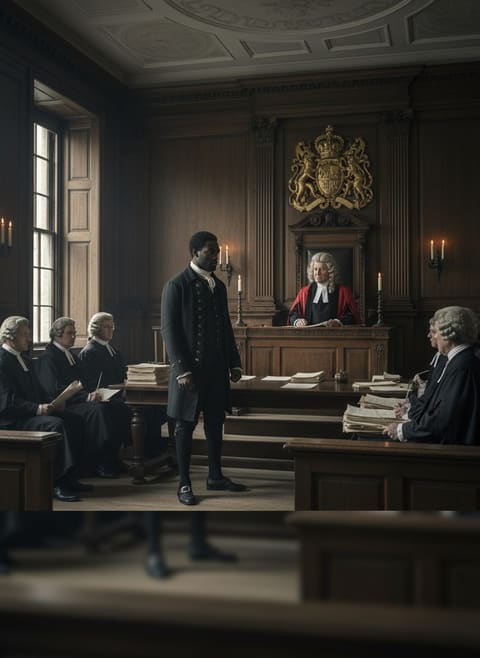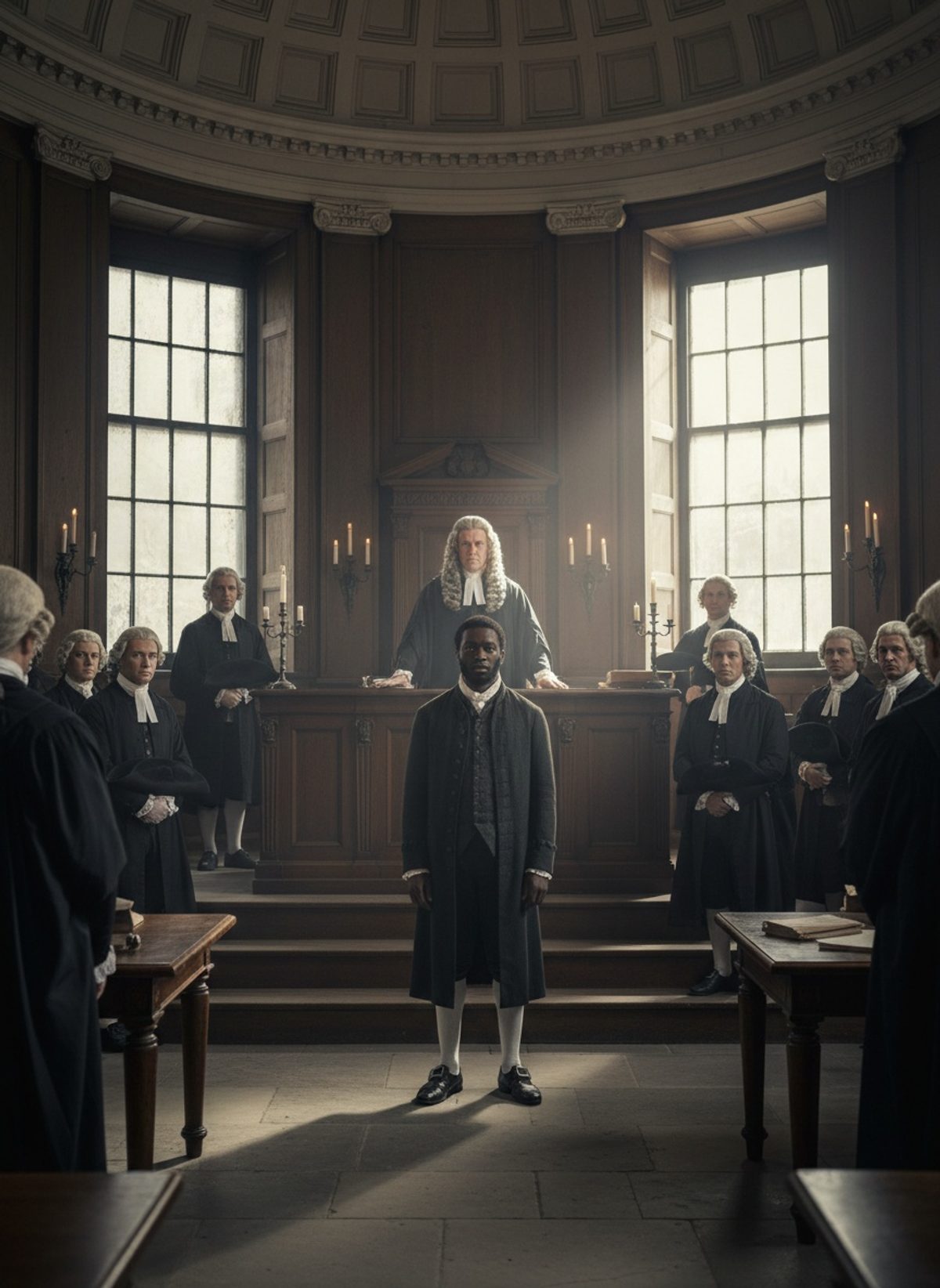
James Somerset was just another name among millions. Then, he became a symbol and a catalyst.
The Chains that Bound and Unbound
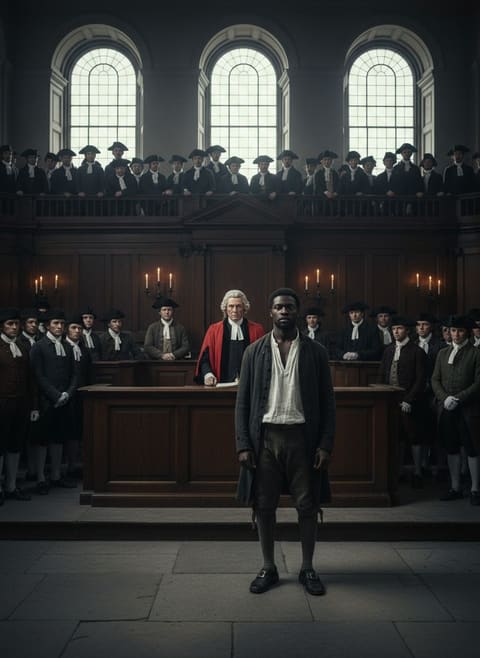
In the year 1772, London sat at the heart of a sprawling empire, its veins pulsating with trade and its arteries fueled by the immense wealth generated by colonies around the globe. Amidst the grandeur of this empire, a legal battle unfolded that would challenge the foundations of its society. It took place in a hushed courtroom, where every wooden pew was filled with a diverse assortment of attendees, each craning to witness a decision that would either affirm ancient practices or signal the beginning of their end. At the center was a man sentenced to chains, a man whose fate hung on a singular premise: his very humanity and right to liberty.
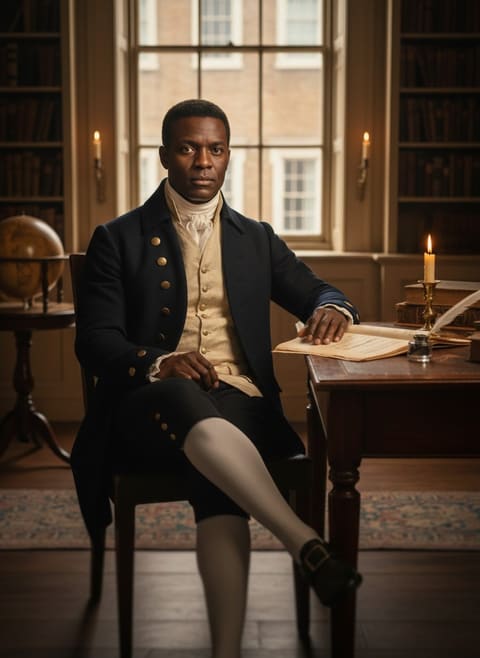
James Somerset was no stranger to captivity. He had been brought to England by his master, Charles Stewart, a Boston customs officer, as enslaved individuals often accompanied their owners on journeys between the American colonies and mainland Britain. Yet, beneath the shadow of his shackled existence, Somerset's spine bore a spirit unbroken by chains. Encouraged by a growing abolitionist movement in England, Somerset seized a narrow window of opportunity and fled his master’s grip. It was a brief taste of freedom, one quickly curtailed when Stewart moved to recapture him.
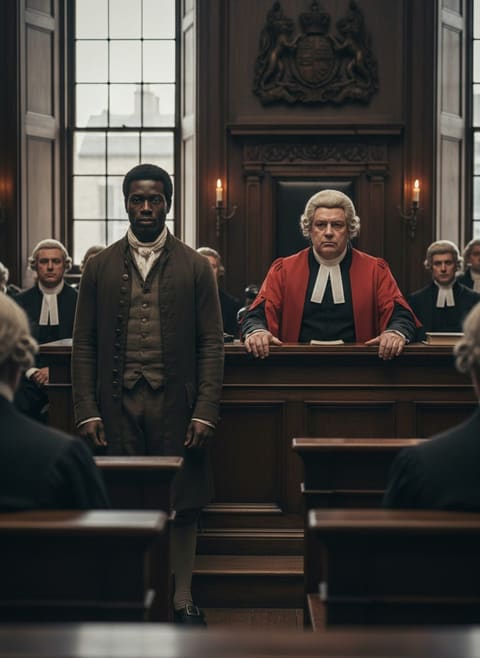
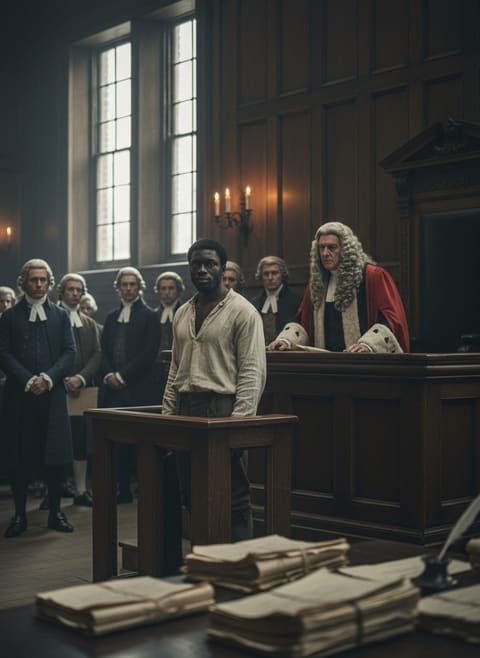
The court case that followed was more than just a hearing for Somerset; it was a trial that would pit the moral fibers of England against the economic realities of the day. In bringing Somerset to trial, Stewart sought nothing beyond the legal affirmation of Somerset's status as his property—a validation that should have been routine. Instead, Lord Chief Justice Mansfield found himself presiding over a case that would ultimately test the conscience of a nation. As the spectacle unfolded over several months, the courtroom transformed into a battleground where arguments of freedom and human rights clashed against traditions of ownership and control.
Read next: The Day a Freed Slave Wrote a Letter That Shook Britain
A Blow to the Empire’s Moral Compass
Mansfield was a man known for his intellect and composure. Even so, he was burdened with an awareness that the decision he penned could not be confined within the walls of his courtroom, nor between the covers of legal statutes. On June 22, 1772, in a move that shocked both allies and adversaries, he stood amid the echoes of the court and delivered a judgment that would resonate through the corridors of history. His decree was concise yet profoundly complex: no man, once upon English soil, could be removed from it in chains.
The ruling struck like a thunderbolt at the institution of slavery within Britain, echoing into the halls of plantations and latifundia across the empire. For enslaved individuals, who had for so long been treated as chattel, the judgment offered a rare glimmer of hope. To abolitionists, it was a powerful tool of persuasion and rhetoric in their campaign against slavery. For the empire's commercial sectors, however, the decision sowed seeds of uncertainty and discord, rippling into colonial territories whose economies were tightly interwoven with the labor of enslaved people. The ruling did not abolish slavery nor did it affect the colonies directly, but Mansfield's decision planted an idea whose roots would grow deeper and spread further than anyone—perhaps even Mansfield himself—might have imagined at the time.
There, in the quietude that followed Mansfield’s pronouncement, lay no simple eradication of slavery, but a change in discourse that would embolden future champions of liberty. The courtroom had served as a forge, molding notions of freedom that traversed beyond mere legalities to a broader moral awakening. Somerset's victory was inextricable from the burgeoning moral shift taking place, one that would influence countless down the winding road to abolition.
Read next: The Day a Bristol Clerk Stood Up and Freed a Dying Man
The Ripple Effect Beyond Chains
The echoes of 1772 spread slowly at first, building momentum as they crisscrossed the Atlantic and ricocheted from colony to colony. While the immediate legal impact in Britain was limited, the ruling ignited a dialogue that challenged the very constructs of ownership and human rights. Its spirit found fertile ground in a burgeoning movement that demanded the re-examination of what it meant to own another human being, alongside newer, bolder assertions of freedom and dignity.
In a twist of fate, Somerset's court case not only forged the path for abolitionists but also illuminated the glaring hypocrisy of a nation that prided itself on liberty while enslaving others. It posed a stark moral quandary to an empire asserting both supremacy and civilized values. Somerset's legacy became interwoven with the efforts that eventually culminated in the abolition of the transatlantic slave trade in 1807, and the complete cessation of slavery within the British Empire in 1833. While the physical shackles had not been broken by the hand of Mansfield alone, the hammering of his gavel had chipped decisively at their links.
James Somerset, an ordinary man who walked into the courtroom in chains, left a transformed symbol. He represented an irrefutable acknowledgment in a world struggling with dual identities: one of a slave-holder and the other of a proclaimer of freedoms. His case was a harbinger not because it erased the vestiges of enslavement immediately, but because it forced a dialogue upon a nation content with silence. The ripples of that pivotal 1772 ruling touched the shores of not only Britain but of the very understanding of human dignity and justice. Through Somerset's story, we find ourselves reminded of the fragile yet potent interplay between law and morality, and how a single courtroom can indeed become the most pivotal room in an empire. James Somerset walked away with more than a reprieve; he unwittingly taught a nation to look steadily at itself—and ask the tougher questions of its conscience.