The city of Washington stood secure in its infancy. Within hours, it was a battlefield of abandoned hopes and lavish dinners consumed by its enemies.
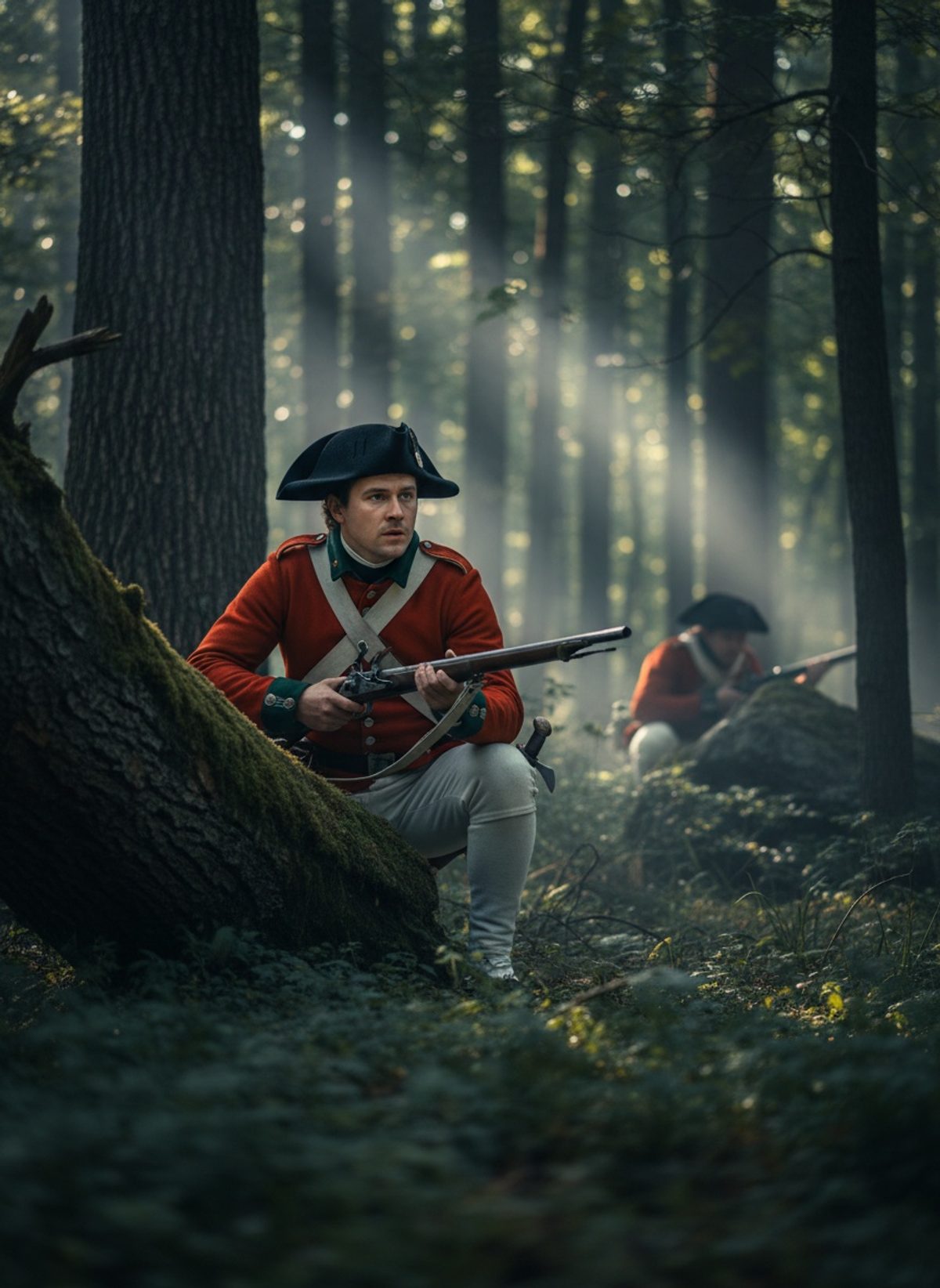
In the sultry heat of August 1814, a British force of 4,500 men, under the redcoats' flag, accomplished a feat that would seem unimaginable to Americans today: they strode into Washington, the barely established capital of the United States, without a serious obstacle in their path. This audacious incursion was less about conquest and more a statement, a scorching punctuation mark in the ongoing War of 1812. As the weapons clattered in Bladensburg, a battle described disparagingly by some as the "Bladensburg Races" due to the swift retreat of American militiamen, the path to Washington lay bare.
The air in Washington, balmy and tinged with late summer, became thick with smoke and the acrid scent of scorched buildings. President James Madison had vacated the premises with scant warning, stealing away to safety amidst the chaos and leaving behind his sacred abode, the President's House, vulnerable. Along with him, his wife, Dolley Madison, escape just in time, clutching precious relics, including the iconic portrait of George Washington, saving it from the impending inferno.
With the President in flight, Washington's streets were eerily quiet when the British marched in. The impressive grandeur of the capital’s federal buildings belied its vulnerability. Only a handful remained, their loyalty hanging by the loosest threads or perhaps a desire to witness history unfold. What they saw was an unprecedented scene: British officers mounting the steps of the President's House, entering as though invited guests.
Read next: The Defeat That Built the British Army's Deadliest Soldier
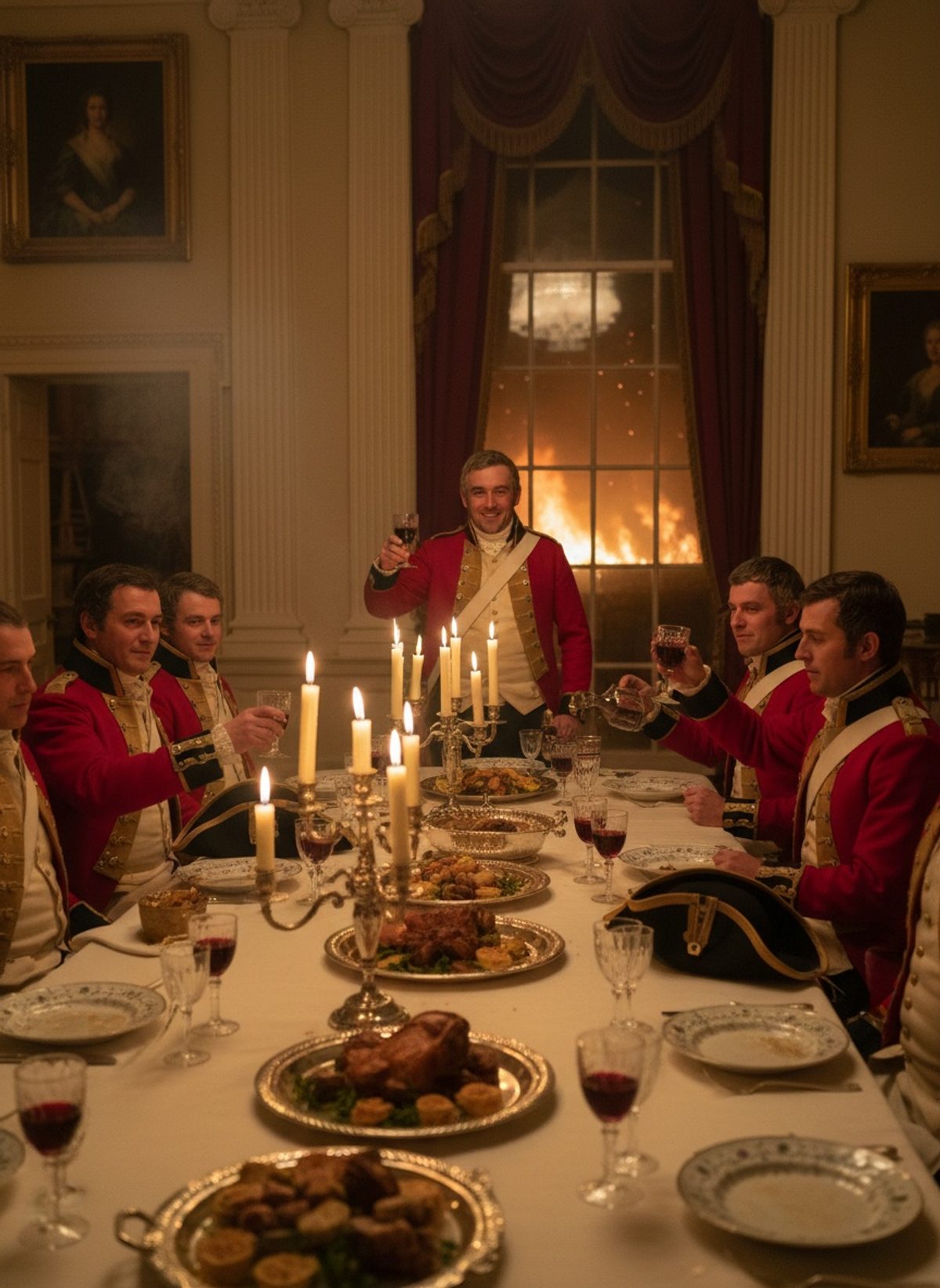
This is where the encounter becomes truly extraordinary, for inside, the dining room was set, the aromas of a lavish dinner for forty still hung in the air. In a twist of surreal audacity, the British officers took their places at the table. Their bellies empty from arduous travel, the allure of a sumptuous meal was irresistible. It was more than just sustenance; it was a symbolic act of dominion over their adversaries, consuming not only roasted meats and fresh-baked breads, but the pride of a fledgling nation. They toasted to the President’s health with his collection of fine Savannah wine, the irony as crisp as the libations themselves.
As they supped, Washington residents peeked through cracks in the curtains, their capital—a beacon of their democratic experiment—now reduced to a dinner spectacle for enemy troops. Perhaps it was this spectacle, more so than the flames that followed, that left the deepest scorch of humiliation.
When the last bites had been savored and the final toasts made, the officers rose, leaving the table in disarray, wine still staining the linen cloth. The house was set ablaze; flames licked the walls, and the proud edifice of the President’s House was reduced to a shell. It wasn't alone in its fiery fate. The flames grew ravenous, consuming the Capitol, the Treasury, the War Office. The smoke was as much a message: the breach was complete, the capital itself was as vulnerable as its hastily prepared fortifications.
Yet, amidst this grievous act, the flames did not scorch the spirit of the nation or silence its resolve. Herein lies a lesser-told story, for within those ravaged hours lurked resilience. In a nation that was never supposed to stand, according to European powers, this was a mere flicker, not a death blow. Washington was a city reborn from its own ashes, quite literally as metal roofs buckled and limestone cracked in the conflagration.
Curiously, the aftermath of this brazen dining and subsequent incendiary attack brought an unexpected turn of fortune. Just weeks later, events conspired to shift the winds of war in favor of the Americans. Naval victories and overextended British campaigns elsewhere saw the dynamic change. By December's end, the Treaty of Ghent would be signed, effectively calling for peace by restoring conditions before the war. The war ended not with grandiose triumphs but quiet negotiations across the Atlantic.
The night the British dined at the American President's table and torched the White House epitomized the unpredictable and sometimes surreal stitchings of history. It serves to remind us of the fragility of power and the potency of symbols—as fleeting as a bottle of wine shared between enemies or the candlelit vigil of a burning house. More than a footnote, it stands as a testament to ironies that permeate human conflict and the enduring ability to rebuild in its wake.