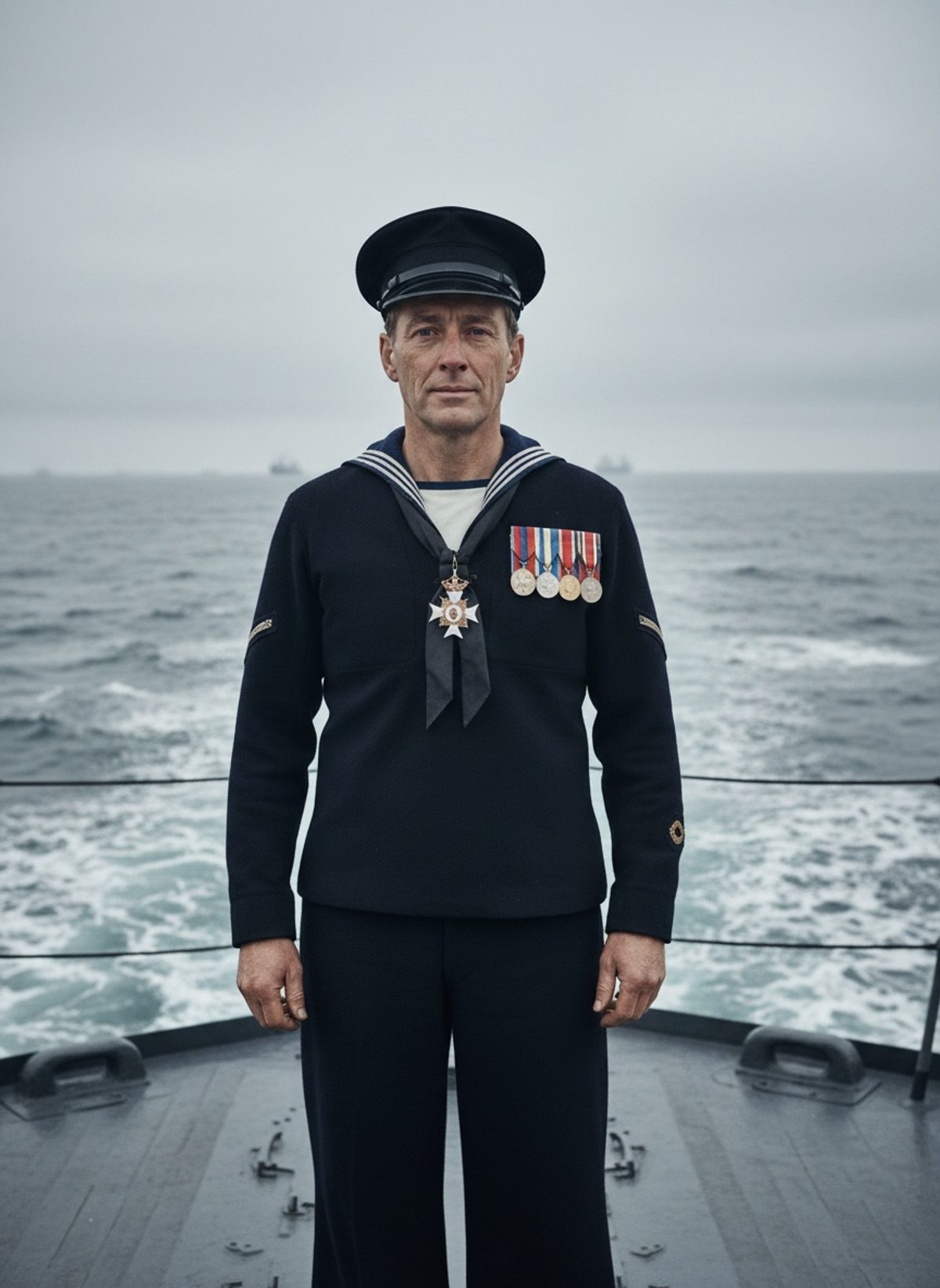
The salt spray stung George Parker's face as he gripped the railing of HMS Valiant. The North Sea was unforgiving today, its waves crashing against the hull with relentless fury. Parker's cheeks, still boyishly youthful at fifteen, were flush from the cold and adrenaline. Around him, the seasoned sailors worked with practiced precision, their voices barely audible over the howling wind. Yet, despite the cacophony, Parker felt a thrilling sense of belonging. He had traded the cobblestone streets of London for the sea, and the enormity of the ocean seemed a fitting match to his boundless ambition.
When George Parker had marched into the Royal Navy recruiting office in 1916, his heart pounded with a mixture of anxiety and excitement. Too young by law to enlist, his document stated he was two years older. Teenagers fabricating their age for a taste of naval life was not uncommon; Britain needed every able-bodied soul it could find. The Great War was an ongoing maelstrom, and Parker sensed he was on the precipice of history. His youthful determination carried him through basic training, where he learned quickly that the romanticized version of war bore little resemblance to the harsh conditions of life at sea.
Those early days aboard HMS Valiant were an education in endurance. The air was thick with the scent of salt and steely resolve. Parker learned to tie knots with deft fingers, his hands red and raw from the cold. He scrubbed decks until they gleamed and stood night watches under star-studded skies. Beneath his pretense of age, Parker was just a boy surrounded by men who ribbed him good-naturedly and taught him the unwritten rules of life at sea. His youth, initially a curiosity, soon became an accepted part of the ship's rough and tumble existence.
By the end of the Great War, Parker had experienced more than most men would in a lifetime. He had witnessed the terrible beauty of naval engagements, the roar of the guns, and the silent passage of torpedoes beneath the waves. As the guns finally fell silent in 1918, a grim peace settled over Europe, but the sea had already claimed Parker's heart. Despite the allure of civilian life, he remained with the Royal Navy, a decision that would see him in uniform as the world edged inexorably towards yet another global conflict.
Read next: When Britain Gutted Its Army to Balance the Books, 1932
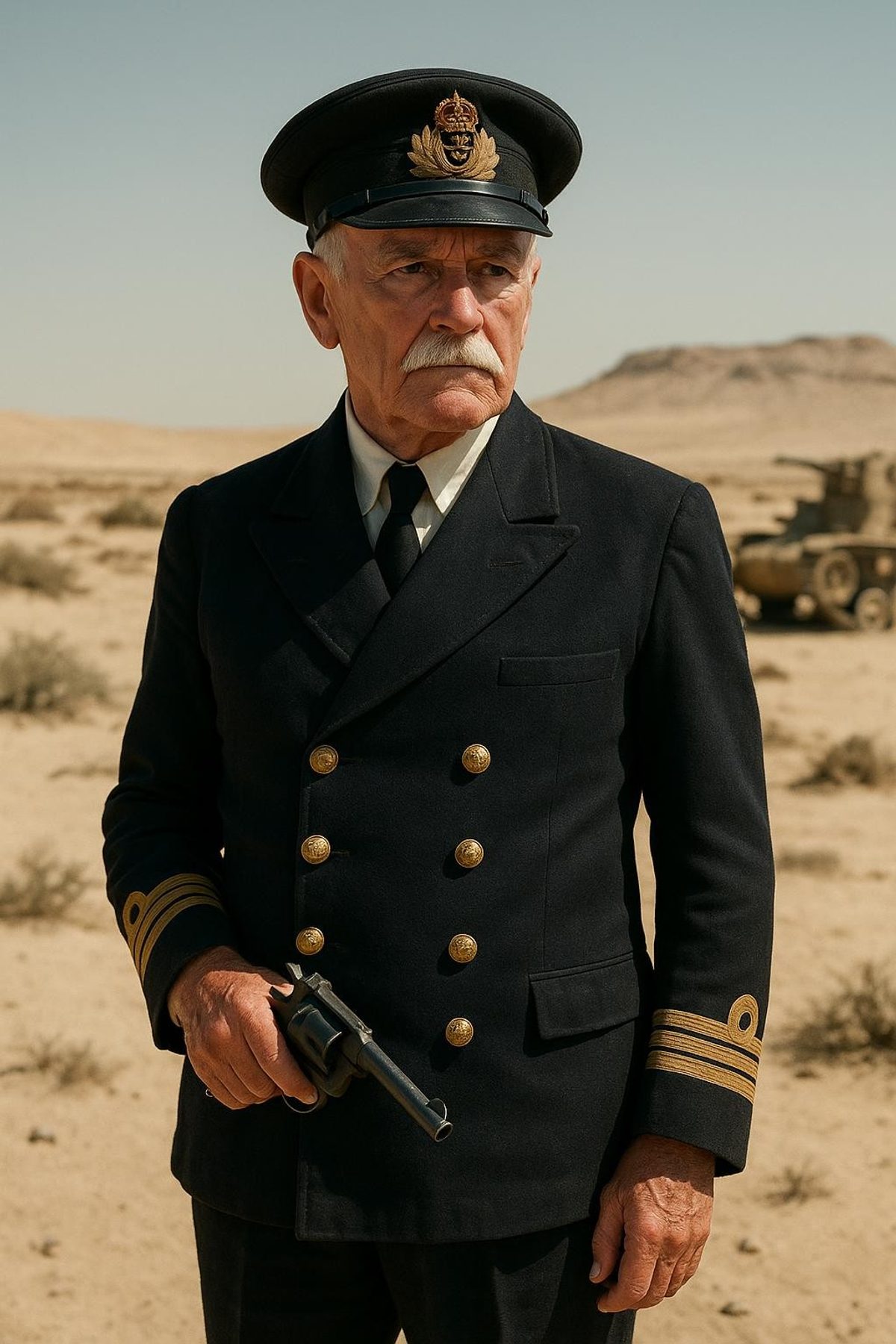
Two decades later, on the eve of World War II, George Parker awoke to find himself one of the Royal Navy's seasoned veterans. Steel grey eyes that had once carried eager youthfulness were now testimony to myriad battles and ocean storms. The young recruit had become a stalwart leader, his presence a calming influence among the younger, less experienced sailors balancing between fear and national duty. As the European theatre erupted into chaos once more, Parker's unwavering dedication saw him navigate the tumultuous waters of war with indomitable grit.
During these years, Parker's reputation was cemented through acts of quiet heroism that went unsung outside the cramped quarters of a naval ship. He became a legend among his peers, known for his unflinching composure in the face of danger. From the frigid waters of the Atlantic engagements to the complex manoeuvrings in the Mediterranean, he was there, maintaining the steady course amid the chaos. His uniform, heavy with service ribbons, marked significant victories and poignant reminders of comrades lost to the sea.
As the war dragged on, the collective weariness was palpable. Yet, Parker's spirit remained unbroken; his love affair with the sea endured through shifting tides and political landscapes. When Germany finally surrendered in 1945, Parker witnessed the world reshape itself in the aftermath. The sailor who had once lied about his age to fight for his country had now given nearly thirty years of his life to the cause of freedom. This bond with the sea had defined his very existence, guiding him from boyhood to the twilight of his service years.
By the time Parker finally hung up his naval uniform, he held not only a trove of medals but an even richer trove of memories. The boy sailor who had set out for adventure had become a witness to history, a symbol of perseverance and dedication amid the trials of war. As he retired, the peace of civilian life awaited, yet the echoes of the ocean he loved would forever call to him. Parker's journey was less about the battles he fought and more about the constancy of spirit in the face of relentless change.
George Parker's story, shared over pints in a local pub or recounted to a rapt audience of grandchildren, carried within it a deeper resonance. It was not just a tale of battles won and lost at sea, but an exploration of human resilience and the indomitable will to endure. His life, etched in the salt lines on his face and the old scars on his hands, served as a tangible reminder of the sacrifices quietly made by those who chose a life at sea. The history of nations is often chronicled through grand events, yet the true heart of those epochs beats in the everyday heroics of men like Parker, who navigated the choppy waters of war and peace with steadfast courage. The stories left out of textbooks sometimes speak the loudest, inviting us to honor the lesser-known legends of our collective past.